World art
World art encompasses far more than objects displayed behind glass in museums. It represents the tangible expressions of human culture—from textiles woven with mathematical precision to sacred objects still considered “living” by their communities of origin. Yet managing, collecting, and displaying these cultural treasures raises profound questions that challenge institutions and collectors alike: How do we preserve fragile materials while making them accessible? When does appreciation cross into appropriation? Who truly owns heritage?
The landscape of world art has transformed dramatically in recent decades. Museums face increasing scrutiny about colonial-era acquisitions, collectors navigate complex legal frameworks governing antiquities, and heritage sites struggle to balance tourism revenue with conservation. This evolution demands a new approach—one grounded in ethical stewardship, community engagement, and cultural respect. Whether you’re a museum professional, collector, student, or simply curious about global artistic traditions, understanding these interconnected challenges is essential to engaging meaningfully with world art.
Preserving Cultural Heritage: Balancing Access and Protection
The fundamental paradox of heritage preservation is simple yet profound: the more accessible we make objects, the more we risk damaging them. Light fades pigments, humidity warps wood, and human breath introduces moisture that degrades textiles. Yet objects locked away in climate-controlled storage fulfill no educational mission.
Creating Frameworks for Future Generations
Effective preservation begins with robust metadata standards—the detailed records that contextualize each object. Think of metadata as an object’s biography: where it was made, by whom, using what techniques, and for what purpose. Without this information, a Navajo textile becomes merely “a blanket,” stripping away the weaver’s identity, the mathematical complexity of the pattern, and the cultural significance of the design. Institutions increasingly invest in digital systems that capture not just physical dimensions but also intangible heritage—oral histories, traditional uses, and cultural protocols.
Moving Beyond Colonial Narratives
Many museum collections carry the weight of colonial history. Objects acquired through dubious circumstances during occupation, expedition, or unequal power dynamics present ethical challenges. Modern interpretation requires acknowledging these histories honestly. Rather than labels reading “collected by” a European explorer, contemporary practice demands transparency: “removed from” or “acquired during” provide more accurate context. This shift isn’t about assigning guilt but about presenting truthful narratives that respect source communities.
Engaging Communities in Stewardship
The most meaningful preservation involves descendant communities as active partners rather than passive subjects. Indigenous groups, for example, often possess traditional knowledge about material care that Western conservation science is only beginning to understand. Community curation models invite these experts to shape exhibitions, correct misinterpretations, and determine appropriate display methods for sensitive items. This collaborative approach produces richer storytelling and ensures cultural accuracy.
Navigating the Antiquities Market: Ethics and Legality
The market for cultural objects exists in a complex space where legitimate collecting intersects with illicit trafficking. Recent decades have seen increasing regulation, yet gaps in enforcement and documentation continue to pose challenges for even well-intentioned collectors.
Understanding Legal Frameworks
International conventions like the UNESCO agreements establish baseline protections, but enforcement varies dramatically by country. Import and export restrictions protect cultural patrimony, making it illegal to remove certain categories of objects from their nations of origin without permission. Collectors must understand that a purchase receipt doesn’t necessarily establish legal ownership—if an object was illegally exported decades ago, current laws often allow seizure and repatriation regardless of good-faith purchase.
Investigating Provenance Gaps
An object’s ownership history, or provenance, serves as its legal fingerprint. Suspicious gaps—particularly during periods of conflict or occupation—should raise immediate red flags. A Cambodian sculpture with no documented history between the Khmer Rouge era and its appearance in a Western gallery likely has problematic origins. Responsible collectors demand complete paper trails: exhibition catalogs, auction records, customs documents, and photographs showing the piece in earlier collections. The absence of documentation isn’t always proof of illegality, but it represents significant risk.
Recognizing Documentation Red Flags
Forged provenance has become increasingly sophisticated. Warning signs include vague attributions (“from an old European collection”), inconsistent dates, recently created documents for supposedly old acquisitions, and sellers reluctant to provide full disclosure. Reputable dealers welcome scrutiny and provide comprehensive documentation unprompted. If a seller emphasizes “investment potential” over cultural significance or rushes the transaction, proceed with extreme caution.
Reimagining Museums for Modern Communities
Public art institutions face an identity crisis. Once designed as temples of high culture serving educated elites, museums must now demonstrate relevance to diverse, contemporary audiences while justifying public funding and maintaining scholarly standards.
Demonstrating Social Value Beyond Visitor Numbers
Funders increasingly demand evidence of community impact rather than just attendance figures. Progressive institutions measure success through educational programs reaching underserved populations, community advisory boards shaping programming, and partnerships with local organizations. A museum might track how many first-time visitors attended due to culturally specific programming, or how school partnerships introduced students to curatorial careers. These metrics tell richer stories than simple headcounts.
The Free Access Debate
Should museums charge admission? Proponents of free entry argue that publicly funded institutions have obligations to remain accessible regardless of economic status. Admission fees, even modest ones, create barriers for low-income families, especially those with multiple children. However, ticket revenue often funds the very educational programming that serves these communities. Hybrid models have emerged: free general admission with charges for special exhibitions, or sliding-scale pricing with free days targeting specific neighborhoods.
Dismantling Elitist Design Barriers
Accessibility extends beyond wheelchair ramps. Museums inadvertently signal exclusivity through architectural intimidation—monumental staircases, formal dress expectations, hushed atmospheres that make casual visitors feel unwelcome. Contemporary redesigns favor transparent facades inviting visual connection, casual seating encouraging lingering, and clear wayfinding reducing anxiety. Even label text matters: academic jargon alienates, while conversational language engages without oversimplifying.
Managing Heritage Tourism Without Losing Authenticity
Historic sites face a delicate balance: tourism generates essential preservation funding while simultaneously threatening the very fabric it supports. A temple that survives on visitor fees can be destroyed by visitor feet.
Mitigating Physical Damage
Foot traffic on ancient floors causes measurable erosion. Original frescoes fade from repeated camera flashes. Even humidity from human breath damages delicate paintings in enclosed spaces. Site managers employ various protective strategies: limiting daily visitor numbers through timed ticketing, installing protective walkways over original surfaces, creating replica spaces for high-traffic viewing while restricting access to fragile originals, and using advanced monitoring systems to track environmental impacts in real-time.
Preventing Cultural Disneyfication
The term “Disneyfication” describes tourism development that transforms authentic cultural sites into sanitized entertainment venues stripped of genuine meaning. Warning signs include reconstructed “traditional villages” where residents perform culture as theater, historical narratives simplified into easily consumable soundbites, and site modifications prioritizing photo opportunities over historical accuracy. Sustainable heritage tourism maintains complexity, acknowledges uncomfortable histories, and preserves sites as spaces of genuine cultural significance rather than mere backdrops for vacation photographs.
Optimizing Local Economic Benefits
Tourism revenue doesn’t automatically benefit local communities. International hotel chains and tour operators often extract profits while locals bear the burden of overcrowding and inflated living costs. Ethical heritage tourism directs revenue through local guides, artisan cooperatives, family-owned accommodations, and community-managed visitor facilities. This approach ensures that those who preserve cultural traditions benefit economically from sharing them.
The Art and Science of Ethical Collecting
For private collectors, navigating the world art market requires developing connoisseurship skills that distinguish authentic pieces from forgeries while ensuring ethical sourcing.
Understanding patina—the surface aging that occurs naturally over time—provides crucial authentication clues. Genuine age creates consistent wear patterns: high points show smoothing from handling, crevices accumulate darker deposits, and wood develops specific color shifts from oxidation. Forgers often apply artificial aging, but it rarely withstands close examination. Similarly, tool marks reveal manufacturing methods: hand-forged metalwork shows hammer facets, while machine-made pieces display uniform surfaces. Learning to read these physical signatures takes years of handling authentic objects.
The distinction between “field collected” and “runner sourced” objects matters significantly. Field collection involves direct acquisition from makers or their immediate communities, establishing clear provenance from the moment of creation. Runner-sourced pieces pass through intermediary dealers, each transaction potentially obscuring origin. While runner networks aren’t inherently unethical, they increase documentation challenges and risk of restricted items entering circulation.
Responsible collectors develop systematic vetting processes: researching comparable authenticated pieces, consulting specialized experts before significant purchases, requesting condition reports from conservators, and maintaining detailed acquisition records. This diligence protects both investment value and cultural integrity.
Indigenous Textiles: Mathematics, Memory, and Preservation
Textile traditions worldwide encode sophisticated knowledge systems that challenge Western distinctions between art, mathematics, and literature. A single weaving may simultaneously represent artistic expression, mathematical precision, and historical narrative.
The warp and weft mathematics underlying complex patterns demonstrate remarkable computational thinking. Weavers working on backstrap looms mentally calculate thread counts, tension ratios, and pattern sequences without written notation, producing intricate designs through embodied mathematical knowledge passed through generations. Understanding these systems requires recognizing textile production as intellectual achievement, not merely craft.
Natural dyes present specific preservation challenges. Plant-based colors fade when exposed to light, while insect-derived pigments may react to atmospheric pollutants. Proper storage demands darkness, stable humidity, and acid-free materials. The folding technique itself matters: creases create stress points where fibers weaken and break. Museums employ specialized methods: rolling textiles around archival tubes, using custom-fitted supports, or creating flat storage for especially fragile pieces. Preventing insect damage requires vigilant monitoring, as moths and beetles can devastate collections within months.
The distinction between backstrap and treadle looms isn’t merely technical but cultural. Backstrap weaving, where tension comes from the weaver’s body, creates intimate connection between maker and textile. The resulting fabrics carry different structural properties and cultural meanings than treadle-loom products. Recognizing these distinctions helps collectors and curators appreciate textiles within appropriate cultural contexts.
Sacred Objects and the Question of Repatriation
Perhaps no aspect of world art raises more profound ethical questions than sacred objects removed from their cultural contexts and displayed in museums or private collections.
Many Indigenous cultures consider certain objects “living”—not metaphorically, but literally imbued with spiritual presence requiring ongoing ritual care. Western museum practice traditionally treats objects as inert specimens for study and display. This fundamental philosophical difference creates irreconcilable tensions. An object considered dead by curators may be understood as suffering or even dangerous when improperly cared for by its community of origin.
Display methods carry significant implications. Open display versus case storage affects not just preservation but also cultural appropriateness. Some objects should never be photographed, viewed by certain demographics, or removed from specific geographic contexts according to traditional protocols. Generic labeling—”ceremonial object, origin unknown”—compounds historical erasure by stripping objects of specific cultural identity, maker attribution, and proper names in source languages.
Repatriation processes have accelerated in recent decades, but they remain complex and emotionally charged. Institutions must sequence careful research to establish cultural affiliation, negotiate with multiple claimant communities when origins are disputed, address concerns about preservation capacity in receiving communities, and navigate legal frameworks that vary dramatically by jurisdiction. Progressive museums now recognize that some objects should never have been acquired and that returning them represents necessary correction of historical wrongs, regardless of legal obligation.
Engaging meaningfully with world art requires humility, ongoing education, and willingness to confront uncomfortable histories. The field continues evolving toward more ethical, community-centered practices that honor both cultural objects and the people who created them. Whether your interest lies in preservation, collecting, or simply appreciating global artistic traditions, approaching this work with respect and thoughtfulness benefits everyone.
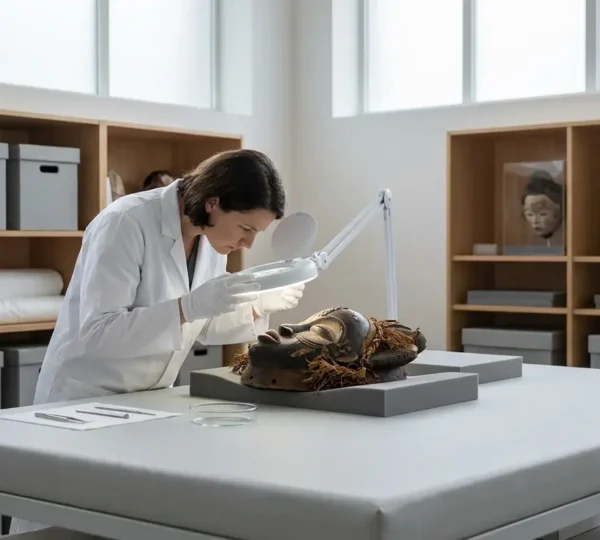
How to Display Sacred Masks Respectfully Without Violating Taboos?
Ethical stewardship of a sacred mask requires treating it not as an inert object, but as a living entity with its own set of cultural and spiritual rules. Display decisions must go beyond aesthetics to honor the mask’s original function,…
Read more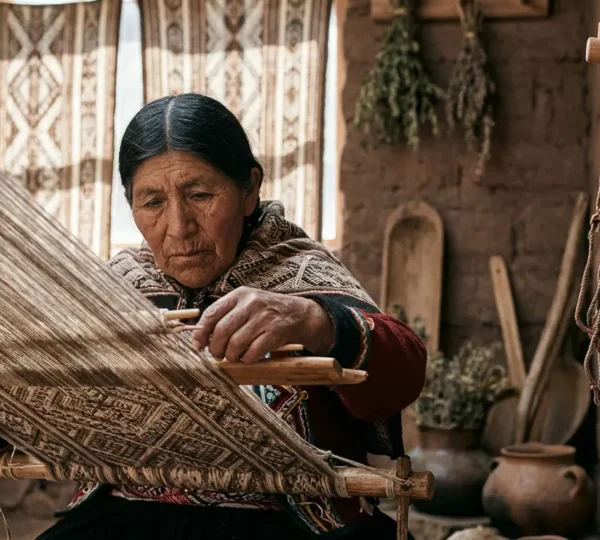
How Ancient Andean Weavers Coded Data into Textiles Before Computers?
The physical structure of ancient Andean textiles was not merely a canvas for information, but a sophisticated data architecture in itself. High thread counts and specific weaving techniques created a high-density medium for complex data, far surpassing contemporary technologies. The…
Read more
How to Distinguish Ritual-Used Masks from “Airport Art” Souvenirs?
In summary: Authenticity is proven by a forensic analysis of wear, not just its presence. Focus on the specific location and nature of patina. Traditional adze carving leaves distinct, rhythmic facets, unlike the smooth, uniform finish of modern sandpaper. –…
Read more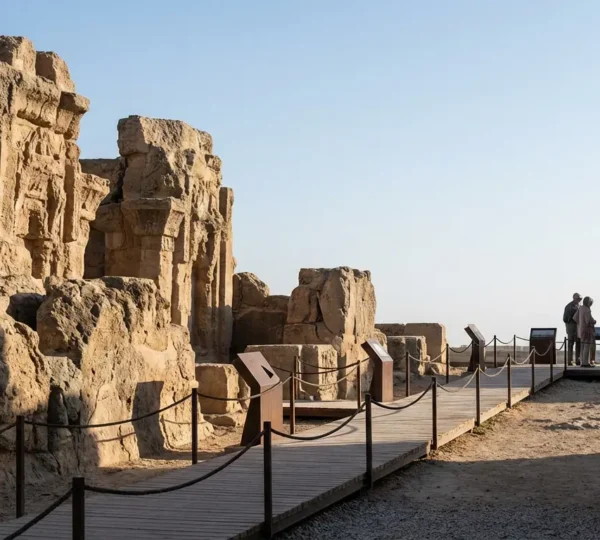
How Does UNESCO Status Actually Change the Tourism Impact on a Heritage Site?
Achieving UNESCO status is not the finish line; it’s the start of a new, more complex operational challenge where visitor footfall becomes a direct factor in site degradation and economic stability. The physical impact of tourism (erosion, wear) often accelerates…
Read more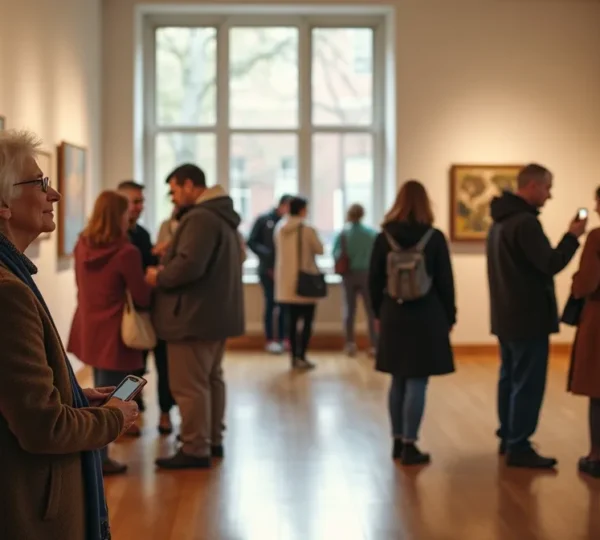
How to Increase Visitor Diversity in Your Public Gallery on a Zero Budget
True visitor diversity isn’t bought with expensive programs; it’s earned by fundamentally re-engineering a gallery’s internal systems to reflect the community it wishes to serve. Shift from measuring ticket sales to tracking meaningful engagement metrics like dwell time and repeat…
Read more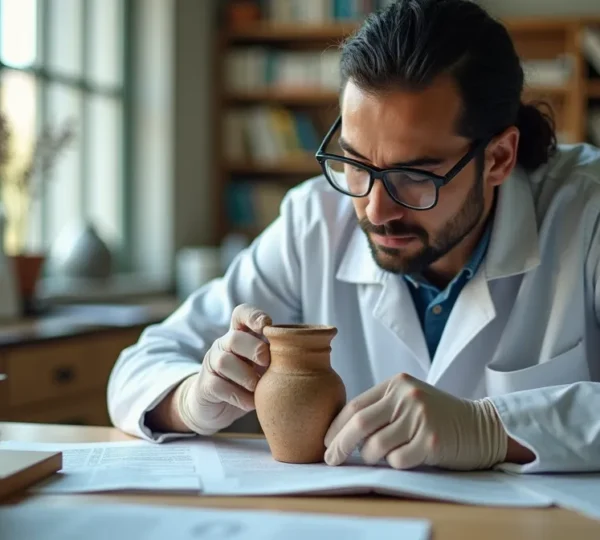
How to Verify the Provenance of a Pre-Columbian Artifact Before Buying?
Successfully acquiring a Pre-Columbian artifact depends less on the documents you’re given and more on your ability to build a defensible legal argument for its ownership history. Federal seizure is a real risk for items lacking clear, pre-1970 export licenses…
Read more
How to Digitize a Collection Without Losing Its Soul: A Guide to Preserving Historical Context
Successful digitization is not defined by the resolution of a scan, but by the depth of the story you preserve with it. The true task for a heritage officer is translating an object’s intangible context—its history, use, and cultural weight—into…
Read more