Sculpture & decorative arts
Sculpture and decorative arts represent one of humanity’s oldest creative pursuits, transforming raw materials into three-dimensional forms that can inspire, commemorate, or enhance our daily lives. Whether you’re drawn to monumental bronze statues, delicate ceramics, or functional furniture that doubles as art, this field combines technical mastery with artistic vision in uniquely tangible ways. Unlike two-dimensional arts, sculptural works exist in physical space, demanding careful consideration of materials, structural integrity, and environmental factors.
For those beginning their journey into sculpture and decorative arts—whether as creators, collectors, or simply curious enthusiasts—the sheer breadth of techniques and materials can seem overwhelming. From understanding why certain stones resist weathering better than others, to mastering the chemistry behind a perfect ceramic glaze, each discipline carries its own vocabulary and skill set. This article provides a comprehensive foundation, exploring the essential processes, material considerations, and preservation techniques that define this diverse artistic landscape.
Understanding Materials: The Foundation of Three-Dimensional Art
Every successful sculpture begins with a critical decision: material selection. The choice between bronze, stone, clay, wood, or modern composites fundamentally shapes not only the aesthetic outcome but also the fabrication process, longevity, and maintenance requirements of the finished work.
Evaluating Material Properties for Structural Success
When working in three dimensions, artists and fabricators must consider tensile strength—the material’s ability to resist breaking under tension. Think of it like choosing between a rubber band and a metal wire: both can span a distance, but they behave completely differently under stress. Bronze can support delicate, extended forms like outstretched arms, while certain stones might fracture under similar configurations. Testing stone quality before committing to a large sculpture involves examining the grain structure, porosity, and historical weathering patterns of the specific quarry block.
Natural Versus Manufactured Materials
The debate between cast stone and natural stone illustrates a broader conversation in decorative arts. Natural stone offers unique veining, color variations, and a geological history spanning millennia. Cast stone—a manufactured blend of aggregates and binders—provides consistency, lighter weight, and often lower cost. Neither is inherently superior; context determines appropriateness. A garden ornament might thrive in cast stone, while a museum-quality sculpture demands the authenticity of Carrara marble or Tennessee limestone.
When combining different materials in a single work, artists must prevent galvanic corrosion, which occurs when dissimilar metals contact each other in the presence of moisture. This electrochemical reaction can destroy a carefully crafted piece within years. Proper isolation using non-conductive gaskets or coatings preserves the integrity of mixed-media sculptures.
Weight Distribution and Structural Planning
Optimizing weight distribution determines whether a sculpture stands for decades or topples during installation. Large-scale works often require internal armatures—skeletal frameworks that bear the load while remaining invisible. The principle resembles how steel beams support a building’s decorative facade: the structure and the art work together, neither compromising the other.
Bronze Casting: From Molten Metal to Finished Sculpture
Bronze casting remains one of sculpture’s most revered yet technically demanding processes. The transformation of an artist’s original concept into permanent metal involves multiple specialists, significant costs, and carefully sequenced steps where a single error can compromise months of work.
The Lost Wax Method and Alternative Approaches
The lost wax casting process, used since ancient times, begins with creating a detailed wax replica of the desired sculpture. This wax model is then encased in a heat-resistant mold material. When heated, the wax melts away (hence “lost”), leaving a perfect negative space into which molten bronze flows. The result captures extraordinary detail—every fingerprint and texture the artist impressed into the wax.
Sand casting offers a faster, more economical alternative suitable for simpler forms or industrial applications. Instead of wax, a pattern is pressed into specially formulated sand to create the mold cavity. While less expensive, sand casting typically cannot achieve the fine detail or complex undercuts possible with lost wax techniques.
Understanding the Investment: Mold Costs and Production Timelines
Prospective clients often experience sticker shock when foundries quote mold costs. A ceramic shell mold for lost wax casting must withstand temperatures exceeding 2,000 degrees Fahrenheit while maintaining dimensional accuracy. For edition works, this initial investment gets amortized across multiple casts, but for one-of-a-kind pieces, it represents a significant portion of the total budget.
The production timeline typically unfolds in distinct phases:
- Wax preparation and refinement (adjusting thickness, adding vents and gates)
- Shell building through repeated dipping and drying cycles
- Burnout (removing wax and hardening the shell)
- Pouring molten bronze at precise temperatures
- Shell removal and metal chasing (grinding away casting artifacts)
- Patination and finishing
Each phase demands patience. Rushing any step invites casting flaws—air bubbles, incomplete fills, or cracking—that may not become apparent until substantial resources have been committed.
Preserving Outdoor Sculpture: Protection Against the Elements
Placing sculpture outdoors extends its audience but exposes it to relentless environmental challenges. Rain, temperature fluctuations, biological colonization, and atmospheric pollutants wage constant war against even the most durable materials.
Biological Threats and Treatment Options
Within months of installation, outdoor statuary often develops biological growth: algae, lichen, moss, and fungal colonies that thrive on moisture-retaining surfaces. While some collectors appreciate the aged patina this creates, unchecked growth can trap moisture against the substrate, accelerating deterioration. The choice between biocide treatment and manual cleaning depends on the material and setting. Chemical biocides efficiently kill organisms but may discolor porous stones or harm surrounding plantings. Manual cleaning with soft brushes and appropriate cleansers takes longer but offers precision and environmental gentleness.
Protective Coatings and Their Application
Applying protective coatings creates a sacrificial barrier between the sculpture and the environment. For bronze, this might mean a specialized wax applied over the patina. For stone, breathable sealers allow internal moisture to escape while repelling external water—imagine a rain jacket for your sculpture that prevents rain from entering while letting perspiration evaporate.
These coatings aren’t permanent. Establishing regular maintenance cycles—perhaps annually for harsh climates, every few years for protected locations—prevents minor issues from becoming major restoration projects.
Preventing Freeze-Thaw Damage
In cold climates, freeze-thaw cycles pose the greatest threat to porous materials. Water enters tiny cracks, freezes and expands with tremendous force, then thaws and penetrates deeper. Over seasons, this relentless process can fracture even granite. Preventive measures include ensuring proper drainage (water shouldn’t pool on horizontal surfaces), applying penetrating sealers, and in extreme cases, seasonal protection or indoor storage for vulnerable pieces.
Stone Carving: The Ancient Art of Subtractive Sculpture
Unlike additive processes where material is built up, stone sculpture is fundamentally subtractive—removing everything that isn’t the intended form. This irreversible nature demands careful planning, patience, and respect for the material’s inherent qualities.
Tools of the Trade: Selecting the Right Chisel
Stone carving employs a specialized arsenal of chisels, each designed for specific tasks. Point chisels remove large amounts of material during initial roughing. Tooth chisels (with serrated edges) refine the form. Flat chisels create smooth planes. Selecting the appropriate tool for each phase is like a chef choosing knives: the right implement makes the work safer, faster, and more controlled.
The debate between pneumatic tools and traditional hand tools divides the carving community. Pneumatic equipment dramatically accelerates material removal, making ambitious projects feasible within realistic timeframes. Traditionalists argue that hand tools provide superior sensitivity and connection to the material. Most contemporary sculptors employ both, using power tools for roughing-out and hand tools for detailed finishing.
Technique Considerations: Avoiding Common Pitfalls
“Stunning” the stone—creating invisible internal fractures through excessive force—represents a carver’s nightmare. The damage may not appear immediately, but weeks later the sculpture can spontaneously crack along these stress lines. Controlled, measured strikes and reading the stone’s feedback prevent this frustrating outcome.
Optimizing the roughing-out phase establishes the sculpture’s fundamental proportions and gestures. Many beginners rush through this stage, eager to see details emerge, only to discover the overall composition is compromised. Think of it as sketching before painting: time invested in getting the big picture right pays dividends throughout the remaining process.
Finishing: Polishing Without Losing Form
Achieving a polished surface requires progressing through increasingly fine abrasives—perhaps starting with 60-grit and advancing to 3,000-grit or beyond. The challenge lies in maintaining the crisp edges and precise planes established during carving. Over-enthusiastic polishing can round over details and muddle the form’s clarity. Experienced carvers polish intentionally, varying surface treatments to enhance the composition rather than uniformly smoothing everything.
Patination Techniques: Bringing Color and Character to Metal
Raw bronze emerges from the foundry in a reddish-golden state. Through chemical coloration, artists transform this base metal into rich browns, verdant greens, deep blacks, or vibrant blues—a process called patination that combines chemistry, heat, and technique in equal measure.
Hot Patina Versus Cold Patina Approaches
Hot patination involves heating the metal surface (often with torches) then applying chemical solutions that react with the warm bronze. The heat accelerates the chemical reactions and allows for real-time color development that the artist can observe and control. This immediate feedback enables subtle blending and tonal variation. Cold patination applies chemicals to room-temperature metal, requiring longer reaction times but offering different color possibilities and reduced equipment requirements.
Neither method is universally superior. Hot patina generally creates more durable, integrated surface colors. Cold patina can achieve certain hues impossible with heat and poses less risk of warping thin sections. Many patinators master both, selecting the appropriate approach for each project’s requirements.
Layering Chemicals for Depth and Complexity
The most compelling patinas rarely result from a single chemical application. Instead, artists build layered colors—perhaps starting with a brown base, adding green highlights in recessed areas, then burnishing raised surfaces to reveal the underlying bronze. This layering mimics natural aging patterns and creates visual richness that reads as authentic rather than artificial.
Controlling heat application proves crucial during this process. Too much heat drives the chemicals too deep or burns them off entirely. Insufficient heat prevents adequate reaction. Skilled patinators develop an intuitive sense for temperature, often gauging it by how quickly water droplets dance and evaporate on the surface.
Preventing Bronze Disease and Sealing
Bronze disease—a progressive corrosion caused by chloride contamination—can destroy improperly maintained bronzes. It appears as powdery, pale green spots that spread like an infection. Prevention begins with proper cleaning before patination and continues with appropriate sealing after the desired colors develop. The sealing process, typically involving wax applications, locks in the patina while providing moisture resistance. This protective layer requires periodic renewal, making it part of the sculpture’s ongoing care rather than a one-time treatment.
Collecting Decorative Arts: Function Meets Beauty
Collecting and integrating functional art into daily life represents a distinctive approach to art appreciation. Unlike paintings that hang passively on walls, decorative arts pieces—ceramic vessels, art furniture, sculptural lighting—actively participate in domestic routines while elevating the aesthetic environment.
Understanding Quality Markers and Authentication
Identifying maker’s marks provides the first step in authentication and valuation. These stamps, signatures, or symbols link an object to its creator and period. However, marks can be forged, and not all quality pieces bear clear attribution. Understanding material qualities helps: porcelain hardness varies dramatically between soft-paste and hard-paste formulations, with genuine hard-paste porcelain producing a clear ring when gently tapped.
The restored versus original condition debate significantly impacts value and collecting philosophy. Some collectors prize only untouched pieces, accepting chips and wear as honest history. Others appreciate skilled restoration that allows fuller enjoyment of the object. Neither position is wrong, but transparency matters: buyers deserve accurate disclosure about any interventions.
Display and Care Considerations
Displaying furniture safely—particularly pieces with sculptural elements or fragile veneers—requires attention to environmental conditions. Dramatic humidity fluctuations cause wood to expand and contract, potentially cracking joinery or lifting inlays. Direct sunlight fades fabrics and can degrade certain finishes. These aren’t reasons to avoid using decorative pieces, but awareness allows appropriate placement and preventive care.
Timing the cleaning cycle for decorative objects balances preservation with practicality. Overly frequent cleaning risks gradual wear to gilding, painted surfaces, or patinas. Neglect allows damaging dirt accumulation. Most conservators recommend gentle dusting as needed and more thorough cleaning annually or when visibly soiled, using materials appropriate to the specific object.
Ceramic Glazing: Science and Artistry Combined
Glazing transforms porous clay into functional, waterproof ceramics while offering nearly limitless decorative possibilities. This final firing stage involves complex chemistry, where ingredients melt into a glass-like coating that fuses permanently with the clay body.
Technical Considerations for Successful Glazing
Calculating thermal expansion compatibility between clay body and glaze prevents crazing (fine surface cracks) or shivering (glaze peeling). Clay and glaze expand when heated and contract when cooled, but at different rates. If the mismatch is too great, the glaze cannot accommodate the stress. It’s similar to wearing a shirt that’s slightly too small—you can get it on, but movement creates uncomfortable pulling.
When glazing functional ceramics, testing for food safety becomes essential. Not all beautiful glazes are safe for dinnerware. Certain colorants, particularly some lead and cadmium compounds, can leach into acidic foods. Reputable contemporary potters use food-safe formulations and conduct appropriate testing, but collectors of older pieces should exercise caution with items intended for food use.
Surface Qualities and Common Problems
The choice between matte and gloss glazes affects both aesthetics and durability. Glossy surfaces resist staining and clean easily but show scratches more readily. Matte glazes offer subtle, sophisticated surfaces but may be more porous and prone to marking. Understanding these trade-offs helps in selecting appropriate glazes for each piece’s intended function.
Preventing crawling—where glaze pulls away from the clay surface leaving bare patches—requires attention to surface preparation and glaze application thickness. Dusty or oily bisqueware prevents proper adhesion, as does applying glaze too thickly. The defect often doesn’t appear until the final firing, making prevention through proper technique far preferable to remediation.
Optimizing the Firing Schedule
The firing schedule—the precise sequence of temperature increases, holds, and decreases—determines whether glazes mature properly. Rushing the process by climbing too quickly to peak temperature can trap gases that cause pinholing or blistering. Insufficient soaking time at peak temperature prevents complete glaze maturation. Each glaze formulation has optimal firing parameters, and experienced ceramicists treat their kiln controllers like musical instruments, fine-tuning the program to achieve consistent, desired results.
Sculpture and decorative arts encompass extraordinary technical and creative diversity. Whether you’re drawn to the permanence of carved stone, the alchemy of bronze casting, the chemistry of glazes, or the hunt for exceptional decorative pieces, each path offers lifelong learning opportunities. The techniques outlined here represent starting points rather than destinations—foundations upon which deeper exploration and mastery can be built. As you develop your knowledge and skills, remember that the most successful practitioners balance technical precision with artistic vision, allowing material properties and creative intention to work in harmony.
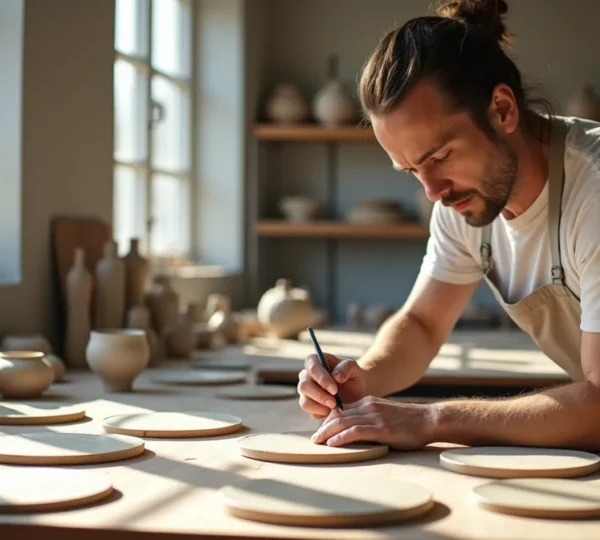
The Science of a Flawless Glaze: How to Formulate for Zero Crazing After 5 Years
The delayed failure of a glaze is not bad luck; it’s a predictable materials science problem that can be permanently solved by mastering glaze-to-body fit. Crazing is caused by a mismatch in the Coefficient of Thermal Expansion (CTE), where the…
Read more
How to Use Antique Porcelain Daily Without Destroying Its Value?
Contrary to the ‘hands-off’ approach, using your antiques is not only possible but desirable. The key isn’t a list of fear-based rules, but an understanding of the material science behind each piece—from porcelain’s hardness to wood’s reaction to humidity. This…
Read more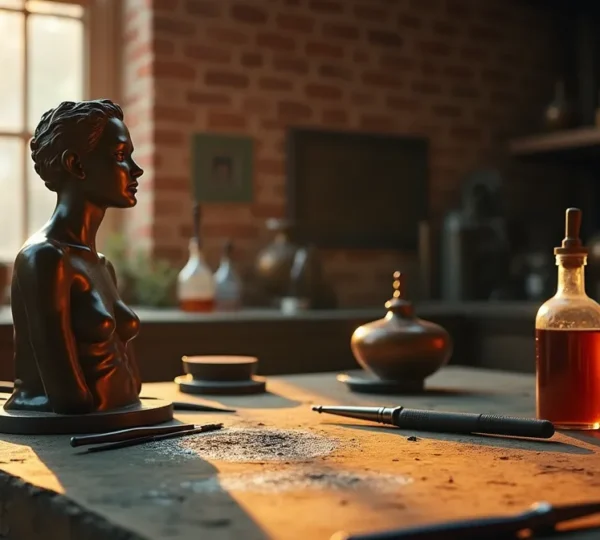
The Alchemist’s Guide: How to Achieve a “Renaissance Brown” Patina on Bronze Without Catastrophe
Achieving a masterful bronze patina isn’t about finding the right recipe; it’s about mastering the subtle alchemical dialogue between heat, chemistry, and timing. Success hinges on precise temperature control, not just applying heat, to prevent immediate flaking and ensure chemical…
Read more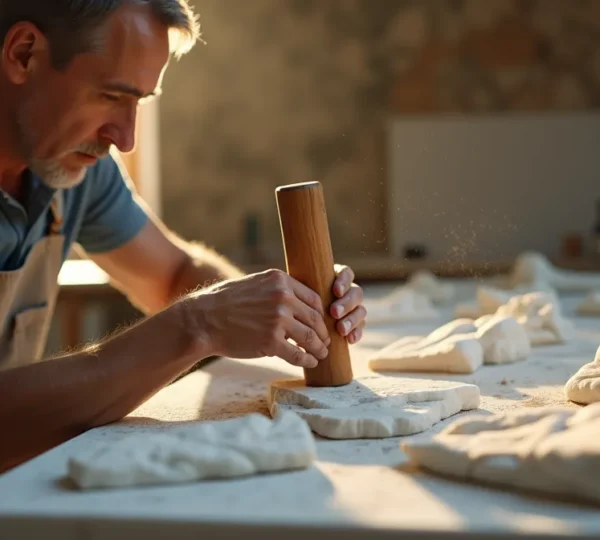
How to Carve Deep Folds in Marble Without Snapping the Stone?
The secret to carving deep, unbroken marble folds lies not in cautious hesitation, but in scientifically managing material stress. Recognize early signs of material fatigue—like changes in sound and dust—to stop cracks before they start. Understand that the angle and…
Read more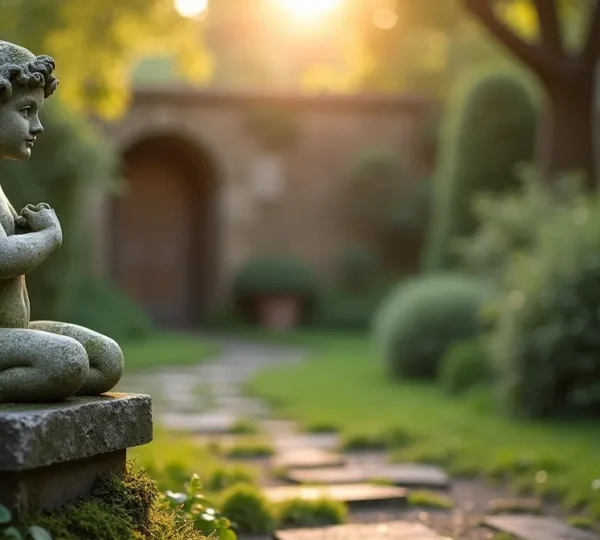
A Gentle Guide to Cleaning Lichen from a Limestone Statue Without Causing Harm
In summary: Avoid pressure washing at all costs; it forces water into the porous limestone, leading to severe damage. Opt for a pH-neutral, approved biological solution instead of harsh chemicals or aggressive scrubbing. Protect statues in winter with a breathable…
Read more
How to Reduce Foundry Costs Without Sacrificing the Quality of the Cast?
The single most effective way to lower foundry costs is not by haggling over the final price, but by making strategic, technically-informed decisions during pre-production. Simplifying undercuts and perfecting your wax chasing can eliminate the most significant and expensive foundry…
Read more
Why Bronze Lasts 3,000 Years While Zinc Crumbles in 50?
The longevity of an outdoor sculpture is not a matter of chance, but of applied material science. Material properties like tensile strength and porosity are more critical than simple weight or appearance in predicting durability. Invisible threats, such as galvanic…
Read more