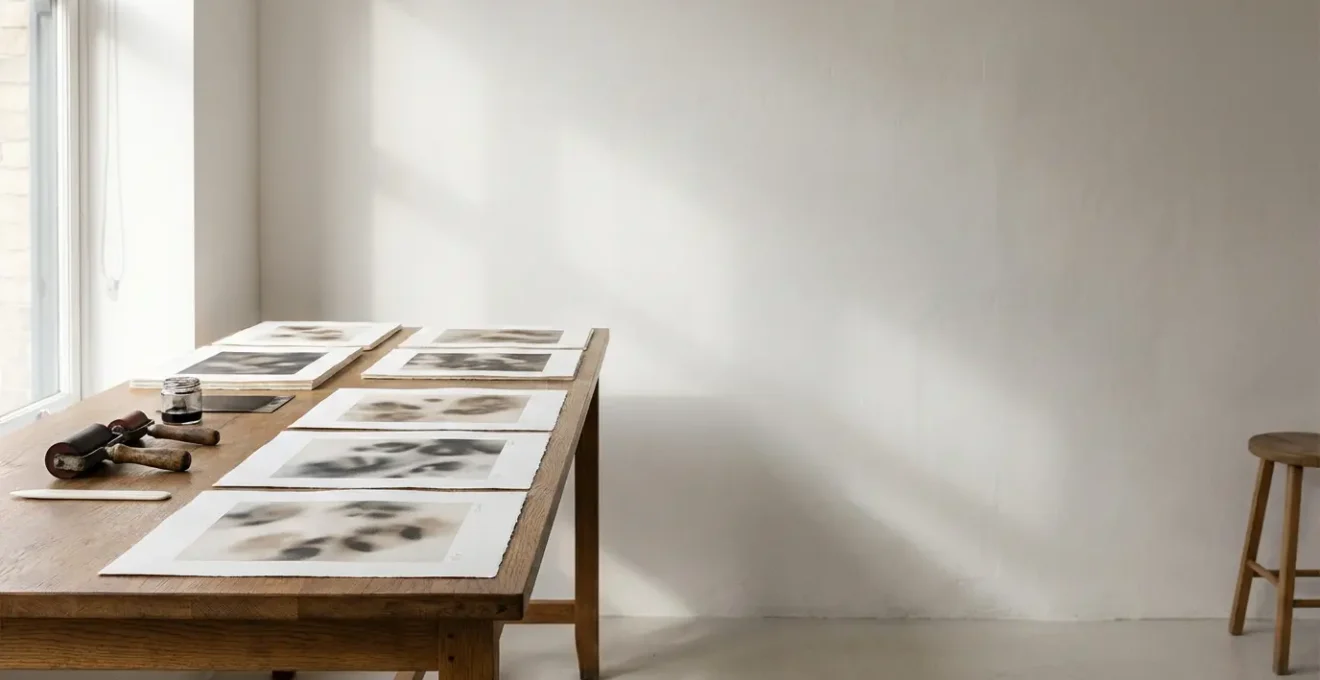
The financial success of a limited edition print isn’t luck; it’s a direct result of a deliberate market strategy built on perceived scarcity and reputational integrity.
- The size of an edition is the primary market signal for its collectibility and urgency.
- Pricing must escalate as an edition sells out to reward early collectors and capture demand.
- The artist’s promise of limitation is a core asset that must be protected with absolute integrity.
Recommendation: Treat every print as a financial asset with a clear strategic plan from its creation to its final sale.
For any visual artist entering the print market, the question of edition size feels both fundamental and fraught with anxiety. It’s a decision that seems to balance artistic accessibility against commercial value. The common advice often circles around basic rules of scarcity, but this view is incomplete. A successful print strategy is not merely about limiting supply; it’s about actively architecting value, communicating intent to the market, and building a foundation for a sustainable career. Viewing each choice—from the edition number to the signature placement—as a deliberate market signal is the first step toward moving from simply selling prints to building a collectible body of work.
This guide moves beyond the elementary rules. We will deconstruct the strategic thinking behind editioning, pricing, and protecting your work’s integrity. We won’t just tell you what to do; we will explain the market logic for why these standards exist and how you can leverage them. The goal is to empower you with a framework for making informed decisions that maximize not just the immediate sale, but the long-term value of your entire artistic reputation.
This article provides a comprehensive roadmap for navigating the strategic complexities of the fine art print market. You will learn the principles of edition sizing, the protocols for professional presentation, and the financial strategies that separate successful artists from the crowd. Let’s explore how to turn your prints into coveted assets.
Summary: A Strategic Guide to Numbering, Pricing, and Value for Limited Edition Prints
- Why a run of 10 prints sells out faster than a run of 100?
- How to sign and title a print according to gallery standards?
- Artist Proofs (A.P.) vs. Numbered Prints: What is the acceptable ratio?
- The integrity error of reprinting a “limited” edition that ruins your reputation
- When to raise the price of the remaining prints in a selling-out edition?
- Why NFTs (despite the crash) solved the “right click save” problem for provenance?
- Insurance Value vs. Resale Value: Why the numbers are different for the same painting?
- How to Spot the Next Blue-Chip Artist at a Graduate Degree Show?
Why a run of 10 prints sells out faster than a run of 100?
The psychology of collecting is driven by scarcity. A smaller edition size is a powerful market signal that communicates exclusivity and urgency, compelling collectors to act quickly for fear of missing out. An edition of 10 feels rare and intimate, a direct-to-collector opportunity. An edition of 100, while still limited, can feel more like a commercial product, reducing the immediate impulse to purchase. The perceived value and desirability are inversely proportional to the edition size. This is why many contemporary art experts recommend edition sizes between 10 to 50 for emerging and mid-career artists aiming to build a collector base.
The strategic choice depends on your career goals. If your objective is to have your work become highly collectible, a low edition size is paramount. It builds a narrative of scarcity that can drive up secondary market values over time. However, if your primary goal is to generate a consistent income stream and make your work more accessible, a larger edition (e.g., 100-250) might be more appropriate. The key is intentionality. A larger edition is not inherently “worse,” but it sends a different signal to the market. The danger lies in creating an edition so large that the term “limited” becomes arbitrary, eroding the very sense of specialness that attracts serious collectors.
How to sign and title a print according to gallery standards?
The way a print is signed and numbered is not mere tradition; it is a standardized language that communicates authenticity and professionalism to galleries, collectors, and auction houses. Adhering to these conventions demonstrates that you understand the market you are operating in and respect its history. The industry standard is clear and should be followed meticulously to avoid any ambiguity about the print’s status. Using a hard, sharp pencil (2H or harder) is recommended, as graphite is archival and bites into the paper, making it harder to forge than ink.
The universally accepted convention for placement is as follows:
- Edition Number: Placed in the bottom-left margin, written as a fraction (e.g., 1/20).
- Title: Placed in the bottom-center margin. This is optional; some artists prefer a cleaner look and omit it.
- Signature and Year: Placed in the bottom-right margin. Your signature should be consistent across all your works.
This precise structure provides all the necessary information at a glance. As the industry standard dictates, this specific placement allows for quick verification and cataloging, reinforcing the print’s status as a legitimate work of art.
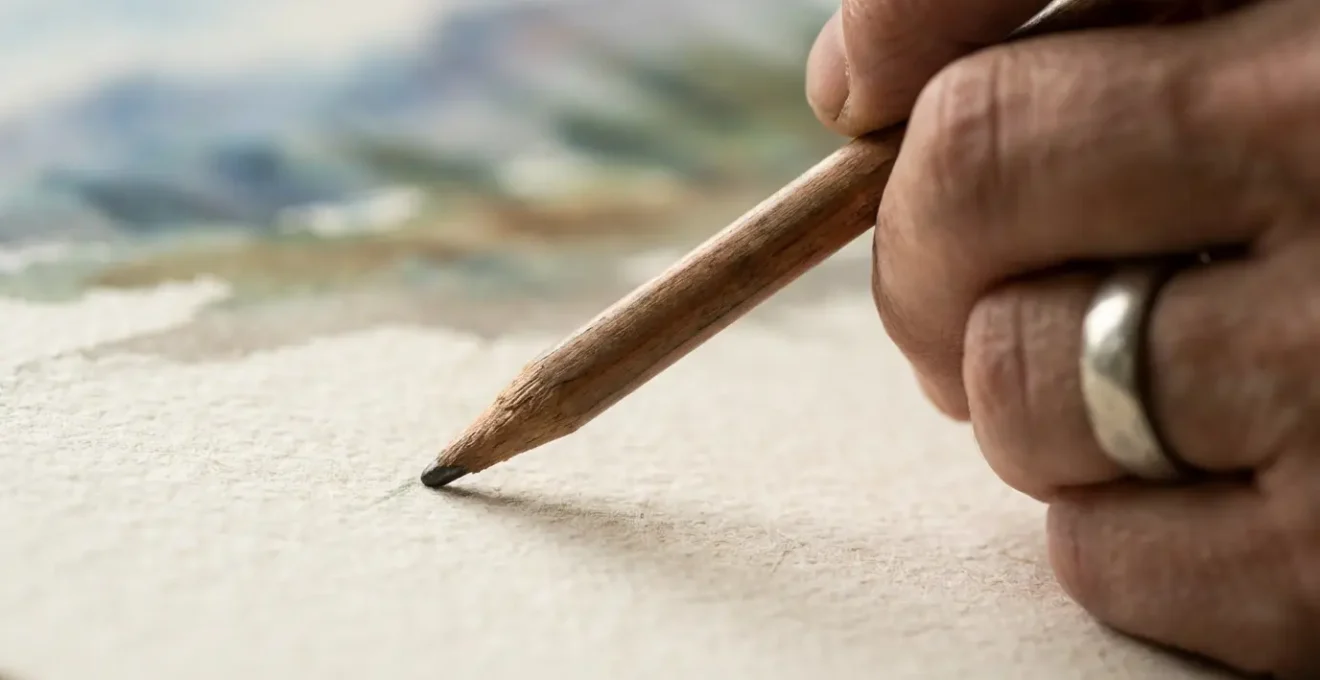
As this image illustrates, the act of signing is the final touch of the artist’s hand, transforming a multiple into a unique object within an edition. This methodical process is a crucial part of the provenance architecture, establishing a clear and verifiable link between the artist and the work.
Artist Proofs (A.P.) vs. Numbered Prints: What is the acceptable ratio?
Within the world of printmaking, not all prints from a single image are considered equal. Artist’s Proofs (A.P. or E.A. for the French *épreuve d’artiste*) are a small number of prints set aside from the main numbered edition. Historically, these were the first impressions pulled from the plate for the artist to check and approve, but today they function as a distinct, more exclusive subset of the edition. The key question for artists is determining the correct ratio of A.P.s to maintain market credibility. As the College Art Association’s Fine Art Print Publication Guidelines state, “As a general guide, the number of artist proofs should not exceed 10% of the number of prints in the edition.”
This 10% rule is the gold standard for value integrity. Exceeding this ratio can be perceived as an attempt to artificially inflate the supply of a “limited” edition, which can damage an artist’s reputation. A.P.s are highly coveted by collectors precisely because of their rarity and their direct connection to the artist’s personal collection. This exclusivity often translates to a higher market value compared to the standard numbered prints. The table below breaks down the hierarchy within a typical print edition.
| Edition Type | Typical Percentage | Market Value | Collector Appeal |
|---|---|---|---|
| Numbered Edition | 90% of total run | Base value | Standard collectibility |
| Artist’s Proofs (A/P) | 10% of edition | More exclusive and valuable | High – tied to artist’s collection |
| Printer’s Proofs (P/P) | One per printer involved | Even more exclusive than A/P | Very high – extreme rarity |
| Bon à Tirer (BAT) | One per edition | Highest value | The standard reference print |
Understanding this hierarchy is crucial. The ‘Bon à Tirer’ (BAT), French for “good to pull,” is the single print that meets the artist’s standard, against which all other prints in the edition are compared. It is often considered the most valuable single print. By managing these different proof types transparently and within accepted ratios, an artist builds trust and adds layers of desirability to their work.
The integrity error of reprinting a “limited” edition that ruins your reputation
The term “limited edition” is a solemn promise from the artist to the collector: the number of prints stated will never be exceeded. Breaking this promise is the single most damaging mistake an artist can make, as it irrevocably shatters the foundation of trust and scarcity upon which the entire market is built. It is an act of reputational collateral default. Once an edition is announced as “limited to 25,” creating a 26th print (outside of the accepted A.P./P.P. ratios) is a betrayal that devalues the entire edition and permanently tarnishes the artist’s name. Collectors talk, and news of such a breach of integrity spreads quickly, making it difficult to regain trust.
Serious artists and publishers go to great lengths to guarantee the integrity of an edition. The most extreme and definitive method is the physical destruction of the master plate, screen, or digital file after the run is complete. This act provides an ironclad guarantee that no more prints can ever be produced from the original source, cementing the edition’s finite nature. While this may seem dramatic, it is a powerful marketing statement that reinforces the value and scarcity of the prints already in circulation. However, it’s important to note that artists can legitimately create different editions of the same image if the variations are transparently communicated. For example, an artist can release an edition of 100 at a 4×6 inch size and a separate, more exclusive edition of 10 at a 16×24 inch size. As long as each edition is clearly defined and its limits respected, integrity is maintained.
Action Plan: Maintaining Edition Integrity
- Commit and Document: Before selling print #1, formally document the total edition size, number of A.P.s, and any other proofs. This document is your internal contract.
- Practice Definitive Destruction: To ensure the edition’s finality, create a protocol for destroying the creation materials (e.g., deleting high-res files and backups, striking a physical plate) and document the act.
- Implement Transparent Versioning: If releasing the same image at different sizes, clearly label each edition as such (e.g., “Edition of 50 at 8×10”, “Edition of 10 at 20×30”). Never mix them.
- Issue Certificates of Authenticity (COA): Each print sold from a limited edition must be accompanied by a COA that restates the edition size and the specific number of that print, signed by the artist.
- Maintain a Public Registry: Keep a meticulous and, if possible, public record of each numbered print and its original buyer to create an unimpeachable provenance trail from day one.
When to raise the price of the remaining prints in a selling-out edition?
Implementing a tiered or progressive pricing strategy is a sophisticated technique that rewards early collectors and allows the artist to capitalize on rising demand. The core concept is simple: as an edition sells out and its scarcity increases, the price of the remaining prints should also increase. This strategy, which I call “pricing velocity,” turns a selling edition into a dynamic event rather than a static offering. It creates a powerful incentive for collectors to buy early, knowing the price will only go up. This is a standard practice in established galleries and a tool every serious artist should consider.
A common strategy is to divide the edition into tiers. For example, in an edition of 30, prints 1-10 might be sold at the base price, prints 11-20 at a 25% markup, and the final ten prints (21-30) at a 50% or higher markup. As described in the art market, “When galleries sell limited editioned artworks for the first time, they often sell them in number order. If there is high demand, galleries may raise the price of remaining unsold works. The print numbered 30/30 will be more expensive than 1/30—simply because it was the last to be sold.” This method validates the work’s increasing value in real-time. The final print of a sold-out edition is often the most expensive, symbolizing its ultimate rarity.
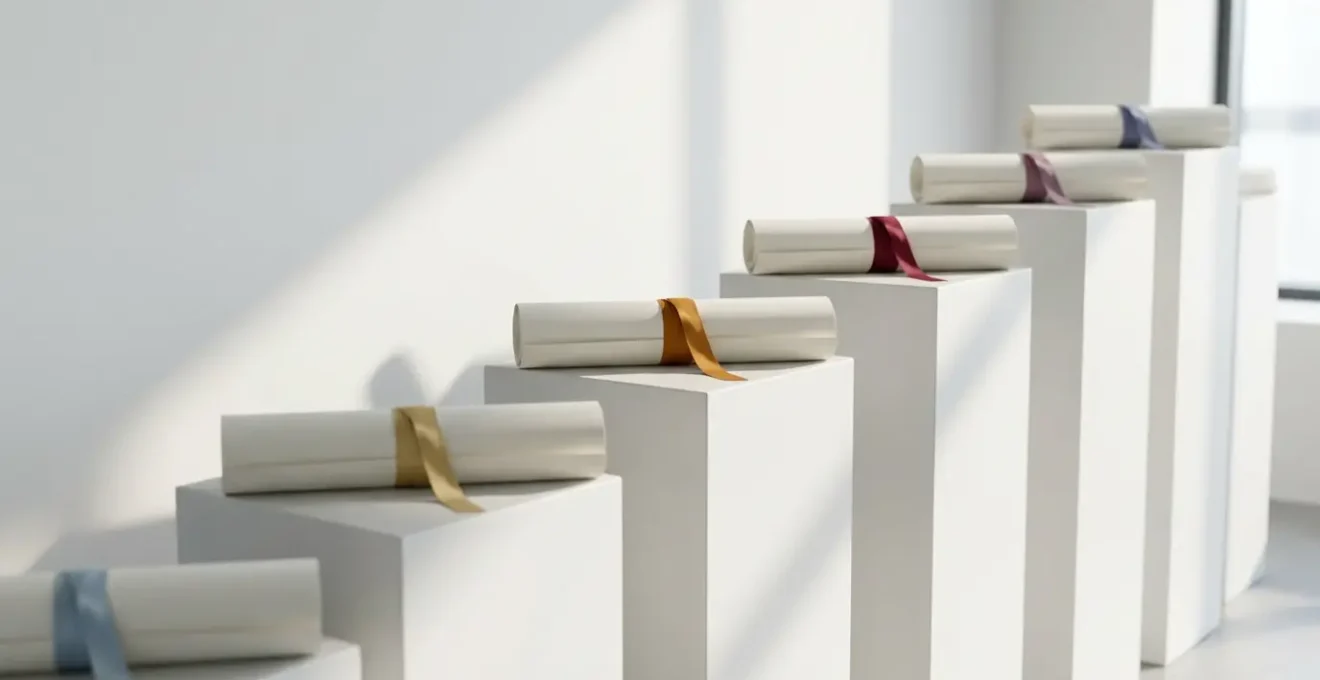
This visual metaphor of ascending forms perfectly captures the essence of progressive pricing. Each step up represents not just a higher price, but a new tier of confirmed market demand and value. Implementing this requires confidence and transparent communication with potential buyers, but it is a powerful way to build momentum and maximize revenue from a successful edition.
Why NFTs (despite the crash) solved the “right click save” problem for provenance?
The conversation around Non-Fungible Tokens (NFTs) has been dominated by market volatility and digital art speculation. It’s crucial to acknowledge the reality: market analysis showed that by late 2023, over 95% of NFT collections had zero monetary value. This speculative bubble burst has, for many, discredited the entire technology. However, to dismiss it entirely is to overlook the one problem it elegantly solved: creating a secure and verifiable chain of ownership, or provenance architecture. The infamous “right-click save” issue highlighted how easily a digital file could be copied, making it impossible to prove ownership of the “original.” NFTs changed that by creating a public, unchangeable ledger entry linked to a specific item.
The most compelling application of this technology for physical artists is not in selling JPEGs, but in revolutionizing the humble Certificate of Authenticity (COA). For centuries, the COA has been a piece of paper—easily lost, forged, or separated from the artwork it certifies. Innovative services are now bridging this gap by creating a “digital twin” for physical art. In this model, the artwork’s COA is minted as an NFT on a blockchain. This digital certificate is immutable, cannot be counterfeited, and is permanently linked to the physical piece, often through an embedded NFC chip or QR code. The case of The Fine Art Ledger (FAL) demonstrates this perfectly: they make an artwork’s certificate of authenticity an NFT tied to the physical art, verifiable with a simple mobile phone tap. This creates a secure, transparent, and easily transferable record of provenance that lives with the artwork forever, solving a problem that has plagued the art market for centuries.
Insurance Value vs. Resale Value: Why the numbers are different for the same painting?
For an artist or collector, understanding the distinction between insurance value and resale value is critical for both financial planning and market strategy. The two figures, while related to the same object, serve different purposes and are often significantly different. Insurance Value, or Retail Replacement Value, is typically the highest figure. It represents the full cost to replace a lost or damaged artwork with a similar piece from a retail gallery. This value is forward-looking and accounts for the gallery’s commission, framing, and other associated costs needed to acquire a replacement on the primary market.
On the other hand, Resale Value, or Fair Market Value, is the price a willing buyer would pay a willing seller in the current market, where neither is under compulsion to act. This is the price you would realistically receive if you sold the work today, for instance, through a consignment gallery or at auction. This value must account for the gallery’s or auction house’s commission. As ArtConnect Magazine notes, “If selling through a gallery, keep in mind that commission will be taken on works sold. This amount varies but is often around 50%.” Therefore, if a print’s insurance value is $2,000 (its retail price at a gallery), its resale value for the collector might only be $1,000 after the gallery takes its 50% cut. This difference is a fundamental piece of market economics that every artist must factor into their own pricing strategy.
Key Takeaways
- Scarcity is Strategy: Small, well-defined edition sizes are the most powerful tool for creating urgency and signaling long-term collectibility.
- Price Must Follow Demand: Implementing a tiered pricing model that raises the cost as an edition sells out rewards early buyers and maximizes revenue.
- Integrity is Your Brand: Your promise of a “limited” edition is absolute. Protecting it with transparent documentation and secure provenance is non-negotiable for a sustainable career.
How to Spot the Next Blue-Chip Artist at a Graduate Degree Show?
Identifying emerging talent with long-term potential is the holy grail for collectors. While a graduate show is a sea of raw talent, the artists who are likely to transition into “blue-chip” status often display more than just technical skill; they demonstrate a keen awareness of their own market. An artist who has already implemented a professional editioning strategy for their prints is signaling a high level of career-mindedness. They are not just making art; they are building a brand and an investable asset. When you see a student artist presenting work with clear, small edition sizes, professional documentation, and perhaps even a basic tiered pricing structure, you are witnessing the seeds of a professional career.
These artists understand the concepts we’ve discussed: that an edition of 5 is more coveted than 50, that Artist’s Proofs hold a special allure, and that distinctive iconography, when protected by scarcity, becomes incredibly valuable. They are already thinking about value integrity and provenance architecture. Spotting this strategic mindset amidst the creative energy of a degree show is a strong indicator of future success. These are the artists who understand they are entering a mature market. According to the 2024 ArtPrice Global Market Report, the fine art print market has a $473 million annual turnover, a figure that has doubled from 10 years ago, proving it is a serious and growing sector of the art world. Artists who treat it seriously from day one are the ones to watch.
Begin today by developing a clear editioning and pricing strategy for your next print release, transforming your artistic practice into a sustainable and valuable enterprise.