Most collectors believe spotting new talent is about having a ‘good eye.’ The reality is, it’s about deploying a good system.
- The most reliable leading indicator is peer validation; the artists that other artists are watching are the ones with momentum.
- Institutional endorsements like prestigious residencies and grants function as a critical pre-vetting process, signaling long-term potential.
- An artist’s future value is tied to their conceptual trajectory and the coherence of their vision, not just isolated technical brilliance.
Recommendation: Shift your focus from the aesthetic of a single piece to identifying the career-building signals that predict an artist’s journey into the blue-chip market.
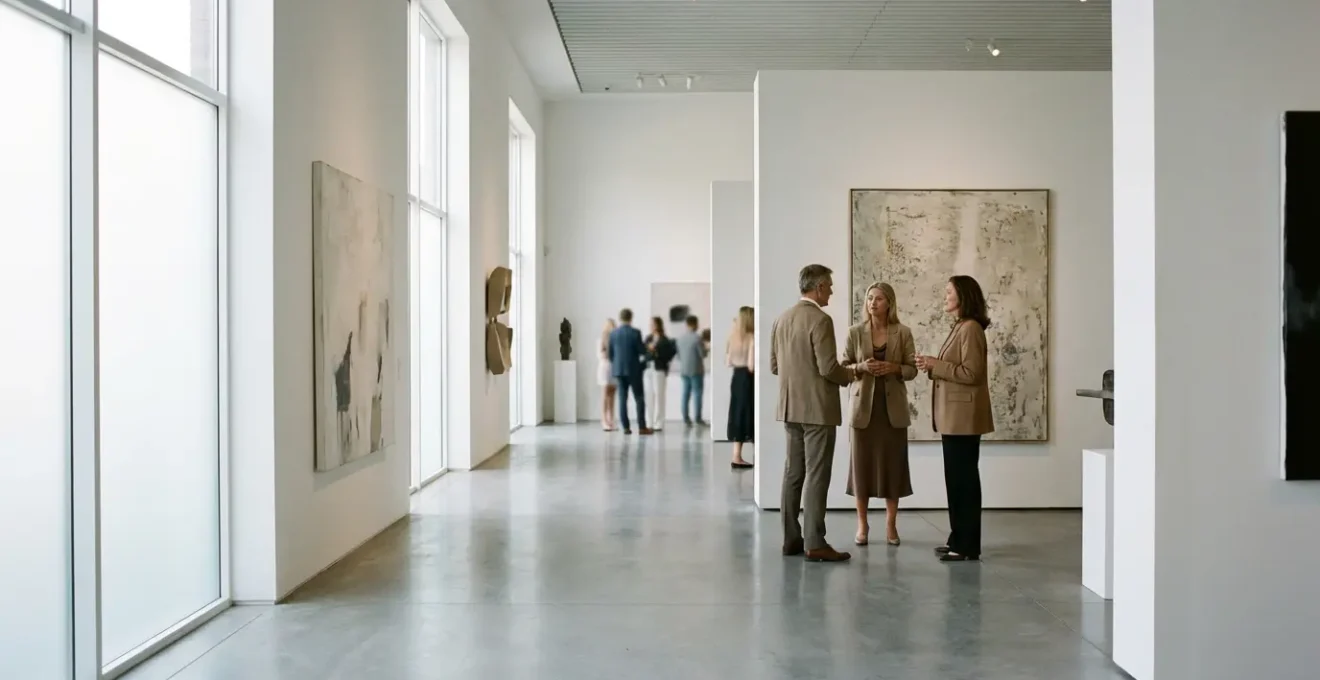
The air at a Master of Fine Arts (MFA) graduate show is electric with potential. It’s a chaotic, vibrant marketplace of ideas where hundreds of newly minted artists present their work, each hoping to be discovered. For a collector or gallerist, it feels like a treasure hunt without a map. The common advice often feels insufficient: “buy what you love,” “look for technical skill,” or “trust your gut.” While well-intentioned, this guidance is a lottery ticket, not an investment strategy. It overlooks the subtle, yet crucial, signals that separate a promising student from a future art-world fixture.
The challenge isn’t a lack of talent, but an abundance of it. How do you cut through the noise to identify the artists with genuine career longevity? The key is to stop looking for a masterpiece and start looking for a career in motion. This requires a shift in perspective—from a purely aesthetic evaluation to a market-savvy analysis of an artist’s ecosystem. It involves understanding the power of peer networks, decoding the language of institutional validation, and assessing the intellectual rigor that underpins the visual spectacle. An artist’s inclusion in certain circles, their ability to secure competitive residencies, and the conceptual daring of their work are all data points in a larger pattern.
This guide provides a framework for that analysis. We will deconstruct the signals that matter, moving beyond the surface to reveal the underlying structures that propel an artist’s career forward. By learning to read these signs, you can transform your visit to a graduate show from a game of chance into an exercise in strategic acquisition, identifying tomorrow’s blue-chip artists today, before their prices reflect their inevitable ascent.
To navigate this complex landscape, we will explore the key indicators of an emerging artist’s potential. The following sections break down the methodology for identifying true long-term value in the crowded world of graduate art shows.
Summary: A Collector’s System for Identifying Future Art Stars
- Why the artist that other artists are watching is the one you should buy?
- How to map an artist’s trajectory through prestigious residency acceptances?
- Technical Skill vs. Conceptual Daring: Which signals long-term career longevity?
- The derivative style mistake: buying an artist who looks like a cheaper version of a star
- When to buy: the window between the MFA show and the first solo gallery exhibition?
- Why you must compare an unknown artist to their documented peers, not the masters?
- Academic paper vs. Trade book: Which publishing path builds more authority?
- How to Appraise a Painting When the Artist Has No Auction Record?
Why the artist that other artists are watching is the one you should buy?
In the art world, the most potent and often earliest signal of an artist’s importance isn’t a glowing review from a critic or a sale at a major fair; it’s the quiet, consistent attention of their peers. When other talented artists are talking about, influenced by, or congregating around a specific individual’s work, it’s a powerful leading indicator of future significance. This “artist’s artist” phenomenon represents a form of peer-to-peer validation that predates mainstream recognition. Artists possess a unique and intimate understanding of material, technique, and conceptual innovation. When they collectively recognize something new and compelling in a peer’s work, it’s a sign that a genuine contribution is being made to the artistic dialogue.
This “whisper network” is a vital source of information for industry insiders. As curator Hitomi Iwasaki noted in an interview, one of the primary methods for discovering new talent is simply by asking other artists. She stresses that many ambitious artists underestimate the value of this network, but for curators, it’s an indispensable tool. As she stated for Artnet News, a primary source for discovering new artists is other artists. This insight is critical for collectors navigating a graduate show. Instead of only relying on your own eye, try to “read the room.” Observe where the other graduating artists are gathering. Listen to the conversations and note which names are mentioned with respect and excitement. This is often where the real energy of the show is concentrated.
The dynamic is clear at events like the New York Academy of Art’s MFA Thesis Exhibition, where the quality can range from standout to so-so. Amidst the vast display, certain pieces inevitably become focal points not just for visiting collectors, but for the students themselves. They recognize the technical breakthrough or the bold conceptual leap that sets a peer apart. This is the raw data of future success. Buying the artist that other artists are watching is a strategy based on the principle that those closest to the craft are the first to see the future.
How to map an artist’s trajectory through prestigious residency acceptances?
If peer validation is the whisper network, then a prestigious residency acceptance is the public announcement. Artist residencies are much more than just a free studio and time to work; they are a critical form of institutional endorsement. Acceptance into a highly competitive program acts as a powerful vetting mechanism. A panel of experienced curators, gallerists, and established artists has effectively pre-screened the applicant pool, signaling that the selected artist possesses a level of professionalism, conceptual rigor, and promise that merits significant investment.
The impact of these programs on an artist’s career cannot be overstated. They provide unparalleled networking opportunities, mentorship from leading figures, and a platform for experimentation that often leads to major breakthroughs. More importantly, the name of a top-tier residency on an artist’s CV is a mark of quality that the art market understands and values. It builds a narrative of success and seriousness long before the first major gallery show or auction result. Programs like Skowhegan, the Studio Museum in Harlem, or the MacDowell Colony are known career-launchers, and their alumni lists are a who’s who of contemporary art.
For instance, an analysis of career-launching residency programs reveals a history of success, with Skowhegan alone boasting alumni like Vito Acconci, Sanford Biggers, John Cage, and Alex Katz. For a collector, tracking these acceptances is a strategic way to map an artist’s upward trajectory. An artist who secures a spot in such a program shortly after their MFA show is on an accelerated path. Their work is not only being created in a high-stimulus environment but is also being seen by an influential audience of visiting curators and critics, laying the groundwork for future opportunities.
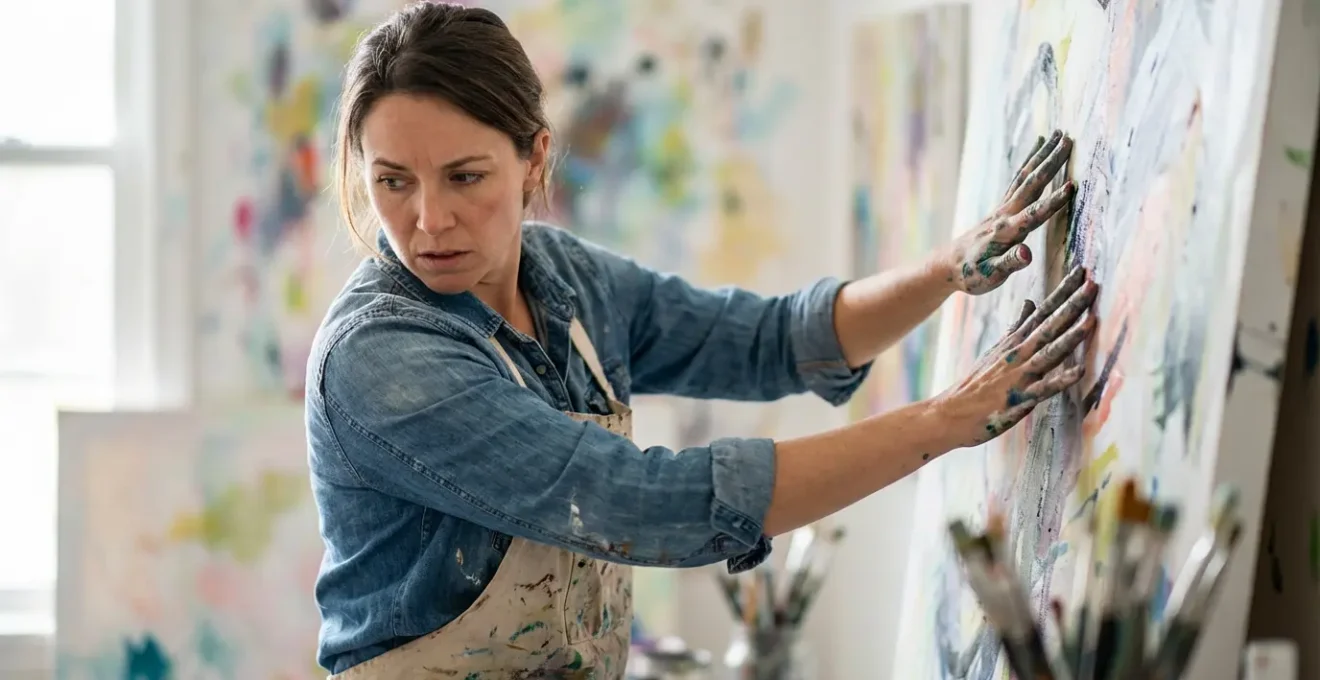
This focused studio time, away from commercial pressures, allows for the deep conceptual development that underpins a lasting career. When evaluating an emerging artist, look beyond the work itself and examine their CV for these institutional stamps of approval. They are among the most reliable indicators that you are looking at an artist with a tangible, professionally-vetted future.
Technical Skill vs. Conceptual Daring: Which signals long-term career longevity?
A common pitfall for new collectors is to be seduced by pure technical virtuosity. A flawlessly rendered photorealistic painting or a perfectly polished sculpture is impressive, but technical skill alone is not a reliable indicator of long-term success. In the contemporary art market, conceptual daring is the engine of longevity. While a baseline of technical competence is necessary to execute a vision, it is the vision itself—the ideas, the questions, and the unique perspective an artist brings—that creates lasting value. A technician can copy; an artist must invent.
Today’s most promising emerging artists are not just demonstrating craft; they are engaging with the world’s most pressing issues. As a review of the 2022 MFA class in Artsy magazine noted, many recent grads are tackling existential questions about identity, climate change, and societal structures. They are using their chosen media as tools for inquiry, not just for aesthetic decoration. This intellectual and emotional depth is what resonates with curators and creates a body of work that remains relevant over time. A career built on a powerful idea has endless avenues for exploration, while a career built only on technique can quickly become repetitive and dated.
The ideal investment is an artist who achieves a synergy between these two poles. Consider the work of Matthew F. Fisher, an artist who paints serene, almost abstract seascapes. His technical ability is evident in the layered, dense swathes of acrylic and ink. However, the power of his work comes from its conceptual foundation: exploring the “void between memory and time” and using simplified natural forms as vehicles for personal reflection. The technique serves the concept, not the other way around. This balance of skillful execution and conceptual rigor is the hallmark of an artist poised for a significant career.
When at a graduate show, look past the initial “wow” factor of technical polish. Ask yourself: What is this artist trying to say? Is there a unique and compelling idea driving the work? Is there evidence of a sustained intellectual project that can evolve over many years? The artists who can answer these questions with their work are the ones building a legacy, not just a portfolio.
The derivative style mistake: buying an artist who looks like a cheaper version of a star
In the rush to find the “next big thing,” one of the most common and costly errors is investing in an artist whose work is overtly derivative of an established, blue-chip star. You see an artist who paints like Gerhard Richter but costs a fraction of the price, or a sculptor with echoes of Jeff Koons, and it feels like a market inefficiency—a chance to get in on the ground floor of a proven aesthetic. This is almost always a trap. The art market rewards originality and innovation, not imitation. An artist who is a “cheaper version” of another is building their practice on borrowed ground and is unlikely to develop a unique voice or a sustainable market of their own.
There is a fine but critical line between influence and derivation. All artists are influenced by those who came before them, but a strong artist synthesizes their influences into a new, personal language. A derivative artist simply mimics the surface style. This distinction is vital for long-term value. The market for the “real thing” is secure; the market for the “lookalike” is fickle and often evaporates as tastes change. As data from ArtTactic’s Global Art Market Outlook shows, collector confidence remains highest in blue-chip artists (43%) and established contemporary artists (40%), with emerging artists lagging at 27%. This demonstrates a flight to quality and authenticity, reinforcing the risk of investing in work that feels secondary.
When you encounter work that feels familiar, your task is to dissect the nature of that familiarity. Is the artist in dialogue with a historical figure, using their style as a jumping-off point for a new conversation? Or are they simply replicating a successful formula? A helpful question to ask is: “If the famous artist didn’t exist, would this work still be compelling?” If the answer is no, you are likely looking at a derivative practice. The goal is to find an artist who is starting their own school of thought, not one who is merely a student in someone else’s.
When to buy: the window between the MFA show and the first solo gallery exhibition?
Timing an acquisition is as crucial as selecting the right artist. For a market-savvy collector, there is a strategic sweet spot for buying the work of an emerging artist: the period after the MFA show but before their first significant solo exhibition at a reputable commercial gallery. This window represents a moment of maximum opportunity, where the artist has proven their initial promise but their market has not yet been formalized and priced accordingly.
The MFA show is the starting gun. It’s the first time the public and the art world at large can see a cohesive body of work. Prices here are at their lowest, but the risk is also at its highest, as many graduates will not go on to have sustained careers. The period immediately following the show is one of intense activity. The most promising artists will be fielding inquiries, securing studio space, and often, being courted by galleries. This is the moment when the institutional and peer validation signals discussed earlier begin to solidify into tangible market interest.
Once an artist has their first solo show, the calculus changes dramatically. The gallery’s involvement formalizes their primary market. Prices are set, an official roster of collectors is established, and the artist’s work is placed into a specific commercial context. A successful show can cause prices to double or triple overnight, effectively closing the initial window of opportunity for an early-stage investment. Buying during this in-between phase allows a collector to acquire work based on clear signals of upward momentum, but before that momentum is fully reflected in a gallery’s price list.
To capitalize on this moment, a collector must be proactive. Engage with the artist directly at the graduate show, express interest, and ask to be kept informed of their progress. A direct studio visit can be an invaluable opportunity to see the next body of work in development and acquire a piece before it is consigned to a gallery. This period is a fleeting but critical juncture where informed risk can yield the greatest reward.
Why you must compare an unknown artist to their documented peers, not the masters?
When faced with an exciting new artist, it is tempting to engage in aspirational comparisons. “This painter has the same energy as a young de Kooning,” or “This sculptor could be the next Richard Serra.” This line of thinking is not only a form of wishful thinking; it is a dangerous valuation mistake. The only valid way to assess the work of an unknown artist is by benchmarking them against their direct, documented peers—other artists at a similar stage in their career, with a similar level of institutional validation and a comparable exhibition history.
Comparing an emerging artist to a blue-chip master is like comparing a tech startup to Apple; the historical, market, and institutional contexts are so vastly different as to render the comparison meaningless. The market for emerging art is notoriously volatile and subject to rapid correction. For example, market data shows buyers spent $347 million on young contemporary artists in 2022, a figure that plummeted by 71% to just $101 million in 2024. This dramatic swing highlights the speculative nature of the ultra-contemporary market and underscores the need for sober, realistic valuation methods.
A disciplined approach involves creating a “comp set” (a set of comparable artists). Identify three to five other artists who have graduated in the last few years, work in a similar medium and style, and have a comparable CV (e.g., have been in a similar number of group shows or have a residency from a similarly tiered institution). Then, research the primary market prices for their work. What are their pieces selling for at their galleries or in studio sales? This data provides a realistic price range and a solid foundation for appraising the work of the artist you are considering. This method anchors your decision in current market realities, not historical fantasy, and protects you from overpaying based on hype or emotion.
Academic paper vs. Trade book: Which publishing path builds more authority?
While the question of academic versus trade publishing is relevant in some fields, for a visual artist, the concept of “authority building” has evolved far beyond the printed page. Today, an artist’s authority is constructed through a diverse and dynamic ecosystem of validation, where digital platforms and artist-run initiatives often carry as much, if not more, weight than traditional publications. For a collector, understanding these new paths to authority is key to identifying artists who are actively and effectively building their own careers.
Historically, a mention in an academic journal or a feature in a major art magazine was a definitive stamp of approval. While still valuable, these traditional gatekeepers are no longer the only game in town. The most resourceful and forward-thinking artists are now building authority on their own terms. This can take many forms. For example, artist Caroline Wilson, after receiving a prestigious grant, co-founded All Mouth Gallery, a digital platform dedicated to supporting other emerging artists. This act of community-building and curatorial leadership establishes her as a central node in a network of new talent, a position of influence that a simple publication could not confer.
Similarly, inclusion on a highly curated digital platform can be a powerful signal. Sites like OnesToWatch are gaining influence by using a human-centric curation model rather than algorithms. Being selected for one of their editorial features or curated playlists exposes an artist to a global audience of tastemakers and collectors, building a groundswell of support. These platforms function as a new type of peer and curatorial review, and their endorsement is a modern form of authority. When assessing an artist, look for this type of proactive career-building. Are they just waiting to be discovered, or are they creating their own context, building their own community, and leveraging digital tools to craft their own narrative? The latter is a strong sign of the entrepreneurial mindset required to succeed long-term.
Key Takeaways
- Follow the Network: The most powerful signals of an artist’s potential are peer respect and institutional validation. Prioritize artists who are gaining traction within these expert networks.
- Avoid the Echo: Differentiate between genuine artistic influence and derivative imitation. Long-term value lies in originality, not in being a more affordable version of an established star.
- Appraise with Discipline: Base your valuation on a direct comparison with the artist’s documented peers at the same career stage. Master comparisons are misleading and lead to poor investment decisions.
How to Appraise a Painting When the Artist Has No Auction Record?
Appraising a painting by an artist with no auction record—the situation for virtually every student in a graduate show—requires a methodical approach that replaces public sales data with a matrix of private market signals and qualitative factors. It is an exercise in forensic analysis, piecing together a fair value from the available evidence. The process relies on the principle of peer comparison, layered with adjustments for the artist’s specific career trajectory, the physical attributes of the work, and emerging market trends.
The foundation of any appraisal is the comparable peer analysis discussed earlier. This provides your baseline price range. From there, you must layer in other key factors. An artist’s CV is paramount: have they won any prestigious awards or grants, like the Elizabeth Greenshields Foundation Grant? Have they been accepted into a top-tier residency? Each of these achievements adds a premium to the baseline value, as they represent external validation. The physical work itself is the next factor: size, medium, and complexity all play a role. A large, complex oil painting will command a higher price than a small, simple watercolor, even by the same artist. It’s often useful to calculate a price per square inch for the peer group to establish a consistent metric.
Finally, consider the context. Is the artist represented by a gallery? Even a small, emerging gallery adds a level of validation and will influence the price structure. Broader market trends can also be a factor. For example, a 2025 report from Art Basel and UBS noted that galleries with a higher representation of women artists saw a slight increase in sales, suggesting that market dynamics can create tailwinds for certain artists. By synthesizing these elements—peer pricing, CV strength, physical attributes, and market context—you can build a confident, evidence-based appraisal, transforming a subjective guess into a strategic calculation.
Your 5-Point Appraisal Checklist for an Undocumented Artist
- Peer Group Analysis: Identify 3-5 stylistically and conceptually similar artists at the same career stage. Document their current primary market prices from galleries or studio sales to establish a baseline.
- CV & Institutional Vetting: Inventory all residencies, grants, awards, and inclusions in curated group shows. Assign a higher value for more prestigious, competitive opportunities.
- Material & Scale Factor: Analyze the artwork’s physical properties (size, medium, complexity of execution). Compare its potential price-per-square-inch to the average of your peer group.
- Gallery Representation & Network: Assess the status and reputation of their representing gallery, if any. Investigate the network of curators, critics, and collectors who have already engaged with or acquired their work.
- Trajectory & Cohesion: Evaluate the artist’s entire body of work available for viewing. Look for conceptual consistency, clear artistic development, and the promise of future growth.
Armed with this systematic framework, your next visit to a graduate show is no longer a gamble. It is an opportunity to apply a disciplined, market-savvy methodology to identify and acquire the work of tomorrow’s most significant artists at the very genesis of their careers.