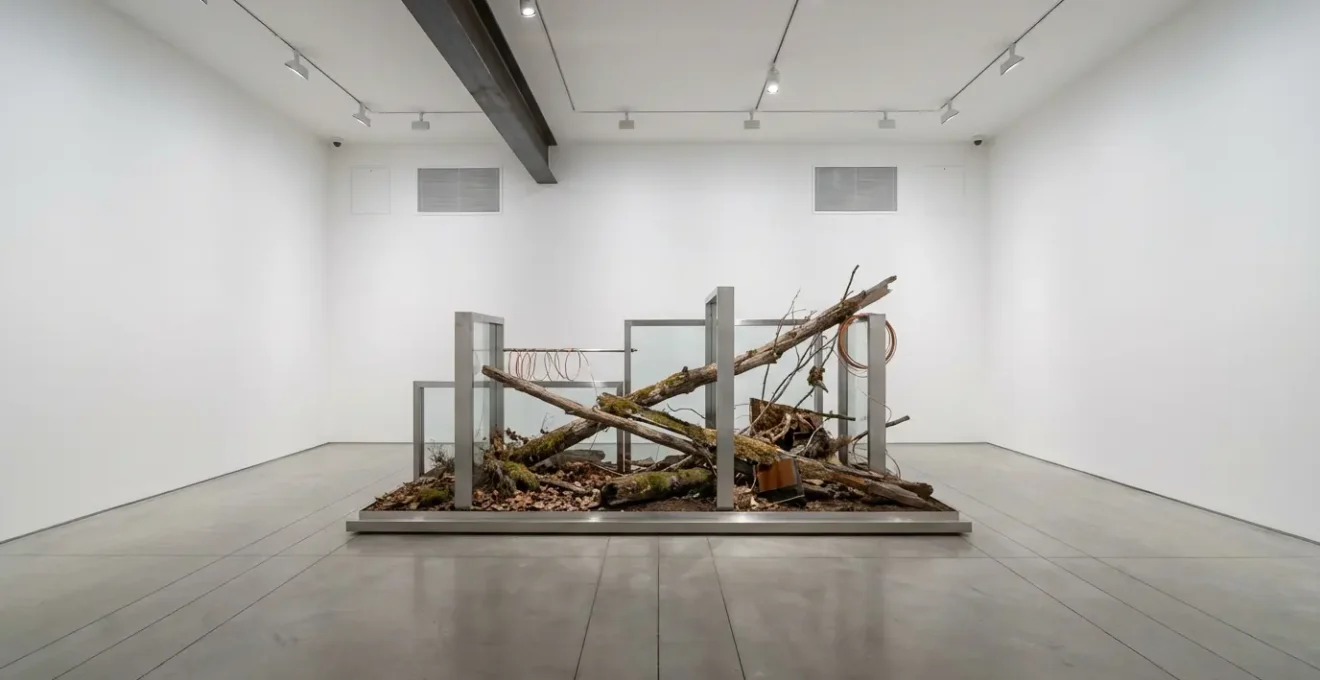
Insuring perishable or unstable art is not about finding a magic policy; it’s about creating a ‘bureaucratic second skin’ of documentation that defines the artwork’s identity, acceptable decay, and re-fabrication rights, making it a manageable risk for insurers.
- Detailed instruction manuals and condition reports are not just records; they are legally binding components of the insurance contract.
- The artwork’s design (fixed vs. modular) and its interaction with the public directly impact liability, premium structures, and exhibition opportunities.
Recommendation: Shift focus from passively seeking coverage to proactively building a comprehensive documentation package that proves meticulous risk management to underwriters.
For gallery managers and artists, the rise of mixed-media installations using ephemeral materials like food, deteriorating plastics, and custom electronics presents a daunting logistical and financial challenge. How do you assign value and secure insurance for an artwork that is, by its very nature, designed to change, decay, or become obsolete? The standard approach of getting an appraisal and taking photographs is fundamentally inadequate for an object whose identity is tied to its impermanence. The core problem is that traditional insurance logic is built on the principle of stasis and restoration to an original state—a concept that is often meaningless for contemporary installation art.
Many institutions default to focusing on climate control and extensive condition reports, but these are reactive measures. They document degradation but do not provide a clear framework for an artwork’s future. The true challenge lies in the artwork’s ‘inherent vice’—its natural tendency to self-destruct—which most standard policies explicitly exclude. This creates a coverage gap that leaves both the artist’s legacy and the institution’s investment unprotected against the inevitable.
This guide reframes the problem. Instead of asking how to insure a perishable object, we will explore how to build a robust bureaucratic and operational framework around it. The solution is to create a bureaucratic ‘second skin’: a set of meticulous, legally-binding documents and protocols that define the artwork’s identity, its managed decay, its re-fabrication rights, and its operational risks. This proactive approach transforms an uninsurable, unstable asset into a documented, manageable entity that underwriters can confidently assess.
We will examine the specific operational protocols required for different types of materials, the critical role of the artist’s instruction manual, how design choices impact logistics and risk, and the emergency procedures that are non-negotiable for policy compliance. By the end, you will have a clear blueprint for making your complex installation insurable.
Summary: A Practical Guide to Insuring Perishable Mixed-Media Installations
- Why using real food in art requires a daily maintenance schedule?
- How to write an instruction manual so a stranger can rebuild your installation in 50 years?
- Fixed Location vs. Modular Design: Which strategy maximizes exhibition opportunities?
- The wiring mistake in light installations that violates fire codes
- When to recycle vs. store: determining if the materials are worth keeping?
- The placement mistake that puts the audience’s heads in the projection beam
- What to do within the first 60 minutes of a climate control failure in the gallery?
- How to Digitize a Physical Collection Without Losing Its Historical Context?
Why Using Real Food in Art Requires a Daily Maintenance Schedule?
The use of organic, perishable materials like food in an installation immediately introduces the concept of inherent vice—the natural tendency of an object to deteriorate due to its own properties. From an insurance perspective, this is a major red flag. Coverage is not designed to protect against inevitable decay, but against unforeseen events. Therefore, managing an artwork with perishable components requires a shift from preservation to active, documented maintenance. A daily schedule is not just a conservation best practice; it is a prerequisite for insurability, demonstrating that any degradation is controlled and managed, rather than neglected.
This process involves treating the artwork almost as a living entity. For instance, the principles of food science become critical. As demonstrated in the conservation strategy for Jason Rhoades’s installation *Piece in Ghent (P.I.G.)*, which contains French fries, a deep understanding of food preservation can offer guidelines for both preserving original elements and creating longer-lasting reproductions. This academic approach transforms the conversation with an insurer from “it’s rotting” to “we have a scientifically-backed protocol to manage its intended lifecycle.” This documented management plan is what an underwriter needs to see to distinguish between managed decay and a total loss.
The tension often lies between the artist’s original intent and the institution’s mandate to preserve. As Carol Mancusi-Ungaro, a leader in the conservation of modern art, has noted, museums aim to preserve a piece in the state it was acquired. When the acquired state is one of active decay, the “preservation” becomes a rigorous, daily process of cleaning, replacement, and environmental adjustment. This daily log of actions serves as crucial evidence in the event of a claim, proving the institution upheld its duty of care and that any sudden change was the result of an external peril, not the material’s inherent nature. This is vital, as recent insurance data reveals that transit losses and water damage are the most frequent and severe risks, and you must be able to differentiate that from expected decay.
How to Write an Instruction Manual So a Stranger Can Rebuild Your Installation in 50 Years?
For a complex, mixed-media installation, the instruction manual is arguably more important than the physical components themselves. It is the artwork’s “source code,” a legal and practical document that ensures its legacy beyond the lifespan of its materials or its creator. For an insurer, this manual is the single most critical piece of the bureaucratic ‘second skin’. It defines what the artwork *is*, how it functions, and how it can be acceptably re-created. Without this document, any re-fabrication is merely a copy; with it, it is a valid iteration of the original work, which is a key distinction for maintaining its insured value.
A robust manual goes far beyond simple assembly instructions. It must be a comprehensive dossier that anticipates material scarcity, technological obsolescence, and legal ambiguity. It should serve as a legally binding addendum to the sales or loan agreement, specifying re-fabrication rights and obligations. This document provides a clear roadmap for future conservators, curators, and, crucially, insurance adjusters. It removes ambiguity about what constitutes “damage” versus “intended state” and provides a protocol for repair or replacement that is pre-approved by the artist.
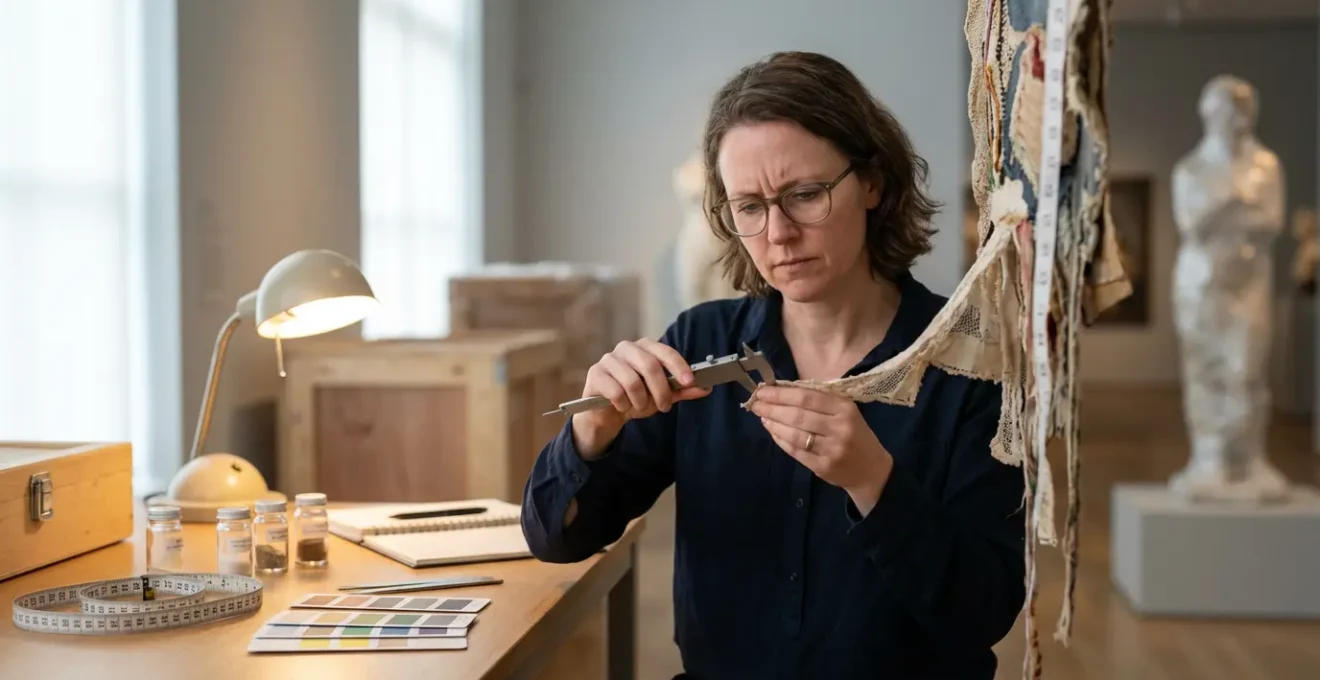
The process of creating this documentation is meticulous and multi-faceted. It involves not just text but also detailed diagrams, material samples, and digital models. The goal is to provide enough information for someone with the right skills, but no prior knowledge of the work, to reconstruct it accurately in both form and concept decades from now. This manual is the ultimate risk mitigation tool, demonstrating to an insurer that a plan exists for every foreseeable contingency, from a broken component to the complete obsolescence of its core technology.
Your Action Plan: Creating a Future-Proof Installation Manual
- Component Inventory and Specification: Create a master list that identifies, photographs, and measures every individual component, from custom-fabricated parts to off-the-shelf hardware. Assign each a unique identifier.
- Assembly Logic and Diagrams: Develop detailed, step-by-step instructions for installation, including high-resolution photos, 3D scans, and CAD drawings. Specify critical tolerances, wiring paths, and handling procedures.
- Material Sourcing Hierarchy: For each material, document its exact supplier and specifications. Crucially, create a “hierarchy of materiality” defining which elements are conceptually vital and which can be substituted with an equivalent if the original is unavailable.
- Technological Sunset Protocol: For any electronic or software components, define a clear protocol for what to do when they become obsolete. This includes criteria for selecting modern replacements that maintain the original’s function and aesthetic intent.
- Deaccessioning and End-of-Life Criteria: Explicitly state the conditions under which the artwork is considered no longer viable or “effectively dead.” This provides a clear trigger for when to file a total loss claim versus attempting another repair.
Fixed Location vs. Modular Design: Which Strategy Maximizes Exhibition Opportunities?
The physical design of a mixed-media installation has profound implications for its insurability and exhibition potential. A site-specific, fixed installation offers a controlled, stable environment, which is attractive to insurers. The risks are known and can be managed with a one-time, comprehensive assessment. However, this severely limits the work’s ability to be shown elsewhere, impacting its cultural reach and financial value. Conversely, a modular design—one conceived for disassembly, travel, and re-assembly—maximizes exhibition opportunities but introduces a host of new risks, primarily related to transit and variable venue conditions.
From a bureaucratic and practical standpoint, insuring a modular piece is far more complex. It often requires per-component coverage and a new risk assessment for each venue. A “Transit Condition Report” for each module becomes a non-negotiable document for every move. Furthermore, many policies for such works include a “First Installation Clause,” which mandates that the artist or a certified representative must supervise the initial installation at any new venue for the insurance to be valid. While this adds logistical overhead, it provides a critical layer of risk management that underwriters require.
The choice between these strategies is a strategic trade-off between control and opportunity. The global fine art market, which serves a vast network of institutions, increasingly favors works that can travel. As the global insurance market data shows, over 95,000 museums worldwide represent potential exhibition venues, making modularity a significant value-driver. The following table, based on an analysis of insurance market trends, breaks down the key differences from an underwriter’s perspective.
| Aspect | Fixed Installation | Modular Design |
|---|---|---|
| Premium Structure | Single location, potentially lower base rate | Per-component coverage, flexible but complex |
| Risk Assessment | Stable environment, controlled conditions | Variable risks per venue, transit exposure |
| Documentation Requirements | One-time comprehensive assessment | Transit Condition Report for each module |
| Exhibition Flexibility | Limited to single venue | Multiple venue opportunities |
| First Installation Clause | Not applicable | Artist supervision required for insurance validity |
The Wiring Mistake in Light Installations That Violates Fire Codes
In light-based or kinetic installations, the electrical system is often the highest-risk component, yet it can be overlooked in the pursuit of aesthetics. A common and dangerous mistake is using temporary solutions, like consumer-grade extension cords and power strips, for what is functionally a permanent installation. This not only violates most local fire codes but can also invalidate an insurance policy in the event of a fire or electrical fault. Insurers and building inspectors draw a hard line between temporary wiring (for an event lasting a few days) and permanent wiring (for an exhibition lasting weeks or months), which must be hardwired and signed off by a certified electrician.
Beyond the immediate fire hazard, electrical components introduce thermal risks. The heat generated by projectors, transformers, and even LED drivers can accelerate the degradation of nearby materials, especially sensitive organics, textiles, and plastics. This is a form of inherent vice that must be actively managed. A thermal map of the installation, identifying potential “hot spots,” should be part of the work’s core documentation. This demonstrates to an insurer that heat dissipation risks have been assessed and mitigated, for example, by ensuring adequate ventilation or using heat shields.
For touring exhibitions, compliance becomes even more complex due to varying international standards. A component must have the correct certifications for each region it visits, such as UL certification in the USA and CE marking in Europe. Failure to verify these certifications can result in the work being denied entry or, worse, causing an incident for which there is no insurance coverage. These technical requirements are not optional; they are fundamental to risk management, especially considering that climate control studies indicate that 60% or more of a museum’s energy consumption comes from HVAC, putting a constant strain on a building’s entire electrical infrastructure. The following points are critical for any electrical installation:
- Obtain a certified electrician’s sign-off for all installations; this is mandatory for the validity of most insurance claims.
- Document heat dissipation risks from all electronics, especially near degradable materials.
- Distinguish clearly between temporary and permanent wiring classifications in all documentation for insurance purposes.
- Verify international voltage and safety certifications (e.g., UL, CE) for any work intended to tour.
When to Recycle vs. Store: Determining if the Materials Are Worth Keeping?
For artworks made of ephemeral or degrading materials, there comes a point where the cost and effort of preservation outweigh the feasibility of exhibition. This leads to a critical decision: should the deteriorating components be deaccessioned and recycled, or placed in long-term “graveyard” storage for research purposes? This decision is not just a practical one; it has significant implications for the artwork’s insured status and its historical record. The key is to have pre-defined criteria in the artist’s manual that outline when a work is considered “beyond repair” or “effectively dead.”
The case of Eva Hesse’s works from the 1960s provides a powerful example. Her pioneering use of industrial materials like latex resulted in sculptures that are now famously unstable. As described in conservation reports, the latex grows yellow and brittle over time. Works like *Expanded Expansion* are now so fragile that they rarely travel and are exhibited with extreme caution. For some of her other pieces, conservators have run out of options. Once deemed beyond repair, they are removed from the active collection and archived solely for research. At this point, their insurance valuation shifts dramatically from an exhibition piece to a historical artifact.
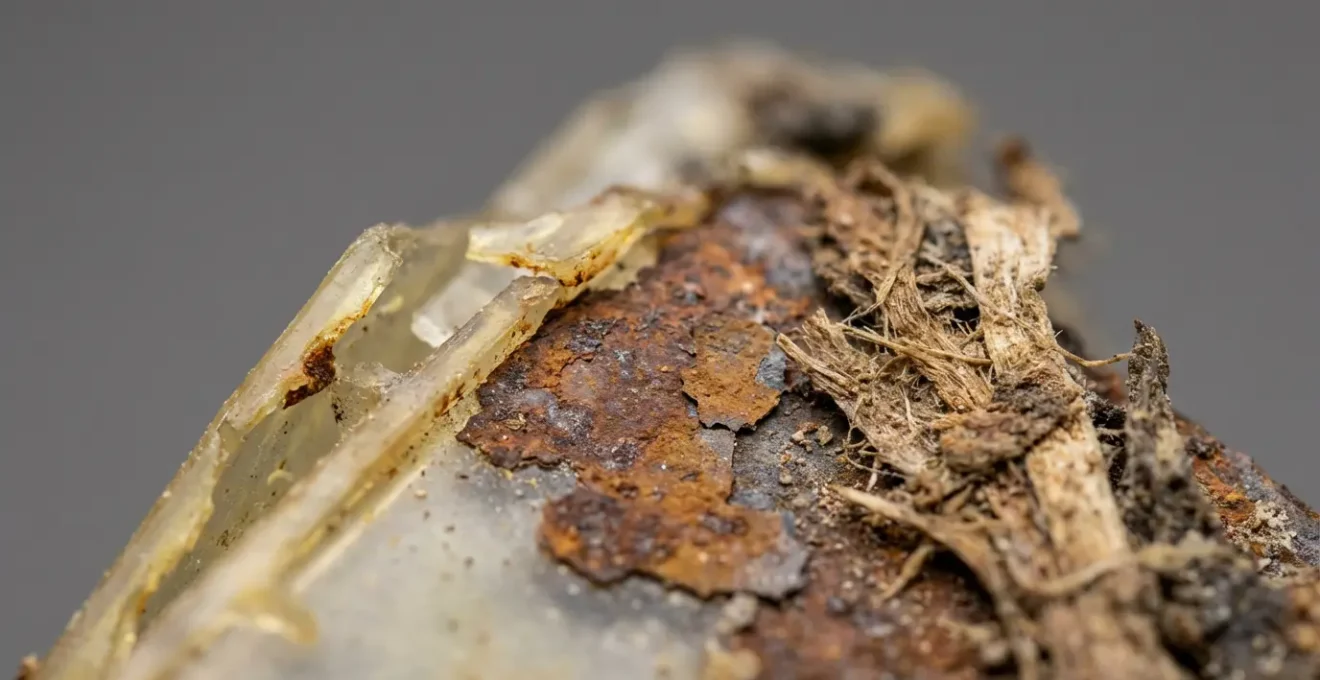
This “end-of-life” plan is a vital part of the artwork’s bureaucratic framework. It gives the institution clear, artist-approved authority to make a difficult decision. For an insurer, this protocol is essential. It defines the threshold for a “total loss” claim. Without it, an institution could be accused of negligence for deaccessioning a work, or conversely, be forced to spend exorbitant sums attempting to preserve something the artist may have intended to let go. The decision to store or recycle is therefore a calculated one, based on the artist’s intent, the material’s condition, its historical importance, and the logistical reality of long-term, climate-controlled storage.
The Placement Mistake That Puts the Audience’s Heads in the Projection Beam
With immersive and projection-based installations, the risk profile expands from the object itself to its interaction with the public. A common and entirely avoidable placement mistake is setting up a projector in a way that the beam is easily interrupted by visitors moving through the space. This not only ruins the viewing experience but also creates significant liability issues. An audience member inadvertently becoming part of the projection can be disorienting, and for installations with strobing or intense light, it can pose health risks, such as triggering seizures in susceptible individuals. These are the kinds of procedural risks that can lead to visitor injury claims.
Managing audience flow is a critical component of risk mitigation for such works. This goes beyond simple stanchions or “do not cross” lines. The installation’s documentation should include predictive ‘Flow and Dwell’ diagrams, mapping out expected visitor paths and viewing points. This documentation is vital for both the venue’s planning and for demonstrating to an insurer that foreseeable risks have been addressed. Innovative solutions can include using floor markings, subtle light patterns, or directional sound to guide visitors away from critical zones without using physical barriers that disrupt the immersive quality of the work.
There are procedural risks that can be avoided with better handling of artwork like visitor damage and vandalism. And, then there’s the minor damages that occur during transit or from small restoration needs. Those tend to be more frequent, but less severe.
– Adrienne Reid, Huntington T. Block insurance webinar
The insurance implications are direct. Standard public liability coverage held by a museum may be challenged if an incident occurs due to what is deemed poor installation design. For works with known risks (e.g., intense visual effects), specific seizure warnings must be posted at the entrance, and the institution’s public liability policy must be reviewed to ensure it covers incidents arising from immersive experiences. Documenting all these mitigation measures—from the flow diagrams to the warning signage—is essential for proving due diligence and ensuring liability coverage remains intact.
What to Do Within the First 60 Minutes of a Climate Control Failure in the Gallery?
A climate control failure is one of the most critical emergencies a gallery or museum can face. For collections containing sensitive mixed-media or organic materials, the first 60 minutes are decisive. A rapid, well-documented response can mean the difference between minor, reversible damage and a catastrophic, uninsurable loss. An institution’s ability to execute a pre-approved emergency protocol is a key indicator of its operational maturity to an insurer. Since the 1970s, traditional museum climate guidelines specify a strict standard of 70°F (±4°) and 50% RH (±3%), and any deviation from this triggers an urgent response.
The response must be immediate, methodical, and logged with precise timestamps for the subsequent insurance claim. The protocol is not something to be improvised; it must be part of the institution’s formal risk management plan, often negotiated in advance with both the insurer and a designated conservation expert. The first step is not to touch the art, but to stabilize the environment and initiate a communication cascade. This ensures that all actions are coordinated and, most importantly, comply with the specific requirements laid out in the fine art insurance policy.
Many specialized art insurance policies have a 24/7 hotline for precisely this type of event. Contacting the insurer within the first hour is often a mandatory requirement for the claim to be considered valid. The following is a time-based protocol that outlines the essential actions to be taken immediately following the discovery of a climate control system failure:
- 0-15 minutes: Immediately notify the head registrar and/or collections manager to activate the emergency response team. Deploy the pre-approved emergency kit, which should include portable dehumidifiers, fans, and monitoring equipment.
- 15-30 minutes: Contact the insurer’s dedicated 24/7 art-specific hotline. This fulfills a critical policy requirement and puts them on notice of a potential claim.
- 30-45 minutes: Begin comprehensive photo and video documentation of the affected space and artworks from multiple angles. Do not touch or move any pieces unless there is an immediate, greater risk (e.g., a water leak).
- 45-60 minutes: With approval from the insurer or a pre-designated conservator, deploy emergency stabilization measures, such as covering works with protective sheeting or isolating highly sensitive pieces.
- Ongoing: Document every action taken with precise timestamps. This log will be the primary evidence for validating the insurance claim.
Key Takeaways
- Insuring perishable art is an active process of risk management, not a passive purchase.
- The artist’s instruction manual is the central legal and operational document that defines the artwork’s identity and future.
- Documented protocols for maintenance, transit, safety, and emergencies are non-negotiable for securing comprehensive coverage.
How to Digitize a Physical Collection Without Losing Its Historical Context?
As physical materials inevitably degrade, digitization offers a path to preserving an installation’s conceptual identity indefinitely. This process, however, is far more than simply taking a high-resolution photograph. To be valuable for insurance, conservation, and historical purposes, the digital record must capture not just the artwork’s appearance but its full context: its three-dimensional structure, material properties, and provenance. This creates the final, most durable layer of the artwork’s bureaucratic ‘second skin’—a digital twin that can be studied and, if necessary, used as a blueprint for future re-fabrication long after the original has ceased to exist.
Various methods of digital documentation serve different purposes, each adding a unique layer of information. Photogrammetry and structured-light scanning, for example, create precise 3D models that serve as a baseline for assessing physical damage or deformation. This is invaluable for an insurance adjuster trying to quantify the extent of a loss. Beyond geometry, the digitization of context involves structuring metadata—the information about the information. This includes a complete record of the artwork’s ownership chain (provenance), exhibition history, and all associated conservation reports. This data provides the evidence needed for authentication, which is central to maintaining insured value.
Embedding physical objects with NFC tags or QR codes that link directly to their digital records creates a seamless bridge between the physical and the digital, allowing a curator or adjuster to instantly access an artwork’s entire history with a simple scan. The table below outlines several key digital documentation methods and highlights their specific value in an insurance context, a critical consideration for any institution managing a collection of complex, physical works.
| Method | Data Captured | Best For | Insurance Value |
|---|---|---|---|
| Photogrammetry | 3D surface geometry, texture | Sculptures, installations | Damage assessment baseline |
| Structured-light scanning | Precise measurements, depth | Complex surfaces | Condition documentation |
| Metadata structuring | Provenance, ownership chain | Historical documentation | Authentication evidence |
| NFC/QR embedding | Direct link to digital records | Physical-digital connection | Instant verification access |
By shifting the institutional mindset from passive preservation to active, documented management, the seemingly impossible task of insuring perishable art becomes a structured, achievable process. The next logical step is to begin auditing your current collection and creating the essential documentation for your most at-risk pieces.