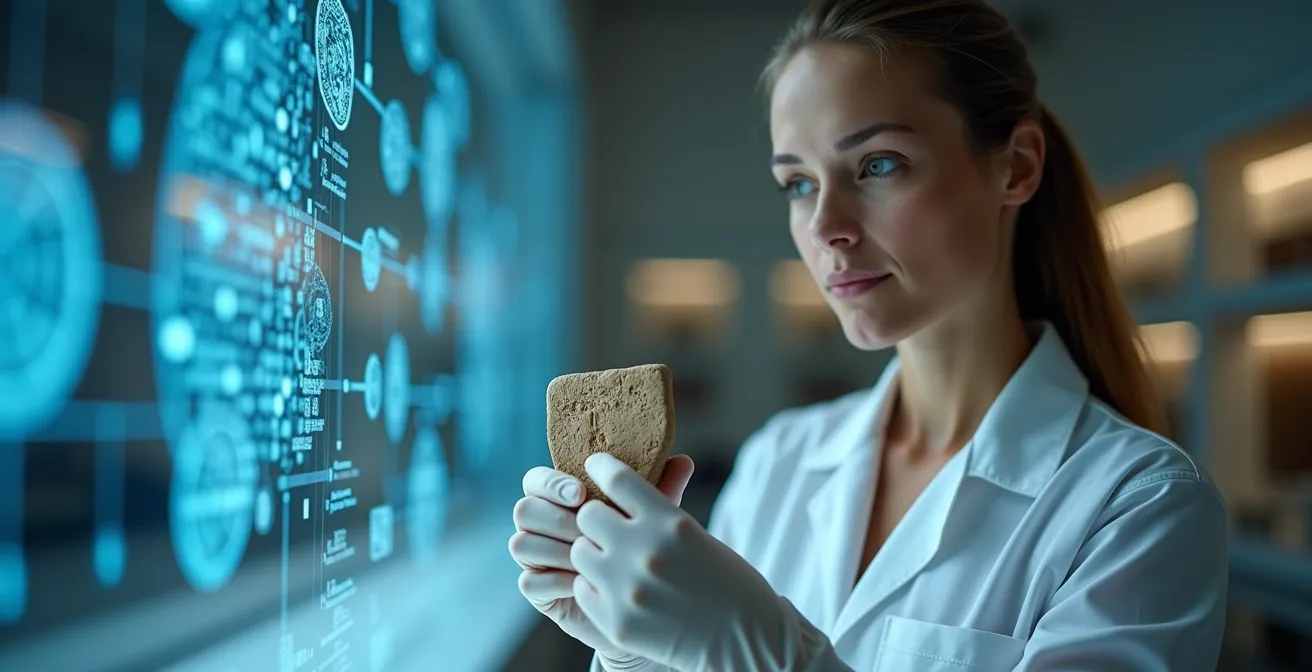
Successful digitization is not defined by the resolution of a scan, but by the depth of the story you preserve with it. The true task for a heritage officer is translating an object’s intangible context—its history, use, and cultural weight—into the digital realm. This guide moves beyond technical advice to focus on strategies for maintaining this contextual integrity for a new generation.
As a heritage officer, you stand at a crucial intersection between the past and the future. The mandate to modernize is clear: digitize the archives, make them accessible, and engage a younger, digitally native audience. The conventional advice often revolves around the technicalities—acquiring high-resolution scanners, establishing metadata standards, and implementing robust backup systems. These steps are necessary, but they address only one half of the equation: the preservation of the physical form.
But what about the object’s soul? The intangible heritage woven into its very fabric—the stories of its creation, the hands that held it, the rituals it was part of, and the community it served. A simple digital photograph or 3D model, devoid of this context, risks becoming a sterile replica, a shadow without substance. This approach can flatten history, silencing the very narratives you are charged to protect.
The fundamental challenge is not one of technology, but of translation. How do we ensure the digital surrogate carries the aura and cultural weight of the original? This article presents a forward-looking, respectful framework for just that. We will explore how to transform your digital archive from a simple catalogue of things into a vibrant repository of stories, ensuring the legacy you preserve is not just seen, but felt and understood for generations to come.
To guide you through this nuanced process, this video offers a glimpse into the meticulous technical work of 3D scanning at the Smithsonian. While it showcases the technological potential, the following sections will explore how to infuse this technical precision with the narrative depth and ethical considerations essential for true cultural transmission.
This article is structured to guide you from the foundational ‘why’ to the practical ‘how’ of contextual digitization. Each section addresses a critical question you will face in transforming your physical collection into a living digital archive.
Summary: A Guide to Digitizing Heritage with Context Intact
- Why cultural preservation is an economic engine for local communities?
- How to catalog oral histories alongside physical artifacts effectively?
- Physical display vs. digital twin: Which serves the legacy better for fragile items?
- The cataloging mistake that misrepresents indigenous artifacts for decades
- When to involve local elders in the preservation process of tribal objects?
- Visible display vs. Restricted access: Which honors the object’s original function?
- Why NFTs (despite the crash) solved the “right click save” problem for provenance?
- How to Sell Digital Art When Collectors Can’t Hang It on a Wall?
Why cultural preservation is an economic engine for local communities?
Viewing cultural preservation solely as a cost is a fundamental misunderstanding of its value. In the digital age, a well-contextualized collection becomes a dynamic asset, an economic engine for local communities. When an artifact is digitized with its story intact, it ceases to be a static object in a climate-controlled room. It becomes content—fuel for tourism campaigns, educational materials, and digital products that can generate revenue and global interest.
The State Darwin Museum provides a compelling model. By creating 3D scans of its collection, the museum doesn’t just archive its holdings; it actively uses them. These digital assets are repurposed for interactive installations within the museum, engaging video clips on its YouTube channel, and planned integrations into social media. Each digital interaction is a touchpoint that can inspire a physical visit, a donation, or a purchase from the gift shop, creating a virtuous cycle where accessibility drives economic activity.
This visibility also has a protective function. As the British Museum’s Interim Director, Mark Jones, stated in a statement on their digitization initiative, “The better a collection is known – and the more it is used – the sooner any absences are noticed.” This increased engagement transforms the public from passive viewers into active stakeholders in the collection’s well-being. By making heritage accessible and relevant, you are not just spending a budget; you are investing in a sustainable cultural and economic future for your community.
How to catalog oral histories alongside physical artifacts effectively?
An object without its story is only half preserved. Oral histories are the connective tissue that gives an artifact its meaning, transforming it from a mere curiosity into a vessel of cultural memory. The challenge for the modern heritage officer is to weave these intangible narratives into the digital fabric of the collection, creating a richer, more humanized experience. As museum researcher Suzanne Keene noted, “We used to build collections of objects. Now we can make collections of information, too.”
Effective cataloging means moving beyond text-based fields. It requires a narrative-first approach where the story dictates the format. This could involve embedding audio clips of elders recounting an object’s ceremonial use, linking to short video documentaries of artisans demonstrating its creation, or even using platforms that resonate with younger audiences. For instance, with a staggering 689 million active monthly users worldwide, TikTok has demonstrated an immense capacity for short-form video storytelling. Imagine a 60-second video showing not just a tribal mask, but a community member explaining its significance in a dance—this is contextual cataloging in action.
The key is to create multiple entry points to the object’s story. Your digital catalog should function less like a spreadsheet and more like a web, where an artifact is the center and threads of oral history, photographs, and related objects radiate outwards. By linking an artifact to the voice of its community, you ensure that the knowledge it represents is not lost and that future generations can understand not just what the object is, but what it *means*.
Physical display vs. digital twin: Which serves the legacy better for fragile items?
The conservator’s paradox is a familiar one: to share a fragile artifact is to risk its destruction. For delicate manuscripts, textiles, or organic materials, every moment exposed to light, air, and handling accelerates their decay. This is where the concept of the digital twin moves from a novelty to an essential preservation tool. It is not a replacement for the original but a powerful partner that resolves the conflict between access and conservation.

A high-fidelity digital twin can provide a level of access that physical display can never safely offer. As demonstrated by The Amelia Scott museum’s strategy, modern 3D scanning can capture detail down to 0.04 millimeters, including subtle color and texture data. This allows researchers and the public to zoom in, rotate, and examine an object in ways that would be impossible with the original behind glass. The physical object can remain in a stabilized, climate-controlled environment, its integrity preserved, while its digital counterpart travels the world, “seen’ forever” in perfect condition.
This approach redefines our relationship with fragile artifacts. The digital twin becomes the primary vehicle for study and public engagement, while the original is honored as the irreplaceable source. This dual strategy ensures that the legacy is served in two critical ways: the artifact’s physical form is protected from further degradation, and its story and details are made radically accessible to a global audience, safeguarding its intellectual and cultural value for the future.
The cataloging mistake that misrepresents indigenous artifacts for decades
For centuries, the cataloging of indigenous artifacts has been fraught with a fundamental error: the imposition of an external, colonial worldview. Objects of deep spiritual or functional significance were often mislabeled as “curios,” “idols,” or described with generic, inaccurate terms. This is not merely a semantic issue; it is an act of cultural erasure that severs an object from its true meaning and community. Correcting this historical injustice is one of the most critical responsibilities in modernizing an archive.
The core mistake is treating provenance as a simple chain of ownership rather than a complex web of custodianship and cultural authority. As a UNESCO policy dialogue on digital preservation highlights, “appropriate indigenous data governance fit for purpose models must be developed” to balance the data captured by non-indigenous institutions. This means moving away from a top-down cataloging system and embracing a collaborative one where the source community is the ultimate authority on an object’s description, use, and access rights.
This requires a radical shift in process, moving from observation to conversation. It involves acknowledging that the institution may be the legal owner but is not the cultural owner. The goal is to create a “provenance trail” that is transparent and respects the object’s origins. This ethical framework ensures that digitization does not perpetuate the mistakes of the past but instead becomes a tool for cultural restoration and accurate representation.
Action Plan: Implementing Ethical Cataloging for Indigenous Heritage
- Principle of Provenance: Establish that the custodianship of the digitized heritage should follow the same provenance rules as the original artifact, recognizing the source community’s primary rights.
- Lifecycle Responsibility: Ensure the original custodian community is consulted and involved in decisions regarding the digital asset’s lifecycle, from creation to dissemination and potential decommissioning.
- Create a Provenance Trail: Document every step of the digitization and cataloging process, including who was consulted and what decisions were made, allowing any user to judge the data’s authenticity and reliability.
- Balance Ownership and Control: Clearly distinguish between the institution’s management of the digital file and the community’s control over the cultural knowledge it represents, establishing clear protocols for access and use.
When to involve local elders in the preservation process of tribal objects?
The answer to “when” to involve local elders is simple: from the very beginning, and at every stage thereafter. Elders and community knowledge-keepers are not consultants to be brought in at the end of a project for a rubber stamp of approval. They are the primary source, the living library whose expertise is as critical to the artifact’s preservation as any conservation scientist’s. Deferring their involvement is a missed opportunity and a sign of disrespect.
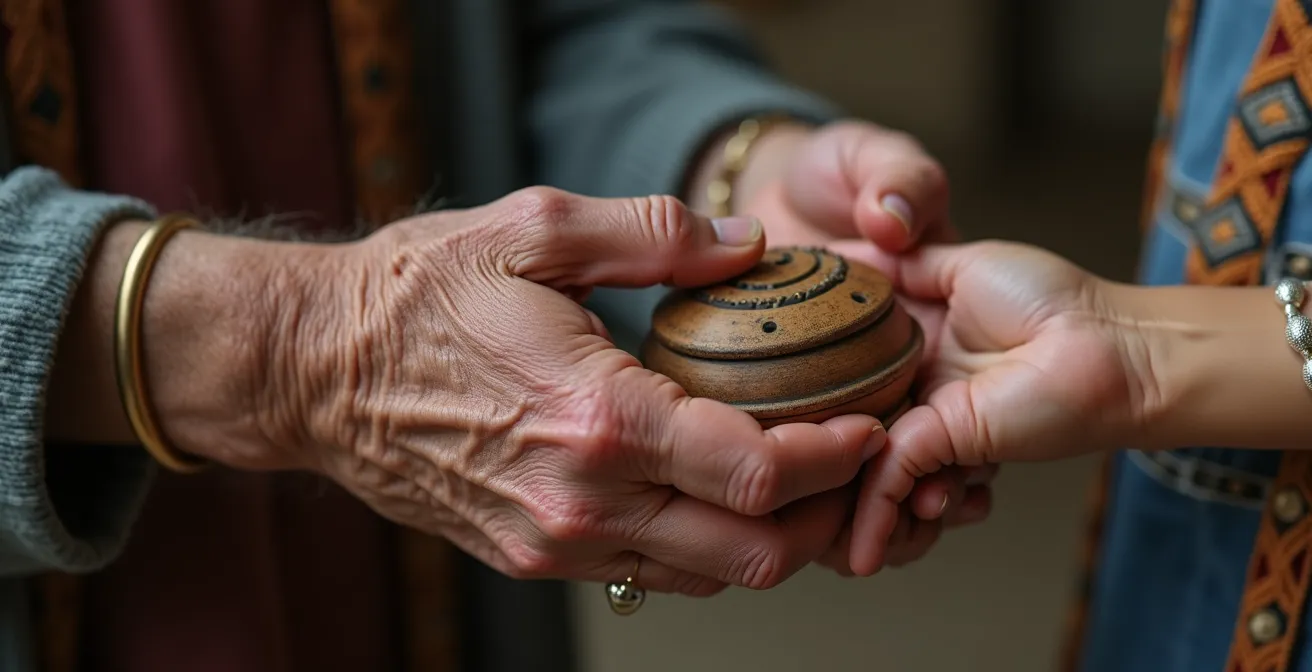
Their involvement should start before a single photograph is taken. During the initial project planning, elders can provide crucial context that technology cannot: Which objects should be prioritized? Are there items that should not be digitized or publicly displayed due to their sacred nature? How should an object be handled, and by whom? This intergenerational knowledge transfer is the heart of ethical preservation. It transforms the process from an extractive, institutional exercise into a collaborative act of cultural continuity.
The sheer scale of many digitization projects makes this collaboration a practical necessity. The British Museum, for example, is undertaking a massive project where 2.4 million records need to be uploaded or upgraded over five years. It is logistically impossible for a team of curators alone to provide accurate, nuanced context for such a vast and diverse collection. Involving community elders from the outset is the only scalable way to ensure the information attached to these digital records is authentic and respectful, preventing the mass production of the cataloging mistakes discussed previously.
Visible display vs. Restricted access: Which honors the object’s original function?
The default museum practice is to make everything visible, guided by a mission of public education and universal access. However, this philosophy can clash directly with an object’s original function and cultural context. Many indigenous or sacred objects were never intended for public display; their power and purpose were tied to specific rituals, seasons, or initiated individuals. In these cases, does placing them in a brightly lit gallery or a public online database truly “honor” them, or does it violate their nature?
This dilemma forces a shift in perspective from “preservation” to what ICCROM calls “sustaining digital heritage.” This concept emphasizes keeping the digital heritage “alive” by nourishing its context and allowing it to evolve. Sometimes, sustaining an object’s heritage means respecting its intended restrictions. Honoring an object may mean keeping its digital surrogate in a restricted-access part of the archive, available only to initiated community members or for specific research purposes, thus mirroring its real-world function.
This does not mean abandoning the principle of access. As British Museum Board Chairman George Osborne argued to the UK Parliament, digitization allows institutions to say, “They are available to you. Even if you cannot visit the museum, you are able to access them digitally.” The key is that “access” is not a monolithic concept. An ethical digital archive must support tiered or conditional access. It can provide open access to general information while protecting sacred knowledge, thereby honoring both the public’s right to learn and the object’s original, often restricted, purpose.
Key Takeaways
- Context Over Copy: The primary goal of digitization is not to create a perfect replica, but to translate the object’s intangible story and cultural significance into the digital space.
- Community as Authority: Source communities, particularly elders, are the ultimate authorities on an artifact’s meaning, use, and appropriate handling. Their involvement from day one is non-negotiable.
- Access is Not Absolute: Honoring an artifact sometimes means respecting its intended privacy. A successful digital archive must balance the drive for open access with ethical, conditional restrictions that mirror the object’s original function.
Why NFTs (despite the crash) solved the “right click save” problem for provenance?
For years, the digital art and heritage world has been plagued by the “right-click, save as” problem. How can a digital file have value or authenticity when it can be copied infinitely with perfect fidelity? While the speculative bubble around Non-Fungible Tokens (NFTs) has burst, the underlying blockchain technology offered a genuinely novel solution to one specific, age-old problem: verifiable provenance.
An NFT is essentially a unique, unforgeable digital certificate of authenticity and ownership recorded on a public ledger (the blockchain). When a museum or artist “mints” an NFT for a digital object, they create an unbreakable link between that specific file and its origin. This solves the provenance issue because, while anyone can still copy the image file, only one person can hold the token that proves they have the “official” version. It mathematically separates the artwork from its certificate of title, something that was previously impossible in the digital realm.
However, it is crucial to understand that solving the provenance problem is not the same as solving the access or engagement problem. Open access models, championed by organizations like Global Digital Heritage, pursue a different goal: making all data freely available to the world to support education and research. This model has proven incredibly successful at generating engagement. For example, the British Museum’s 3D model of the Rosetta Stone on Sketchfab has been viewed 380,000 times and downloaded 7,600 times as of November 2022. NFTs and open access are not mutually exclusive; they are two different tools for two different jobs—one for certifying uniqueness, the other for maximizing reach.
How to Sell Digital Art When Collectors Can’t Hang It on a Wall?
The final frontier of digitization is commercialization. If a heritage object can have a certified, unique digital twin via an NFT, can it be sold or licensed to collectors? This question pushes heritage institutions into the unfamiliar territory of the digital art market. The challenge is clear: the traditional value proposition for art collectors is physical presence—the ability to hang a piece on a wall, to live with it. How do you sell something that exists only as data?
The answer lies in shifting the concept of collecting from physical possession to patronage of an idea or an institution. Collectors of digital art and heritage are often motivated by different factors than traditional buyers. They are investing in:
- Supporting the Mission: A collector might buy an NFT of a digitized artifact not to “own” it, but as a sophisticated form of donation, directly funding the museum’s conservation and education efforts.
- Cultural Capital: Owning the “official” digital version of a significant cultural artifact confers a unique type of status and connection to history.
- Innovative Display: The art is not hung on a wall, but displayed on high-resolution digital frames, in virtual reality galleries, or as projections, creating new aesthetic experiences.
For a heritage organization, this opens a new potential funding stream that is directly tied to its core mission of preservation. The “sale” is not just a transaction; it’s an invitation for a collector to become a digital patron, a partner in safeguarding a piece of history. This model re-frames the value proposition: the collector isn’t buying a file they can’t hang, they are buying a verifiable stake in the preservation of a timeless legacy.
Your collection holds more than objects; it holds the stories and soul of a community. By embracing a strategy of contextual integrity, community collaboration, and ethical access, you can ensure this legacy not only survives but thrives in the digital age. Begin the process of translating that intangible heritage today, creating a living archive for generations to come.