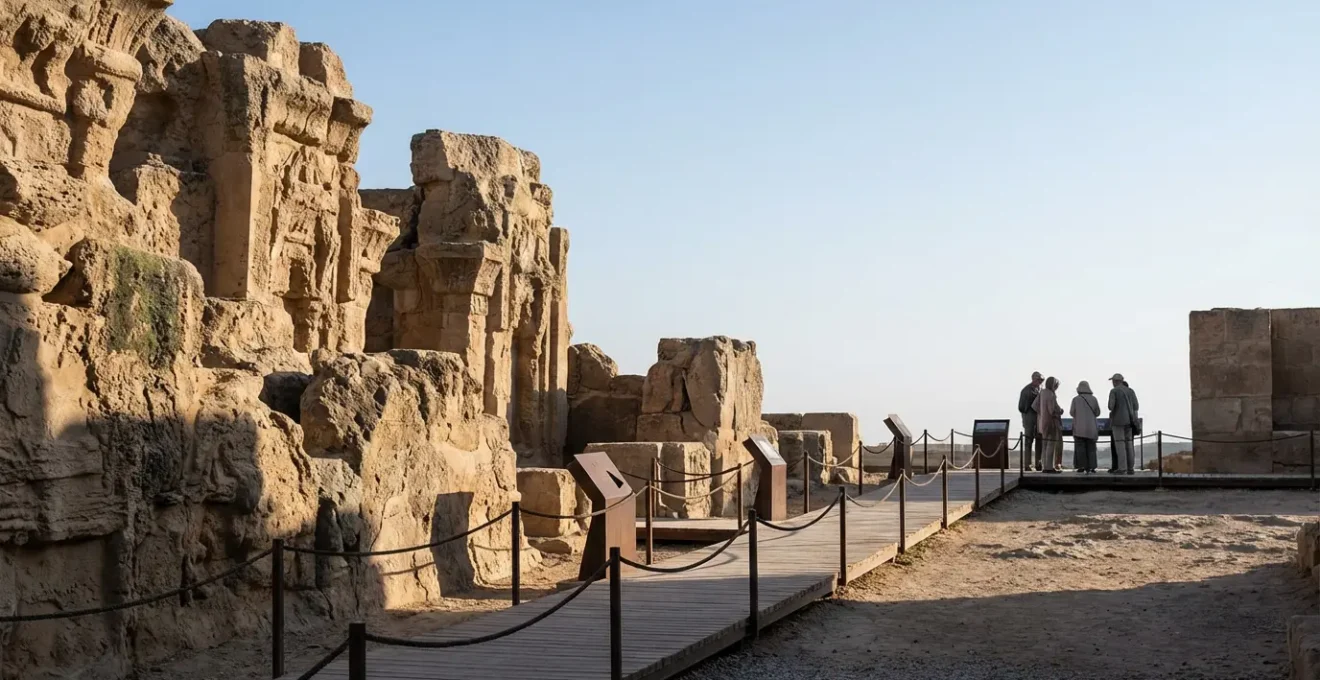
Achieving UNESCO status is not the finish line; it’s the start of a new, more complex operational challenge where visitor footfall becomes a direct factor in site degradation and economic stability.
- The physical impact of tourism (erosion, wear) often accelerates at a rate far greater than natural environmental decay.
- Economic benefits are not automatic; without strategic management, tourism revenue often leaks away from the local community.
Recommendation: Shift from a reactive, crowd-control mindset to a proactive strategy that manages the micro-impacts on your site’s materials and the macro-flows of tourism revenue within your community.
For a site manager, achieving UNESCO World Heritage status can feel like the culmination of a lifelong dream. The international recognition, the prestige, the promise of increased visitor numbers—it all points to success. But this success is a double-edged sword. The common advice to simply “balance preservation and tourism” is a dangerous oversimplification. It ignores the fundamental shift that occurs the moment your site is inscribed on the list. The very forces you are meant to manage change in nature and scale.
The surge in visitors doesn’t just mean longer queues; it introduces new physical and chemical stresses that accelerate decay in ways natural weathering never could. This is the concept of material fatigue, where thousands of soft-soled shoes can do more cumulative damage than a century of rain. Similarly, the influx of tourism revenue doesn’t automatically enrich the local populace. Without a robust strategy, it often creates socio-economic leakage, where money flows into the accounts of international tour operators, leaving the host community with the burdens of tourism but few of its benefits.
This guide moves beyond the platitudes. It is designed for you, the site manager or local official on the ground, who needs to understand the new physics and economics of your role. We will dissect the specific mechanisms of tourism-driven decay and explore concrete, socio-economic levers for ensuring that UNESCO status becomes a tool for sustainable prosperity, not a catalyst for managed decline. We will explore how to manage visitor flow in fragile areas, weigh the difficult choice between closing a site and creating a replica, and ensure the authentic story of your site is told without turning it into a theme park.
This article provides a framework for navigating the complex realities of managing a World Heritage site. The following sections break down the key challenges and offer actionable strategies to address them effectively.
Summary: Managing the Real-World Impacts of UNESCO Tourism
- Why thousands of shoes erode stone steps faster than rain?
- How to route tourists to avoid bottlenecks in fragile sanctuary areas?
- Closing the cave vs. Building a replica: Which saves the art without killing the revenue?
- The interpretation mistake that turns a sacred site into a theme park
- How to ensure tourism dollars reach the local community instead of foreign tour buses?
- When to involve local elders in the preservation process of tribal objects?
- Chemical Biocide vs. Soft Brushing: Which keeps the stone healthy longer?
- How to Distinguish Ritual-Used Masks from “Airport Art” Souvenirs?
Why thousands of shoes erode stone steps faster than rain?
The primary reason increased tourism is more damaging than natural elements lies in the concept of concentrated, repetitive stress. Rain, wind, and temperature changes are distributed forces acting over long periods. In contrast, tourism concentrates a massive amount of mechanical abrasion into very specific, high-traffic areas. A stone step that has withstood centuries of monsoons can be visibly worn down in a few decades by the shuffling of millions of feet. This isn’t just theory; research from UNESCO monitoring at Angkor reveals that post-conservation visitor traffic led to a 10-fold increase in stone loss rates compared to pre-conservation periods.
This accelerated decay, or material fatigue, happens on a microscopic level. Each footstep imparts a small amount of friction and pressure, dislodging tiny grains of stone. While a single step is insignificant, multiplying this by thousands of visitors per day, every day, creates a powerful and relentless erosive force. Furthermore, visitors bring in abrasive dust and grit on their shoes, which acts like sandpaper. They also alter the micro-climate by increasing humidity and carbon dioxide levels in enclosed spaces, which can further accelerate chemical weathering on sensitive surfaces.
Understanding this distinction is critical for a site manager. Your preservation strategy must shift from merely protecting against the elements to actively managing and mitigating the direct, physical impact of human presence. It’s no longer just about fixing a leaky roof; it’s about calculating the carrying capacity of a 1,000-year-old floor.
How to route tourists to avoid bottlenecks in fragile sanctuary areas?
Effective visitor routing is less about drawing lines on a map and more about behavioral engineering. The goal is to disperse impact and protect vulnerable zones without diminishing the visitor experience. Simply putting up “Do Not Enter” signs often fails. Instead, successful strategies use a combination of physical infrastructure, interpretive guidance, and operational timing to guide visitors naturally. This involves identifying “hotspots”—areas of high cultural value and high fragility—and creating alternative, compelling pathways that draw traffic away from them.
This can be achieved by implementing designated walkways, like the wooden paths often seen at sites like Angkor. These structures serve a dual purpose: they physically prevent visitors from walking on fragile ground or touching ancient walls, and they create clear, intuitive routes. By controlling the path, you control the flow, preventing the formation of damaging bottlenecks in sacred or structurally weak areas. The key is to make the designated path the path of least resistance and greatest interest. This might involve placing interpretive panels or unique photo opportunities along the desired route, effectively “pulling” visitors along a pre-determined, safe circuit.
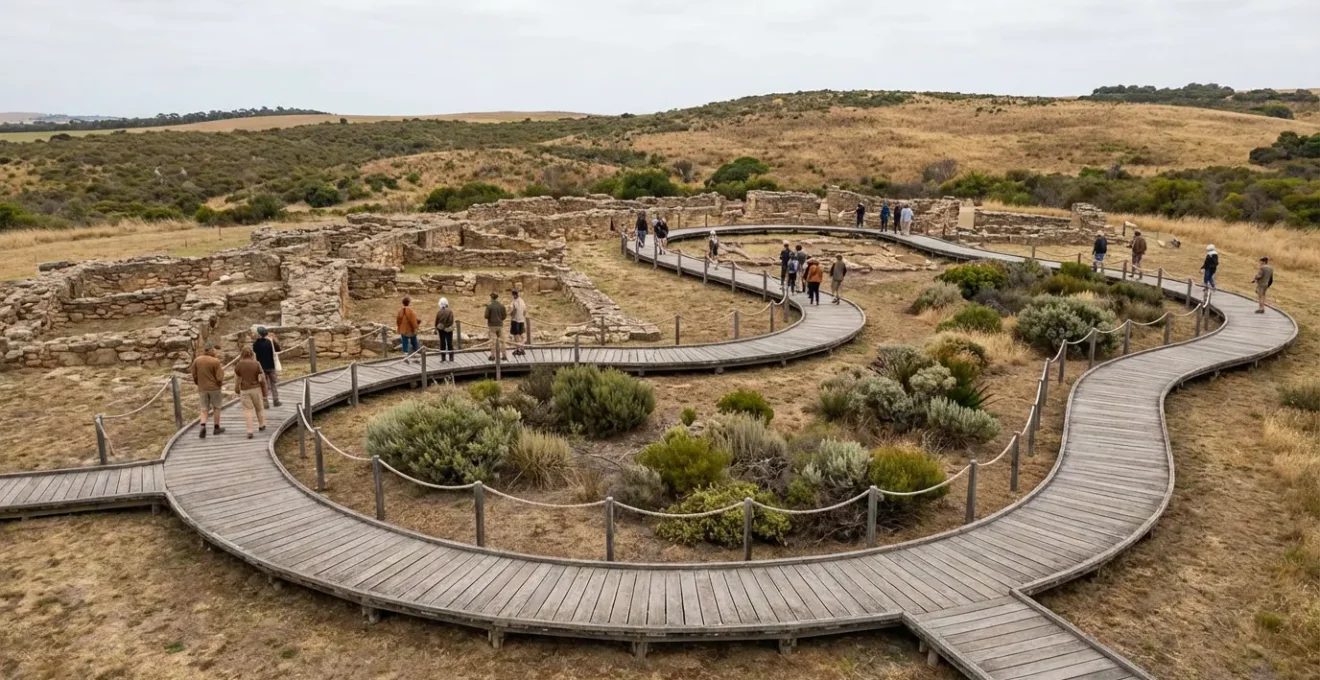
A comprehensive strategy should also focus on improving tourist understanding of why certain areas are restricted. Explaining the continued religious significance or extreme fragility of a sanctuary helps foster a sense of shared responsibility. Ultimately, routing is a dynamic process involving four strategic priorities: enhancing the visitor experience, reducing site impacts, partnering with the tourism industry to set standards, and ensuring the local community benefits from a well-managed site. This holistic approach turns a crowd-control problem into a site-enhancement opportunity.
Closing the cave vs. Building a replica: Which saves the art without killing the revenue?
The dilemma between absolute preservation and economic viability is one of the most difficult challenges for a site manager. When the mere presence of visitors—through their breath, body heat, and microorganisms—threatens to destroy the very art they came to see, a radical solution may be necessary. The case of the Lascaux Cave in France is the archetypal example. Closed to the public since 1963, its prehistoric paintings are now perfectly preserved, but at the cost of all direct tourism revenue. The solution? A high-fidelity replica, Lascaux IV, which now welcomes hundreds of thousands of visitors annually.
This approach presents a fascinating trade-off. As the data shows, the inscription of a new location as a World Heritage Site is a powerful driver for tourism; a recent EU panel data analysis shows a 0.22% increase in tourist numbers for each additional site. Closing an original site seems counterintuitive to capitalizing on this growth. However, the replica model creates a different, more sustainable economic engine. It allows for unlimited visitor capacity without any conservation risk to the original, enabling a revenue model based on volume rather than high-cost, exclusive access.
The following table, based on the principles demonstrated by the Lascaux experience, breaks down the key differences:
| Aspect | Original Site (Restricted Access) | High-Quality Replica |
|---|---|---|
| Conservation Impact | Maximum preservation, minimal deterioration | No impact on original |
| Visitor Experience | Authentic but limited (5-10 visitors/day) | Accessible, educational, unlimited capacity |
| Revenue Model | High-cost exclusive tours | Volume-based general admission |
| Example | Lascaux Cave (closed 1963) | Lascaux IV replica center |
| Long-term Sustainability | Excellent preservation | Requires periodic updates |
For a site manager, the decision is not just about conservation; it’s a strategic business choice. A replica requires significant upfront investment, but it can secure a long-term, scalable revenue stream while guaranteeing the ultimate protection of the original “asset.” It transforms the question from “how many people can we safely let in?” to “how can we create the most educational and engaging experience possible?”
The interpretation mistake that turns a sacred site into a theme park
Interpretive strategy is where the soul of a site is either honored or lost. The greatest mistake is to prioritize entertainment over enlightenment, effectively “Disney-fying” a place of deep cultural or spiritual significance. This happens when managers, desperate to appeal to a mass audience, introduce extrinsic elements like dramatic light shows, costumed actors playing historical roles, or using theme-park jargon like “zones” or “shows.” These additions, while perhaps momentarily engaging, distract from the site’s Outstanding Universal Value and can trivialize its sacred nature. They encourage visitors to see the site as a backdrop for a selfie rather than a place for reflection and learning.
Authentic interpretation focuses on the intrinsic qualities of the site. It uses silence, natural sounds, and personal stories to connect visitors to the place’s history and meaning. It means auditing the language used by guides and on signage to ensure it is respectful and accurate. The goal is to facilitate a genuine connection, not to manufacture a spectacle. This requires a deep commitment to authenticity and a willingness to trust that the site’s own story is compelling enough.
Crucially, this balance cannot be achieved without the community. As Kishore Rao, former Director of UNESCO’s World Heritage Centre, powerfully stated:
Site managers must avoid having their exceptional sites damaged or destroyed. But the local population must also be spared a similar fate: sustainable tourism must be organized in such a way that it brings social, economic and environmental benefits to those living on and around the site.
– Kishore Rao, Director of UNESCO’s World Heritage Centre
His point is clear: protecting the stones is only half the battle. Protecting the living culture that surrounds them is equally vital. Involving local communities in the planning and management of interpretation is the only way to ensure the storytelling is authentic, respectful, and benefits the people to whom the heritage truly belongs.
How to ensure tourism dollars reach the local community instead of foreign tour buses?
This is the challenge of “socio-economic leakage,” where the majority of tourist spending flows out of the local economy and into the hands of international hotel chains, airlines, and large tour operators. For a site manager, combating this leakage is a core part of sustainable management. The key is to create a local “value chain” that captures a greater share of the visitor’s wallet. This means actively promoting and integrating local businesses and services into the tourism experience.
Instead of visitors arriving on large tour buses, staying in foreign-owned hotels, and eating at generic restaurants, a successful strategy encourages them to hire local guides, stay in community-run guesthouses, eat at family-owned restaurants, and buy authentic, locally-made crafts. This requires a proactive approach. The site management authority can create certification programs for local guides, develop a directory of recommended local accommodations, and establish designated market areas for artisans within or near the heritage site.
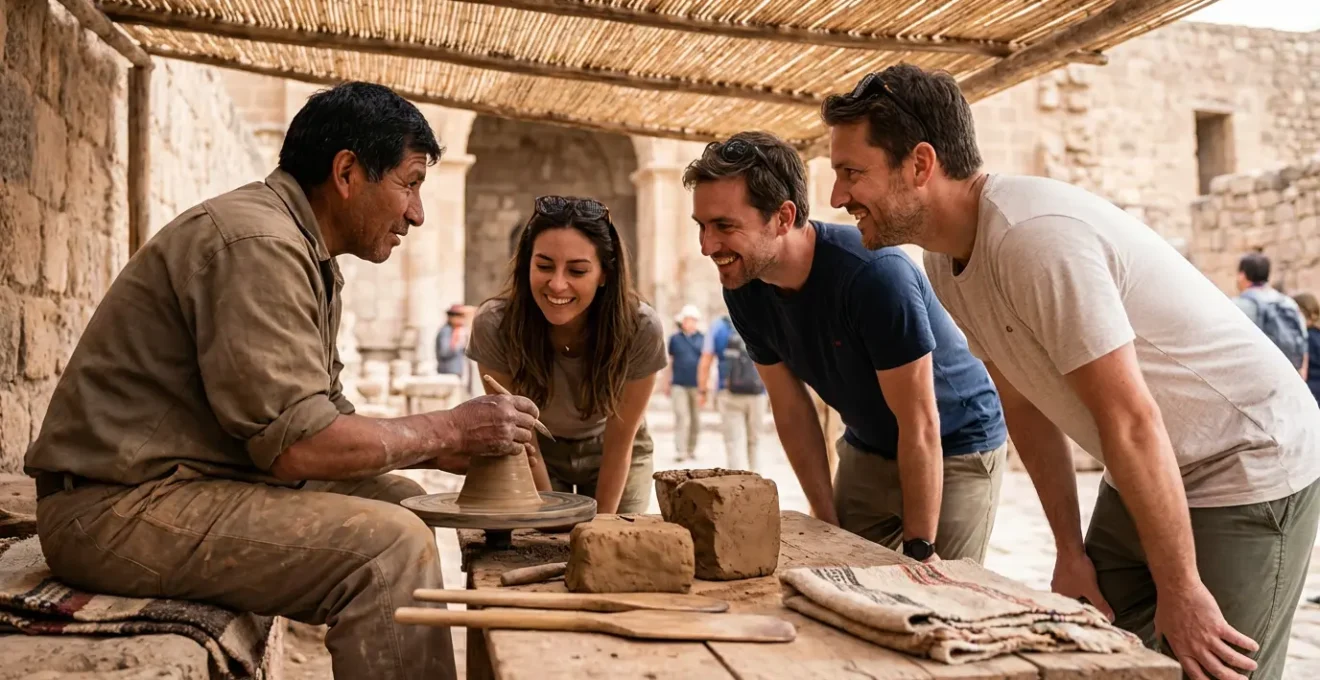
The UNESCO Jakarta office’s initiative, “The Power of Culture,” provides a powerful case study. By supporting community-based management at World Heritage sites in Malaysia, the Philippines, and Indonesia, the program actively works to introduce sustainable tourism models that prioritize local community involvement and benefit-sharing. This isn’t just about social good; it’s about long-term sustainability. When the local community sees a direct economic benefit from preserving their heritage, they become the site’s most passionate and effective guardians. They are incentivized to protect the “golden goose” rather than seeing it as a resource being exploited by outsiders.
When to involve local elders in the preservation process of tribal objects?
The short answer is: from the very beginning and at every critical juncture. For sites with living tribal or indigenous connections, local elders are not just stakeholders; they are knowledge holders whose expertise is as critical as that of any archaeologist or conservator. Involving them should not be a token gesture but a fundamental part of governance, a practice of cultural co-stewardship. This means establishing permanent structures where elders have real decision-making power, not just a chance to be heard.
There are specific moments when their involvement is non-negotiable. One is when scientific conservation methods conflict with spiritual protocols. For example, a conservationist might want to use a chemical to preserve a wooden mask, but an elder may know that this chemical would violate the object’s spiritual integrity. In these cases, a mediation process must exist to balance scientific needs with cultural protocols, recognizing that preserving the object’s “spirit” is as important as preserving its physical form. Elders are the only ones who can define the boundaries of restricted knowledge and identify which objects are too sacred for public display or even scientific analysis.
Ultimately, a truly sustainable model recognizes elder expertise as equal to scientific knowledge within the governance structure of the site. They should be consulted to interpret the meaning and significance of objects, to guide the protocols for handling and display, and to educate staff and visitors. This deep integration moves beyond simple “involvement” and creates a partnership where traditional knowledge and modern science work together to ensure the holistic preservation of both the tangible and intangible aspects of the heritage.
Chemical Biocide vs. Soft Brushing: Which keeps the stone healthy longer?
The conventional debate in stone conservation often pits mechanical cleaning (like soft brushing) against chemical treatments (like biocides) to remove harmful growths like algae and lichen. Brushing is non-invasive but labor-intensive and may not remove all microorganisms. Biocides are effective but can have unknown long-term chemical effects on the stone and surrounding environment. However, a forward-thinking site manager should ask a different question: What if the best solution is neither? What if the answer lies in harnessing nature itself?
This is the principle of “bioprotection,” a revolutionary concept that views certain biological growths not as a disease to be eradicated, but as a potential protective layer. A groundbreaking study at the Ta Keo temple in Angkor provides stunning evidence for this. GIS-based analysis showed that after forest clearance around the temple, stone loss rates increased tenfold. The reason? The surrounding forest had been providing an “umbrella effect,” shielding the sandstone from the extreme stresses of tropical sun and monsoon rains. The forest cover stabilized daily temperature and humidity ranges, reducing the swelling-and-shrinking cycles that cause sandstone to flake and scale.
This research reframes the entire conservation paradigm. The forest is not just a backdrop; it is an active component of the preservation system. This “bioprotective” shield should be considered a valuable ecosystem service in any sustainable management strategy. Instead of focusing solely on cleaning the stone surface, managers should consider how restoring or maintaining the surrounding ecosystem can do the preservation work for them, naturally and sustainably. It suggests that sometimes, the most effective conservation tool is not a brush or a chemical, but a tree.
Key Takeaways
- UNESCO status is an operational catalyst, not a final prize; it fundamentally changes the physical and economic pressures on your site.
- The community is not a stakeholder but a partner. Their economic benefit and cultural knowledge are your site’s best long-term assets.
- Shift from reactive cleaning to proactive management by understanding the micro-mechanics of decay and the macro-dynamics of your site’s ecosystem.
How to Distinguish Ritual-Used Masks from “Airport Art” Souvenirs?
For a site linked to a living culture, maintaining authenticity is paramount. The tourism market creates a huge demand for souvenirs, which can lead to the proliferation of mass-produced, inauthentic items—”airport art”—that dilute the cultural message and divert income from true artisans. As a site manager, being able to distinguish, and help your visitors distinguish, a genuinely used ritual object from a tourist trinket is a vital skill. It protects the culture, educates the visitor, and supports the local economy.
The difference is often found in the details—the forensic evidence of use. A mask carved for a ceremony is a tool, not just a decoration. It will show signs of wear that a souvenir replica, designed for a wall, will lack. The key is to look for evidence of human contact and function. A real ritual mask will often have a patina on the inside from the sweat and breath of the wearer. The eyeholes might be eroded from being looked through, and the overall design will prioritize function (like breathability) over the perfect, sterile symmetry often found in mass-produced items.
Furthermore, authentic pieces often show signs of a life lived. Look for indigenous repairs—a crack mended with fiber, a piece re-attached. These are not flaws; they are signs that the object was valued and maintained over time. Verifying provenance through family stories and understanding its ceremonial context is the final, crucial step. This focus on forensic detail helps build a narrative of authenticity that is impossible for “airport art” to replicate.
Your Action Plan: Authenticating Ritual Objects
- Interior Check: Examine the inside of masks. Look for a dark, smooth patina or discoloration caused by sweat, oils, and breath from a human face. A pristine, freshly-carved interior is a red flag.
- Wear and Tear Analysis: Inspect wear patterns. Focus on erosion around eyeholes, nose, and mouth from actual use, and check attachment points for signs of stress from being worn.
- Residue Identification: Look for remnants of ritual materials. Search for traces of white kaolin clay, red ochre, or other pigments, as well as organic residues that indicate ceremonial application.
- Valued Use Verification: Identify indigenous repairs. A crack stitched together with plant fiber or a broken piece re-attached with local resin indicates the object was important enough to be fixed, not discarded.
- Provenance and Context: Verify the story. Ask for provenance through family lineage or ceremonial history. Compare the object’s style and materials against known, documented examples from the region, not just against other items in a tourist market.
By shifting your perspective from simple management to strategic stewardship, you can leverage your UNESCO status to create a truly sustainable future. Start by conducting an audit of your own site using these principles: evaluate the physical stress points, trace the flow of tourism revenue, and assess the authenticity of your interpretive programs. This is the first step toward transforming the challenges of tourism into opportunities for preservation and prosperity.