Graphic arts & drawings
Graphic arts and drawings encompass an extraordinary range of creative practices, from the intimate gesture of pencil on paper to the precision of digital vector work, from centuries-old printmaking traditions to cutting-edge industrial design communication. Whether you’re sketching to solve visual problems, mastering perspective to construct believable space, or navigating the technical demands of pre-press workflows, this field demands both creative vision and disciplined technical skill.
Understanding the breadth of graphic arts means recognizing how traditional and digital methods complement each other, how foundational principles like value, composition, and spatial reasoning apply across all mediums, and how specialized techniques—from stone lithography to CAD drafting—each serve distinct creative and professional purposes. This resource introduces the core disciplines, essential techniques, and practical considerations that form the foundation of graphic arts practice, providing a roadmap for anyone seeking to deepen their visual communication skills.
Foundational Drawing Techniques and Materials
Every accomplished graphic artist begins with mastery of traditional drawing fundamentals. The ability to control value and shading forms the backbone of representational drawing, allowing you to describe form, light, and atmosphere through tonal gradation alone.
Controlling Mark and Tone
The relationship between your materials and your intentions shapes every mark you make. Paper grain significantly affects how graphite, charcoal, or ink behaves on the surface—a smooth hot-press paper yields crisp, detailed lines ideal for technical work, while a textured cold-press surface catches pigment in its valleys, creating atmospheric effects perfect for expressive sketching. Pressure gradation becomes your primary tool for building dimensional form without changing tools, moving from whisper-light passes that barely register to confident, dark accents that anchor your composition.
Two fundamental approaches to building tone present themselves: hatching (creating value through parallel or cross-hatched lines that preserve the energy of individual marks) and blending (using stumps, tortillons, or fingers to smooth transitions into continuous gradients). Each serves different aesthetic goals—hatching maintains graphic clarity and linear vitality, while blending achieves photographic subtlety and atmospheric depth.
Common Technical Challenges
Even experienced artists encounter persistent technical issues. Graphite shine occurs when excessive pressure burnishes the paper surface, creating unwanted reflective areas that photograph poorly and disrupt tonal relationships. Preventing this requires building value through multiple light layers rather than heavy-handed application. The lift-out technique—using kneaded erasers to selectively remove graphite—allows you to reclaim highlights and create light-to-dark transitions, functioning as both corrective tool and active drawing implement.
Constructing Believable Space Through Perspective
The ability to translate three-dimensional reality onto a flat surface remains one of the most powerful tools in visual communication. Understanding perspective transforms guesswork into systematic construction, whether you’re creating realistic environments, technical illustrations, or intentionally distorted spaces.
Linear and Atmospheric Systems
Linear perspective operates through mathematical principles: parallel lines converge toward vanishing points, objects diminish in size as they recede, and the station point (the viewer’s fixed position) determines the entire spatial arrangement. Accurately dividing space in recession—ensuring that evenly spaced fence posts or floor tiles appear to compress naturally as they move away—requires specific geometric techniques that seem magical but follow predictable logic.
Atmospheric perspective adds environmental reality to geometric structure. Distant objects lose contrast, shift toward cooler colors, and surrender detail to haze—effects you can simulate in monochrome work through progressively lighter values and softer edges. The interplay between these two systems creates convincing depth: linear perspective provides the structural armature, while atmospheric perspective adds natural optical degradation.
Building Accurate Construction
Professional perspective work begins with construction lines—light, systematic marks that establish spatial relationships before committing to finished rendering. The sequence matters: establish the horizon line, locate vanishing points, construct major planes, then subdivide space progressively. Common errors like the “tilted horizon” (where parallel horizontal lines in your scene don’t align with your established horizon) betray rushed construction and immediately destroy spatial credibility.
Digital Design and Production Workflows
Contemporary graphic arts practice increasingly demands fluency in digital tools, not as replacements for traditional skills but as parallel systems with distinct capabilities and workflows.
Resolution, Vectors, and Raster Images
Understanding resolution math prevents costly errors: a design destined for print requires 300 pixels per inch at final size, meaning a 10-inch-wide image needs 3,000 pixels across. The fundamental distinction between raster and vector formats shapes which tool you choose—raster images (pixels) excel at photographic complexity and painterly effects but scale poorly, while vector graphics (mathematical paths) maintain perfect clarity at any size, ideal for logos, typography, and technical illustrations.
The pen tool, though initially counterintuitive, becomes indispensable for vector work once you understand that you’re defining mathematical curves through anchor points and control handles rather than drawing freehand. This shift from gestural to constructive thinking represents one of the significant conceptual adjustments in moving from traditional to digital practice.
Pre-Press and Technical Considerations
Professional digital work extends beyond creative execution into technical preparation. Preventing banding in gradients requires sufficient color depth and proper dithering. The pre-press check sequence—verifying color modes, confirming bleeds, converting fonts to outlines, checking resolution—protects against production failures. Optimizing asset export means choosing appropriate file formats, compression levels, and color profiles for each specific use case, whether web display or commercial printing.
Layout, Typography and Visual Hierarchy
Beyond individual images lies the crucial discipline of arranging elements on the page or screen to guide attention, facilitate comprehension, and create visual harmony.
Cognitive Load and Grid Systems
Effective layout acknowledges that viewers possess limited cognitive resources. Understanding cognitive load means recognizing when visual complexity enhances communication and when it creates overwhelming noise. Modular grid systems provide invisible organizational structures that bring order to complex information, allowing readers to predict where elements will appear and how different pieces relate hierarchically.
Building robust grids requires balancing mathematical precision with optical adjustment. A baseline grid ensures text aligns vertically across columns, while a modular grid divides the page into repeating units that accommodate varied content types. These systems liberate rather than constrain—they handle routine alignment decisions automatically, freeing your attention for creative problem-solving.
The Psychology of Alignment
Mathematical alignment and optical alignment sometimes conflict. A perfectly centered triangle appears to sag downward due to its weighted base—optical centering requires shifting it slightly upward. Round letterforms must extend marginally beyond baseline and cap-height to appear aligned with flat letters. Professional designers develop sensitivity to these perceptual adjustments, trusting their eyes to override the ruler when necessary.
Kerning errors—uneven spacing between letter pairs—disrupt reading rhythm and signal amateurish execution. While digital fonts include kerning tables for common pairs, custom typography and display sizes often demand manual adjustment to achieve even visual spacing.
Technical Drafting and Precision Work
Certain applications of graphic arts demand absolute accuracy and standardized communication protocols, particularly in architecture, engineering, and industrial contexts.
The career shift from manual to digital drafting represents more than learning new software—it requires translating spatial intelligence developed through hand drawing into parametric digital environments. Reading blueprints on construction sites, understanding how drawings translate into physical space, and maintaining scale accuracy across drawing sets remain essential regardless of tools. The evolution from traditional 2D CAD to Building Information Modeling (BIM) adds another layer, moving from drawing lines to constructing intelligent 3D models embedded with material properties, cost data, and construction sequencing.
Scale errors compound catastrophically in technical work: a dimension mistake at drawing stage becomes a costly construction error. The review loop—systematic checking by multiple team members—provides essential quality control, while standardized layer naming, dimension styles, and annotation protocols ensure clarity across project teams.
Printmaking Traditions and Techniques
Printmaking encompasses specialized techniques where drawings become matrices for multiple reproductions, each method offering distinct aesthetic qualities and technical demands.
Stone Lithography
Stone lithography operates on the mutual repulsion of water and oil-based ink. You draw directly on ground limestone using greasy materials (tusche wash for fluid tones, litho crayons for dense marks), then chemically treat the stone so drawn areas attract ink while bare areas repel it. The delicate chemical balance requires precise understanding—acidulating the etch too aggressively destroys subtle tones, while insufficient etching allows ink to spread beyond drawn marks. Graining the stone between editions restores its receptive surface, erasing previous images through systematic abrasion.
Intaglio Processes
Intaglio printing reverses the relief principle: ink sits in recessed lines and textures, transferring to paper under extreme pressure from specialized etching presses. Operating these presses demands understanding blanket compression, micrometer settings, and the crucial distinction between damp and dry paper—dampened paper molds into incised lines more effectively but requires careful handling to prevent buckling and tearing.
Safety innovations have transformed intaglio practice. Traditional acid etching (using nitric acid or Dutch mordant) increasingly gives way to ferric chloride solutions and electro-etching techniques that reduce toxic fumes. Acrylic grounds replace traditional asphaltum resists, while proper mordant disposal protocols protect both printmakers and environmental systems. Understanding bite times—how long metal sits in etchant—determines line depth and tonal density.
Edition Strategy and Market Considerations
Unlike unique drawings, prints exist in numbered editions. Creating artificial scarcity through limited editions establishes market value, while signing and curating each impression certifies authenticity. The distinction between Artist Proofs and edition prints affects both pricing and collectability—APs (typically 10% of edition size) remain in the artist’s collection or go to collaborators, while numbered editions enter the market. Destroying the matrix (plate, stone, or screen) after the edition run guarantees no additional prints can appear, protecting collectors’ investments. Sequencing price increases—raising costs as editions sell—rewards early collectors while acknowledging growing demand.
Building an Effective Creative Practice
Technical skill alone doesn’t guarantee successful outcomes. Professional graphic artists develop systematic approaches to visual problem-solving and iteration.
The Strategic Role of Sketching
Using sketches to solve problems before committing to final work prevents wasted effort and costly mistakes. Small thumbnail sketches allow rapid exploration of compositional alternatives, solving tonal problems when the investment is minimal rather than discovering value imbalances halfway through a finished piece. Scaling up with grids transfers successful small studies to larger formats with geometric accuracy, maintaining proportional relationships during enlargement.
The choice between life study and photo reference significantly affects results. Direct observation teaches you to truly see three-dimensional form, light behavior, and spatial relationships, while photographs freeze motion and provide consistent reference but introduce lens distortion and flatten space. Fixing anatomical errors proves infinitely easier in preliminary sketches than in advanced stages of finished work. Optimizing the study phase—dedicating appropriate time to exploration before production—ultimately accelerates project completion.
Rapid Visual Communication
Industrial design, product development, and collaborative creative work demand quick, clear visual communication. Drawing exploded views reveals how components fit together, essential for manufacturing planning. Mastering the ellipse—the foreshortened circle that appears constantly in cylindrical objects viewed in perspective—separates confident drafters from struggling beginners. The choice between marker rendering and digital sketching affects workflow speed and revision flexibility, while maintaining consistent perspective and sequencing line weights (thick for foreground edges, thin for background elements) ensures clarity in rapid sketches.
Trompe l’Oeil and Intentional Illusion
Some graphic arts applications explicitly aim to deceive the eye. Trompe l’oeil effects require distorting images for specific viewpoints—anamorphic street paintings appear impossibly distorted when photographed straight-on but resolve into perfect perspective from the intended viewing position. Using cast shadows convincingly, understanding the difference between occlusion (one object blocking another) and parallax (apparent position shift from viewpoint change), and strategically breaking the frame to suggest elements emerging into real space all contribute to powerful illusionistic effects. Timing the reveal—designing when and how viewers discover the trick—transforms technical exercise into engaging experience.
The graphic arts represent a vast, interconnected field where traditional craftsmanship meets digital innovation, where aesthetic sensitivity combines with technical precision, and where individual vision finds expression through disciplined practice. Whether your interests lean toward expressive sketching, meticulous technical drafting, experimental printmaking, or digital design workflows, the fundamental principles remain constant: master your materials, understand spatial and compositional logic, develop systematic working methods, and never stop refining your observational and technical skills.
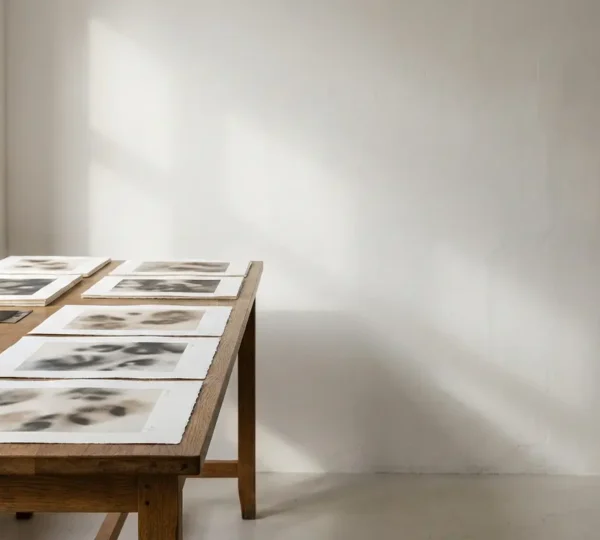
Numbering Strategy: How Many Prints Should Be in a Limited Edition to Maximize Value?
The financial success of a limited edition print isn’t luck; it’s a direct result of a deliberate market strategy built on perceived scarcity and reputational integrity. The size of an edition is the primary market signal for its collectibility and…
Read more
How to Etch Copper Plates Safely? A Guide to Non-Toxic, Precision Intaglio
True studio safety isn’t about better ventilation for toxic acids; it’s about re-engineering your etching process as a controlled electrochemical system that eliminates hazards at their source. Saline sulfate electro-etching offers molecular-level precision, creating clean, straight-walled lines that acid baths…
Read more
How to Calibrate Your Etching Press Pressure for Consistent Deep Blacks
Achieving rich, dark intaglio prints is not about applying more force, but about systematic calibration of your entire press setup. Worn felts and incorrect pressure settings are the primary causes of weak, patchy prints as they fail to push the…
Read more
How to Troubleshoot Ink Scumming on a Lithography Stone During Printing?
The frustrating appearance of ink scumming is not a random failure, but a predictable breakdown in the stone’s hygroscopic balance between water and grease. Scumming often results from “etch fatigue,” where the chemical preparation degrades from the mechanical abrasion of…
Read more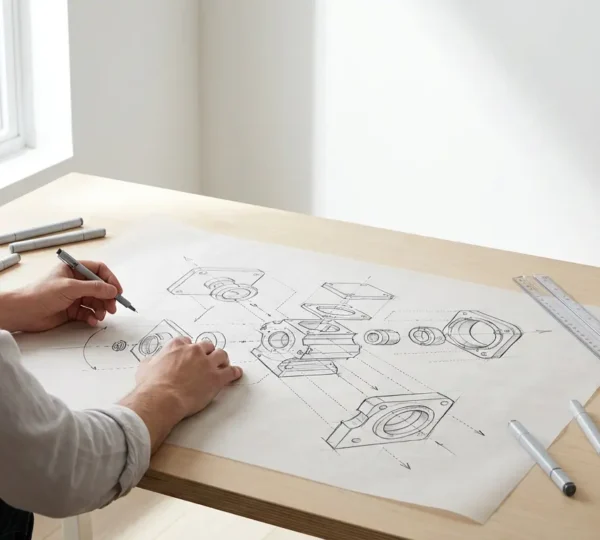
Quick Technical Sketching: How to Communicate Complex Machine Designs Instantly
The fastest way to communicate a complex mechanical idea isn’t with more words or a perfect 3D model; it’s with a strategically imperfect sketch. Mastering exploded views and line weight hierarchy communicates function and assembly more effectively than a photorealistic…
Read more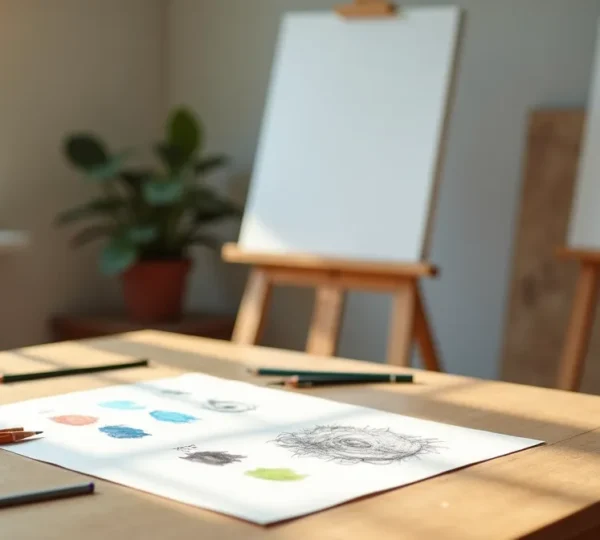
Why Skipping the Realistic Preparatory Sketch Ruins Your Abstract Final Piece?
Rushing to the canvas without a preparatory sketch isn’t a shortcut; it’s a direct path to a failed painting, wasted materials, and creative dead ends. A sketch acts as a low-cost diagnostic tool to solve compositional and value problems before…
Read more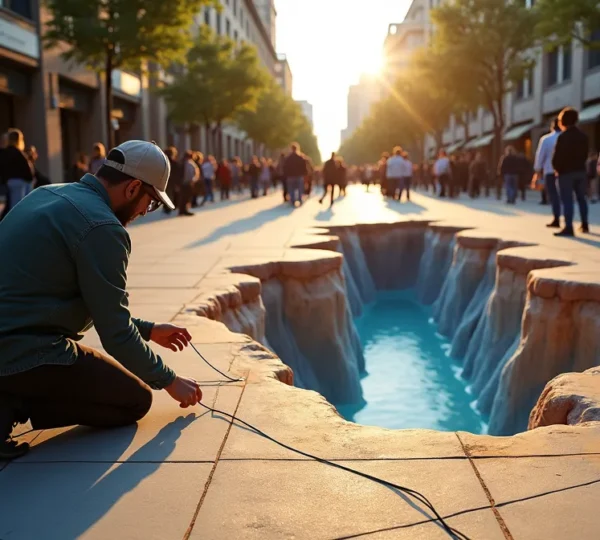
How to Create Depth Illusions on a 2D Surface That Truly Fool the Eye?
The secret to mind-bending depth illusions isn’t just following art rules; it’s about mastering the visual ‘cheats’ that hack human perception. Anamorphic art relies on a distorted grid that only snaps into focus from a single, secret viewpoint. A believable…
Read more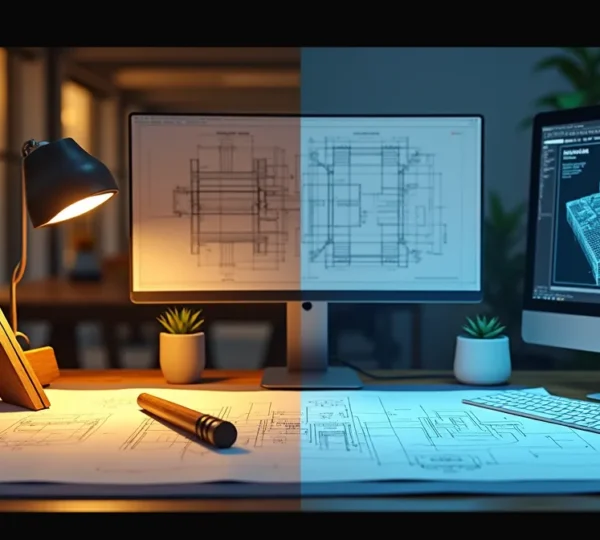
Manual Drafting vs. CAD: Is Hand-Drawing Still a Hireable Skill in Engineering?
The fear of being obsolete is real, but the solution isn’t to abandon old skills—it’s to reframe them as a strategic advantage in a digital world. Manual drafting builds “digital intuition,” making you a faster, more accurate CAD user by…
Read more
How to Draw a 3-Point Perspective Cityscape Without Distortion at the Edges?
In summary: Edge distortion is not a random error but a predictable consequence of exceeding the human eye’s natural field of view. The key to eliminating distortion is to keep all primary elements of your drawing within a 60-degree cone…
Read more
Why Misaligning Your Grid by 1 Pixel Destroys User Trust Instantly
Contrary to popular belief, pixel-perfect alignment isn’t just a professional standard; it’s a psychological necessity. Even a single-pixel error introduces subconscious cognitive friction that actively signals untrustworthiness to the user’s brain. Visual clutter and misalignment force the brain to work…
Read more