
The key to a successful post-academic career is to stop thinking like a scholar and start acting as an intellectual entrepreneur.
- Your deep research skills are a unique asset that can be monetized through scalable digital platforms and content.
- Building public authority through accessible writing and targeted consulting yields greater returns than academic publishing.
Recommendation: Shift your focus from seeking institutional validation to building a personal brand and direct revenue streams around your unique expertise.
The path for an art history PhD graduate once seemed clear: secure a tenure-track position, publish in peer-reviewed journals, and contribute to the slow, steady march of academic discourse. But for many, that path has become a bottleneck. The scarcity of academic jobs leaves highly skilled researchers with a wealth of knowledge and a scarcity of opportunities, often relegated to the precarious world of adjunct teaching. The conventional advice—work in a gallery, become an archivist—often feels like a consolation prize that underutilizes years of specialized training.
Many resources suggest simply “starting a blog” or “using social media,” but they fail to provide a strategic business framework. This approach misses the fundamental shift required. The challenge isn’t a lack of knowledge; it’s the lack of a model for translating that knowledge into a sustainable livelihood. What if the problem wasn’t your expertise, but your mindset? What if the very skills honed in academia—deep research, critical analysis, and narrative construction—are precisely the assets needed to thrive outside of it?
This guide reframes the challenge. It’s not about finding an alternative job; it’s about building a business. The core principle is a shift from an academic to an entrepreneurial mindset, viewing your expertise not as a resume line item but as the foundation for a portfolio of revenue-generating projects. This article will provide a strategic roadmap for this transformation, exploring how to create scalable income, build public authority, and monetize your unique skills in the digital age. We will move from creating digital products and navigating research access to mastering the art of the modern pitch and defining your high-value niche.
For those who prefer a visual summary, the following video offers an overview of diverse career paths that exist within the field of art history, complementing the entrepreneurial strategies detailed in this guide.
To navigate this new landscape effectively, we’ve broken down the essential strategies into a clear and actionable structure. The following sections will guide you through the key pillars of building your career as a successful independent art historian, from establishing a digital presence to leveraging your skills for high-value work.
Summary: Building Your Career as an Independent Art Historian
- Why starting a niche art history Substack pays better than adjunct teaching?
- How to access paywalled archives and journals without a university affiliation?
- Academic paper vs. Trade book: Which publishing path builds more authority?
- The Eurocentric blind spot that ruins modern interpretations of global art
- How to pitch a 17th-century art story to a modern lifestyle magazine?
- How to find old gallery catalogs to prove an artist had a primary market career?
- Technical Skill vs. Conceptual Daring: Which signals long-term career longevity?
- How to Curate a Dialogue Between Renaissance Art and Modern Digital Installations?
Why starting a niche art history Substack pays better than adjunct teaching?
The gig economy of academia, particularly adjunct teaching, often involves significant preparation for minimal and unreliable pay. The alternative is not to abandon teaching, but to change the platform and the business model. A niche Substack or similar newsletter platform transforms your expertise into a scalable digital product. Instead of teaching a class of 20 students, you can reach an audience of thousands who are specifically interested in your unique corner of art history, whether it’s 18th-century textile politics or the semiotics of early video art.
The economic upside is a powerful motivator. While adjunct pay is capped by the hour, a subscription model offers uncapped potential. Success stories abound; recent data shows that over 52 newsletters earn $500,000+ annually on the platform. More pointedly, one analysis highlights that more than 50 authors are now earning over $1 million annually through paid subscriptions alone. This demonstrates the immense potential of building a direct relationship with a dedicated audience, creating a level of financial stability and independence that is virtually unattainable in adjunct roles.
Building this intellectual enterprise requires a strategic approach. It’s not just about writing; it’s about building a business around your content. This means creating a value proposition that justifies a paid subscription and actively marketing your work to find your audience. The path from academic to intellectual entrepreneur begins with treating your knowledge as a valuable asset worthy of direct monetization.
Your Action Plan: Building a Revenue Stack on Substack
- Start with free content to build trust and grow your email list.
- Offer a paid tier between $5-$10 monthly for premium content, such as deep dives, primary source analyses, or audio lectures.
- Create a resource library page listing all exclusive content for paid subscribers to showcase value.
- Link to premium resources within free posts to create natural funnels for conversion.
- Build a custom upgrade page with testimonials from free subscribers and a clear value proposition for going paid.
How to access paywalled archives and journals without a university affiliation?
One of the biggest fears for a researcher leaving academia is the loss of institutional access to libraries, databases, and paywalled journals. This access is the lifeblood of serious scholarship. However, the digital age and a bit of strategic planning have created numerous backdoors and alternative pathways. The key is to shift from relying on a single institutional gateway to building a diversified portfolio of research access points.
Your first and most powerful tool is often your own past. Most universities offer alumni significant library benefits. These range from on-site access cards to, increasingly, remote access to a selection of powerful e-resources and databases. For example, many universities provide alumni access to primary source materials including manuscripts, artwork, photographs, and historical newspapers. It’s crucial to proactively investigate your alma mater’s specific “Alumni eLibrary” or “Alumni Library Privileges” programs, as they are often under-publicized but immensely valuable.
Beyond your alma mater, a world of resources exists. Major public libraries, like the New York Public Library or the British Library, offer research cards to the general public that grant access to astonishingly deep collections. Furthermore, state-funded consortiums like NC LIVE in North Carolina provide free database access to all state residents through their local public library. By combining these methods, you can often replicate, and in some cases even surpass, the research power you had within a single university system. This proactive approach to resource gathering is a core skill of the independent scholar.
Academic paper vs. Trade book: Which publishing path builds more authority?
In academia, authority is built through peer-reviewed papers published in specialized journals. This model creates deep but narrow credibility within a small circle of experts. For the independent scholar, this path offers diminishing returns. The goal is no longer to impress a tenure committee but to build broad public authority—a reputation that attracts clients, subscribers, and media opportunities. This is where the trade book becomes a superior strategic tool.
A trade book, aimed at an intelligent general audience, forces you to sharpen your ideas and communicate them with clarity and verve. While an academic paper might be read by a few dozen people, a successful trade book can be read by thousands, establishing you as the go-to expert on a topic in the public’s mind. This public-facing authority has tangible career benefits, from speaking engagements and consulting gigs to media appearances, which a dozen journal articles will likely never generate. Of course, the financial reality must be considered. While advances and royalties are possible, a survey from The Authors Guild reveals a stark $2,000 median book income for authors in 2022, highlighting that the primary value is often in authority-building, not direct income.
The choice between these paths is a strategic one, directly tied to your career goals. The following table breaks down the fundamental differences between the two models.
| Criteria | Academic Papers | Trade Books |
|---|---|---|
| Time to Publication | 6-18 months | 18-24 months |
| Audience Reach | Specialized academics | General public |
| Income Potential | Minimal to none | Advances + royalties |
| Career Impact | Conference invitations | Media appearances |
| Authority Type | Deep niche credibility | Broad public influence |
The Eurocentric blind spot that ruins modern interpretations of global art
The traditional art history curriculum has long been criticized for its Eurocentric focus, a lens that can distort or flatten the meaning of art from other cultures when applied uncritically. For an independent historian, this “blind spot” is not just an academic problem; it’s a massive market opportunity. The modern audience, more global and connected than ever, is hungry for narratives that decenter Europe and offer more authentic, contextualized interpretations of global art. By specializing in non-Western art or, more powerfully, in the cross-cultural analysis of artistic exchange, you can fill a significant void in public discourse.
This requires moving beyond formal analysis and embracing a more interdisciplinary approach. As one expert notes, the modern intellectual must be more than just an art historian. Alexandros Teneketzis, in “Exploring the Emerging Digital Scene in Art History,” argues for a new kind of scholar:
In the era of ‘image worshipping’ that we live in, it is not enough for someone to appear to be just an art historian… one must also be a historian, a public historian, a digital historian
– Alexandros Teneketzis, Exploring the Emerging Digital Scene in Art History
This hybrid identity allows you to connect objects to their full political, social, and economic contexts, creating richer, more compelling stories that resonate with a contemporary audience seeking depth and authenticity.

Developing this lens is not just an ethical imperative but a strategic advantage. It positions you as a vital voice in a crucial ongoing conversation, making your perspective valuable to media outlets, cultural institutions, and educational platforms looking to diversify their content. You become a bridge between complex objects and a public eager to understand the world in a more nuanced way, carving out a unique and defensible niche in the marketplace of ideas.
How to pitch a 17th-century art story to a modern lifestyle magazine?
Your deep knowledge of 17th-century Dutch still life or Baroque portraiture may seem hopelessly niche, but its value in the modern media landscape depends entirely on framing. Lifestyle, business, and even tech magazines are constantly searching for fresh angles on timeless human concerns: status, productivity, wellness, and self-presentation. Your job as an intellectual entrepreneur is to build a “Relevance Bridge,” connecting your historical expertise to a contemporary obsession.
The formula is simple but powerful. Start with a modern problem, not with the historical subject. For instance, instead of pitching “The Symbolism of the Tulip in 17th-Century Dutch Art,” pitch “What the 17th-Century Tulip Craze Teaches Us About Modern Crypto Bubbles.” Lead with the current trend or anxiety, and then introduce your historical case study as a surprising and insightful lens through which to understand it. This approach transforms you from a dusty historian into a sharp commentator with a unique perspective.
To make your pitch irresistible, as advised by career experts at outlets that help graduates find fulfilling work, you must think visually and interactively. Frame your story with high-resolution images that are aesthetically compelling on platforms like Instagram. Suggest interactive elements like “Which Renaissance patron’s spending habits match yours?” quizzes. Pitch to non-obvious sections: a story about the meticulous studio practices of Vermeer could be a productivity story for a business magazine; an analysis of courtly fashion could be a personal branding piece for a career site. By mastering the art of the reframe, you make your niche knowledge infinitely marketable.
How to find old gallery catalogs to prove an artist had a primary market career?
Beyond writing and content creation lies the lucrative world of consulting, and one of the most valuable services an art historian can offer is provenance research. For collectors, galleries, and auction houses, establishing an artist’s exhibition history and primary market career is crucial for authentication and valuation. This work transforms you into a “Provenance Detective,” and your primary clues are often found in old, obscure gallery catalogs and ephemera.
The hunt for these documents is a specialized skill. While major museum libraries are a starting point, the real work happens in more niche archives. This is where your academic research skills become a direct commercial tool. Digital archives are invaluable; for instance, resources like the Mergent Archives, as noted in some university library guides, provide a vast collection of corporate and industry documents. While intended for business research, they can unearth crucial information about galleries that were structured as corporations, including annual reports that might mention specific artist exhibitions.
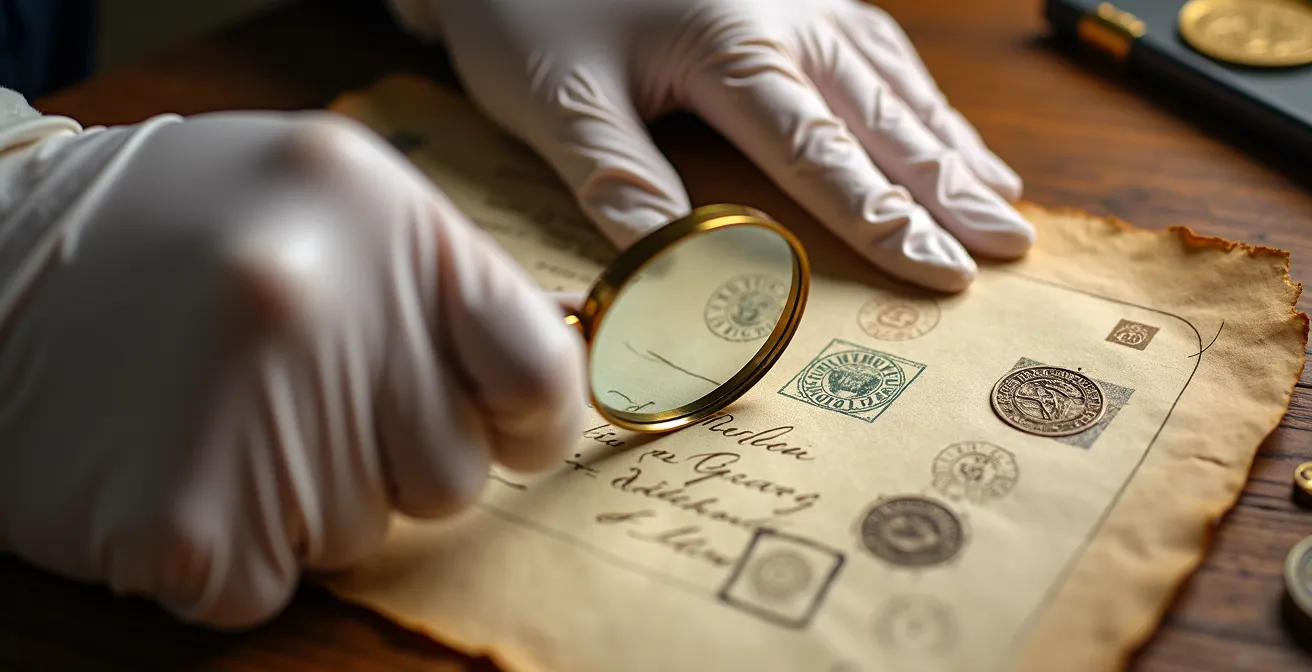
This digital sleuthing is supplemented by physical investigation. Contacting the archives of defunct galleries, searching the personal papers of critics and dealers from the period, and trawling through digitized art magazines in databases like JSTOR are all part of the process. Each catalog, price list, or exhibition review you uncover is a piece of evidence that adds tangible value to an artwork. By packaging this skill as a professional service, you move from academic researcher to a high-value consultant in the art market, paid for your ability to establish certainty and historical significance.
Key Takeaways
- Monetize your expertise directly through scalable platforms like Substack, which offer higher income potential than traditional academic roles.
- Focus on building broad public authority with accessible trade books and media-friendly content rather than narrow academic papers.
- Frame your research skills as a high-value consulting service, such as becoming a “Provenance Detective” for the art market.
Technical Skill vs. Conceptual Daring: Which signals long-term career longevity?
Within art history, a tension often exists between celebrating flawless technical execution and championing bold conceptual innovation. For the independent scholar building a long-term career, this is not just an academic debate; it’s a strategic choice. While technical mastery is impressive, it is often conceptual daring, combined with technological fluency, that signals true longevity and market relevance in the 21st century.
Technical skill can be replicated or, in some cases, even automated. Conceptual daring—the ability to forge surprising connections, reframe historical narratives, and apply old ideas to new problems—is a uniquely human and highly valuable talent. It’s the difference between being able to identify every brushstroke in a Rembrandt and being able to explain how Rembrandt’s use of light prefigures modern cinematic techniques. This ability to think contextually and critically is the true, lasting value of an art history education.
The most successful independent careers are being built at the intersection of conceptual thinking and digital savvy. A prime example is the rise of new roles entirely dependent on this blend. The demand for experts in Digital Art Preservation is growing, requiring individuals who can manage and archive complex digital media. Similarly, the creation of Virtual Museum Experiences needs curators who are not just art historians but also skilled digital storytellers. These roles don’t just require knowing about art; they require a bold vision for how art can be experienced and understood in a digital world. This is where conceptual daring provides the ultimate competitive edge.
Case Study: The Digital Transformation of Art History Careers
With the rise of digital media, there is a growing demand for experts who can preserve and archive digital art, ensuring its longevity for future generations. Furthermore, many museums are now offering virtual tours and online exhibitions. Art historians with tech-savvy skills can curate and manage these digital experiences, creating new avenues for engagement that did not exist a decade ago.
How to Curate a Dialogue Between Renaissance Art and Modern Digital Installations?
The ultimate expression of an independent art historian’s value is the ability to perform “conceptual arbitrage“—creating new meaning by connecting seemingly disparate fields. Curating a dialogue between a 15th-century altarpiece and a 21st-century generative art installation is no longer just an academic exercise; it’s a powerful way to demonstrate your unique perspective and create compelling content for a modern audience. This act of synthesis is the culmination of all the skills an intellectual entrepreneur must cultivate.
This process moves beyond simple “compare and contrast.” It involves identifying the deep, underlying human themes that resonate across centuries: the nature of representation, the relationship between creator and patron, the experience of the sublime, or the role of technology in art-making (whether it’s the oil paint revolution or the blockchain). By framing a Renaissance painting not as a static object but as a piece of “media” from its time, you can draw fascinating parallels with today’s digital media, making both more accessible and interesting.
This approach has immense practical value. It can be the basis for a hit newsletter series, a compelling book proposal, a public lecture, or a unique consulting niche for tech companies looking to infuse their products with cultural depth. This is a far more impactful—and potentially more lucrative—path than traditional curatorial work, where government data shows museum workers earn a median annual salary of around $49,850. By creating these unexpected dialogues, you are not just interpreting culture; you are creating new cultural value, establishing yourself as an indispensable and forward-thinking voice.
By reframing your PhD from a ticket to a specific job into a toolkit for intellectual entrepreneurship, you open up a world of possibilities. The key is to take that first, decisive step. Start today by identifying the one niche topic you can own and outline your first three content ideas. Your career as an intellectual entrepreneur awaits.