In summary:
- Avoid pressure washing at all costs; it forces water into the porous limestone, leading to severe damage.
- Opt for a pH-neutral, approved biological solution instead of harsh chemicals or aggressive scrubbing.
- Protect statues in winter with a breathable cover on a frame, never a plastic tarp wrapped directly on the surface.
- Always assess the statue’s condition before cleaning and consult a professional if you see deep cracks or rust stains.
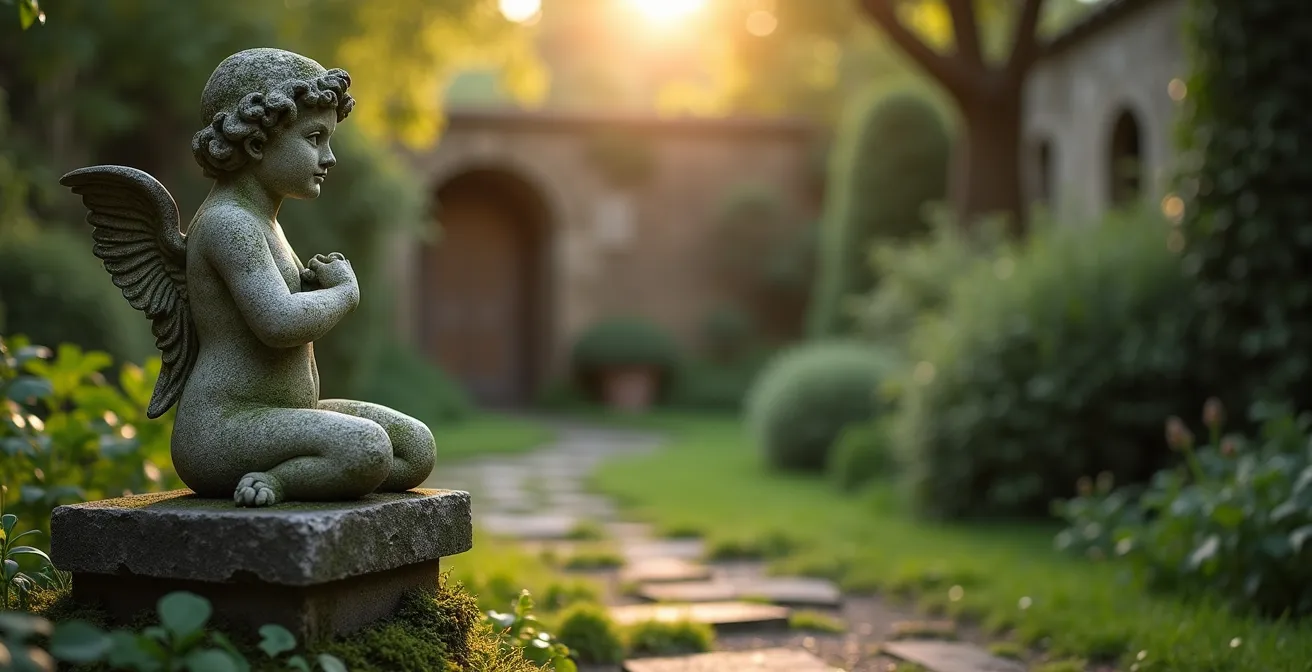
A beautiful limestone statue can be the heart of a garden, a figure of grace and history. But over time, nature begins to reclaim it. Green and black patches of lichen and algae appear, obscuring details and raising the concern of every diligent groundskeeper or homeowner. The immediate impulse is often to fight back, to scrub and blast the stone back to its original pristine state. Common advice suggests pressure washers, wire brushes, and harsh household chemicals—methods that seem effective but are, in reality, acts of aggression against the stone.
These common approaches fail to recognize a fundamental truth: limestone is not an inert block, but a porous ecosystem. It breathes, absorbing and releasing moisture. The secret to its long-term preservation is not a battle for sterile perfection, but a gentle intervention that works in harmony with the material. The goal is not to erase all traces of age, but to manage the biological growth that causes harm, while respecting the natural patina that tells the statue’s story.
This guide abandons the aggressive “cleaning” mindset in favor of a conservator’s approach. We will explore how to understand the stone’s needs, why certain methods cause irreparable damage, and how to gently guide your statue back to health, ensuring it remains a source of beauty for generations to come. It’s about learning a new dialogue with the stone, one based on observation, patience, and minimal, precise action.
To navigate this preservationist journey, this article is structured to address the most critical aspects of limestone care. The following summary outlines the key areas we will explore, from the dangers of common mistakes to the professional techniques that ensure lasting health for your statuary.
Summary: A Preservationist’s Guide to Limestone Statue Care
- Why pressure washing is the worst thing you can do to an old statue?
- How to apply microcrystalline wax to bronze outdoors in cold weather?
- Chemical Biocide vs. Soft Brushing: Which keeps the stone healthy longer?
- The coverage mistake that traps moisture and cracks statues in winter
- When to inspect internal armatures: the signs of rust bleed-through?
- The installation mistake of mixing metals that eats away sculpture bases
- Why thousands of shoes erode stone steps faster than rain?
- Why Even a 5% Humidity Fluctuation Can Ruin an Oil Painting in 48 Hours?
Why pressure washing is the worst thing you can do to an old statue?
The temptation of a pressure washer is understandable. It promises a quick, dramatic transformation, blasting away years of grime in minutes. However, for a limestone statue, this is a catastrophic mistake. The core issue lies in the stone’s inherent nature. Limestone is essentially a hard sponge; its surface is a network of microscopic pores. In fact, due to its composition, the porous nature of limestone makes it particularly vulnerable, allowing it to absorb a significant amount of water.
When you hit that surface with high-pressure water, you are not just cleaning it; you are force-injecting water deep into the stone’s core. This does two devastating things. First, it can erode the delicate, carved surface, a phenomenon known as “sugaring,” where the surface granules flake away, permanently softening details. Second, and more insidiously, it saturates the stone. In colder climates, this trapped water will freeze, expand, and break the stone apart from the inside out in a process called the freeze-thaw cycle. A surface cleaning problem has now become a deep, structural crisis.
The preservationist approach is to begin not with action, but with observation. Before any cleaning is attempted, a thorough assessment is required to understand the statue’s current health. This “material dialogue” informs the gentlest, most effective course of action.
Action Plan: 5 Critical Steps to Assess Limestone Damage Before Cleaning
- Identify the stone type: Consult with conservation experts or historical societies to understand its specific sensitivities and history.
- Assess surface conditions: Note any existing etching, sugaring, or friable areas that could be worsened by any physical or chemical intervention.
- Test cleaning methods: Always test your chosen cleaning agent on a small, inconspicuous area before applying it to the entire surface.
- Document existing damage: Use photography to document any cracks, delamination, or areas of deterioration before you begin any work.
- Consult a professional: If you discover signs of deep structural issues, such as large cracks or rust bleed-through from an internal armature, stop immediately and consult a professional stone conservator.
How to apply microcrystalline wax to bronze outdoors in cold weather?
While this question specifically mentions bronze, the underlying principle—applying a protective coating—is a critical and often misunderstood topic for stone as well. After cleaning, many people are tempted to “seal” their limestone statue to protect it. However, choosing the wrong type of sealant is just as damaging as pressure washing. The key to protection is breathability. The stone must be able to expel moisture vapor, even as it repels liquid water.
Many common sealants, like lacquers, oils, or heavy waxes, are “film-forming.” They create an impermeable plastic-like layer on the surface. This traps any existing moisture inside the stone and prevents it from breathing. As temperatures fluctuate, this trapped moisture leads to spalling, pitting, and ultimately, the failure of the stone surface. The sealant that was meant to protect the statue ends up suffocating it.
A proper conservation treatment uses a breathable water repellent. This type of product doesn’t form a film on the surface; instead, it impregnates the pores of the stone, lining them with a hydrophobic layer. Liquid water from rain beads up and rolls off, but water vapor from within the stone can still escape freely. This maintains the crucial equilibrium between the statue and its environment.
This brief introduction to the table below clarifies the distinction between harmful and helpful treatments. As a study from OMEMY highlights, the choice of coating has profound long-term consequences for stone health.
| Treatment Type | Application | Effect on Stone | Long-term Impact |
|---|---|---|---|
| Film-forming sealants (oils, waxes, acrylics) | Surface coating | Blocks natural pores | Surface pitting and spalling |
| Breathable water repellents | Impregnating treatment | Lines pores without sealing | Allows vapor escape while preventing water entry |
Chemical Biocide vs. Soft Brushing: Which keeps the stone healthy longer?
When faced with biological growth like lichen and algae, the debate often centers on physical removal (scrubbing) versus chemical treatment. Soft brushing with natural-bristle brushes and clean water is the first and gentlest step, and may be sufficient for light soiling. However, for established lichen, which can send “roots” (rhizines) into the stone’s pores, brushing alone can be ineffective and even damaging if too aggressive. Overly vigorous scrubbing can abrade the delicate limestone surface.
This is where a specialized, pH-neutral biocide becomes the superior long-term solution. It’s crucial to distinguish these conservation-grade products from harsh household cleaners like bleach or acid, which will permanently eat away the stone. A proper biocide is designed to work gently over time. It is sprayed on the surface and left to act, killing the lichen, algae, and mold at a cellular level. It requires no scrubbing. The rain and weather then gently rinse the dead organic matter away over weeks or months.
This method is not only less labor-intensive but also far less abrasive to the stone surface. It addresses the root of the problem without causing mechanical wear. For example, studies show that pH-neutral biocides like D/2 require only a 10-15 minute contact time to effectively neutralize most common biological staining, with visible results appearing over time as nature does the gentle “rinsing.” This approach prioritizes the long-term health of the stone over the instant gratification of a harsh cleaning.
Case Study: The Veterans Affairs National Cemetery Administration Program
Perhaps the most compelling endorsement for gentle biocides comes from the maintenance of heroes’ memorials. The Veterans Affairs Administration, responsible for over 3.5 million white marble headstones, needed a method that was effective, safe for the stone, and scalable. After a comprehensive six-year study, the National Park Service’s National Center for Preservation Technology and Training recommended D/2 Biological Solution as the preferred cleaner. This decision highlights a large-scale, professional consensus that a slow-acting, non-abrasive biocide is the most responsible choice for preserving historic stone.
The coverage mistake that traps moisture and cracks statues in winter
As winter approaches, the protective instinct is to cover outdoor statuary. But the most common method—tightly wrapping a statue in a plastic tarp—is one of the most damaging mistakes a caretaker can make. A non-breathable plastic wrap creates a sealed micro-environment. On sunny winter days, the space underneath heats up, drawing moisture out of the ground and the stone itself. As temperatures drop at night, this moisture condenses on the inside of the tarp and the cold surface of the statue, keeping it perpetually damp.
This practice essentially guarantees that the limestone enters the coldest nights of winter fully saturated with water. This perfectly sets the stage for the destructive freeze-thaw cycle. Instead of protecting the statue, the plastic tarp has created the ideal conditions for its destruction, trapping moisture and ensuring it turns to ice within the stone’s pores.
The professional solution is not to wrap, but to tent. This involves building a simple frame around the statue and covering the frame with a breathable, waterproof fabric. This method protects the statue from the worst of the snow and ice while ensuring a crucial layer of circulating air. This air gap prevents condensation from forming on the statue and allows the stone to remain in equilibrium with the ambient humidity, keeping it as dry as possible. This simple shift in technique from “wrapping” to “tenting” can mean the difference between preservation and severe winter damage.
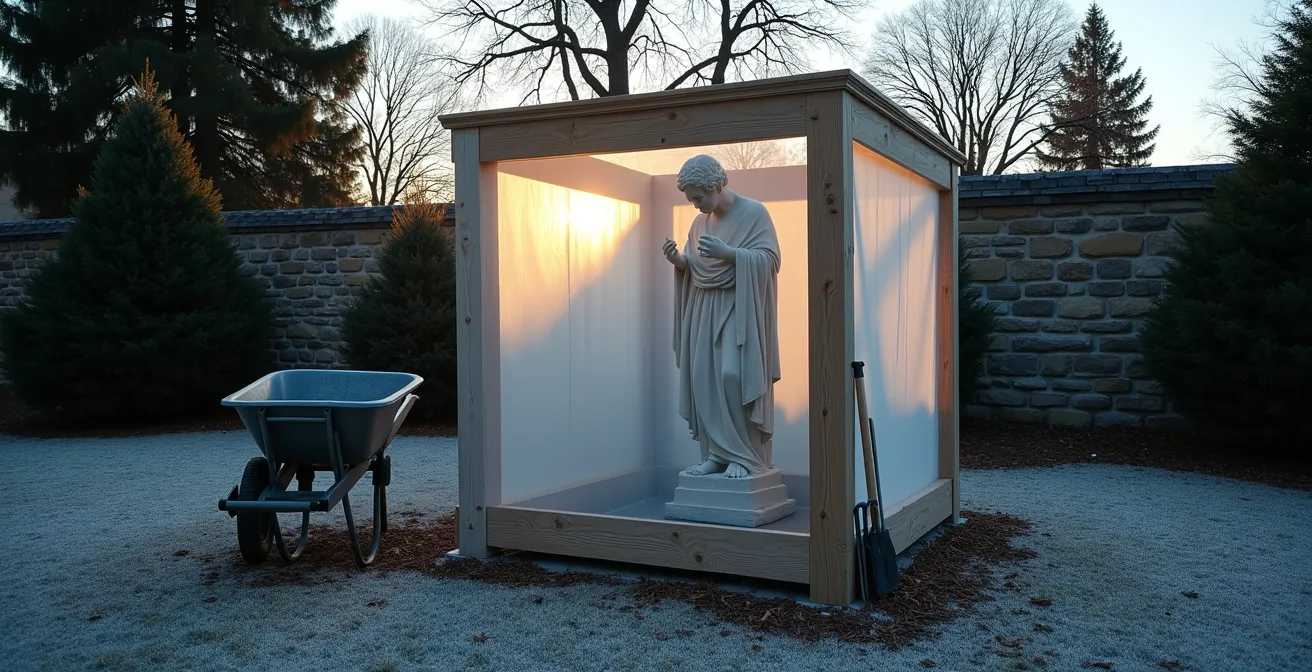
As the image above demonstrates, the goal is to create a protective shelter, not a suffocating seal. The space between the cover and the statue is the most important part of the design, allowing air to move freely and moisture to escape.
When to inspect internal armatures: the signs of rust bleed-through?
Sometimes, the most serious threats to a statue’s health come from within. Many larger or more complex sculptures, particularly those from the late 19th and early 20th centuries, were constructed with an internal metal skeleton, or armature, to provide support. These armatures were typically made of iron or steel. While strong, they are highly susceptible to rust when exposed to moisture that inevitably finds its way into the stone over decades.
As the internal metal armature corrodes, it expands with incredible force, a process known as “rust jacking.” This expansion can crack the stone from the inside out, causing catastrophic structural failure. Long before a crack appears, however, the rusting armature will give off tell-tale signs. This “rust bleed-through” is a critical warning that must not be ignored.
Learning to spot these early indicators is a key part of the “material dialogue” with your statue. It means looking beyond the surface grime to see what the stone is communicating about its internal condition. If you see any of these signs, all cleaning should cease immediately, and a professional stone conservator should be consulted. Attempting to clean over these stains can mask the problem and delay a crucial intervention.
Here are the key visual indicators of internal armature deterioration to look for:
- Orange, red, or dark-brown streaks weeping from joints, old repairs, or natural fissures in the stone.
- Unusual staining patterns that appear to follow straight vertical or horizontal lines, suggesting the location of internal support rods.
- Surface cracking that seems to radiate from a specific point, rather than following a natural bedding plane of the stone.
- Areas where the stone appears to be bulging, pushing outward, or delaminating from an internal pressure source.
The installation mistake of mixing metals that eats away sculpture bases
The long-term health of a limestone statue is determined long before the first patch of lichen appears. It begins with its installation. A common and destructive mistake is to place the limestone base in direct contact with incompatible materials. This can create chemical reactions that actively degrade the stone or introduce damaging salts and moisture from the outset.
One of the most frequent errors is using iron or copper clamps, pins, or supports that are in direct contact with both the limestone and the ground. When two different metals are present in a moist environment, they can create a small electrical current in a process called galvanic corrosion. This not only corrodes the metal fixtures but can also cause deep, unsightly staining on the limestone. Similarly, setting a limestone statue directly onto a concrete pad without a barrier is problematic. Fresh concrete is highly alkaline and can leach salts into the porous limestone, leading to efflorescence (a white, powdery deposit) and long-term deterioration.
A proper installation anticipates these issues by using inert materials as barriers. Non-corrosive stainless steel fixtures should be used instead of iron. A lead sheet or slate damp-proof course should be placed between the statue’s base and a concrete pad to prevent direct contact and moisture transfer. These may seem like minor details, but they are fundamental to preventing a cycle of damage that no amount of cleaning can fix.
The following table, based on established conservation principles, outlines the risks of common installation methods and provides safer, professionally recommended alternatives.
| Installation Method | Compatibility with Limestone | Risk Level | Recommended Alternative |
|---|---|---|---|
| Iron/copper clamps | Incompatible – causes staining | High | Non-corrosive steel or lead sheet barrier |
| Direct concrete pad | Poor – alkaline reaction | Medium-High | Slate or lead damp-proof course |
| Acidic soil contact | Very poor – chemical erosion | High | Elevated base with barrier material |
Why thousands of shoes erode stone steps faster than rain?
The image of a stone step, worn smooth and concave by centuries of footfalls, is a powerful illustration of the force of mechanical abrasion. While a statue may not be subject to foot traffic, the principle is directly relevant: constant, low-grade physical friction is a potent form of erosion. This concept is critical when deciding how to clean a limestone surface. Every time you scrub, you are contributing, in a microscopic way, to that same process of wear.
This is why a preservationist approach favors chemical action over mechanical force wherever possible. While a soft-bristled brush is an essential tool, its overuse or overly aggressive application acts like thousands of tiny shoes, slowly wearing away the stone’s surface. Using a gentle, slow-acting biocide that does the work for you minimizes this physical contact and preserves the intricate details of the carving.
Furthermore, this approach acknowledges a biological reality: you can never truly sterilize an outdoor surface. Even after a thorough cleaning and biocide treatment, the air is full of microscopic spores that will land on the stone and begin to grow again. In fact, research shows deteriorating bacteria can return within 48 hours to a treated limestone surface. The goal, therefore, cannot be eradication. It must be management. By using a gentle biocide periodically, you manage the biological load without inflicting the cumulative damage of repeated, aggressive scrubbing. This insight was a key driver in the development of the Cambridge Museums’ guide for cleaning limestone, which needed to be safe for both the artifact and for use by volunteers.
Key takeaways
- Limestone is a “porous ecosystem” that breathes; your goal is to manage its health, not sterilize it.
- Aggressive methods like pressure washing and using film-forming sealants cause irreversible damage by trapping moisture.
- The best practice is a cycle of gentle intervention: assess, use pH-neutral biocides, and protect with breathable materials.
Why Even a 5% Humidity Fluctuation Can Ruin an Oil Painting in 48 Hours?
Just as a controlled indoor environment is paramount for a delicate oil painting on a canvas that swells and shrinks with humidity, a managed outdoor environment is vital for a limestone statue. While you cannot control the weather, understanding the invisible forces at play is essential for long-term preservation. The most significant damage to outdoor statuary is often caused by the interaction of water with environmental factors.
Water is the primary agent of decay. It acts as a vehicle for pollutants, and its presence within the stone is the catalyst for the three greatest threats. According to conservation science, the most significant limestone cracking results from these three mechanisms: acid/salt attack, the freeze-thaw cycle, and salt crystallization. Acid rain can slowly dissolve the stone, while salts carried by moisture can crystallize just below the surface, exerting immense pressure and causing the outer layer to spall off.
This knowledge should inform every decision, especially the timing of any cleaning intervention. Cleaning a statue on a hot, sunny day can cause thermal shock, creating micro-cracks as the cold water hits the hot stone. Conversely, cleaning in near-freezing temperatures is dangerous because the water used for cleaning and rinsing can freeze in the stone’s pores before it has a chance to evaporate. The ideal time for any cleaning is on a mild, overcast day when temperatures are stable and well above freezing.
Managing these environmental factors is as crucial as the cleaning itself. The following steps are critical for any procedure involving water on limestone:
- Never clean limestone when air and surface temperatures are below 45°F (7°C).
- Avoid cleaning on intensely hot, sunny days when the risk of thermal shock is highest.
- Use an infrared thermometer to test the stone’s surface temperature before you begin.
- Plan your work for stable, overcast days to ensure slow, even drying.
- If a statue has been in direct sun, allow it to cool down and equilibrate to the ambient temperature before applying any water.
By embracing this philosophy of gentle stewardship—observing before acting, choosing the least invasive methods, and working with the stone’s nature rather than against it—you transition from a simple cleaner to a true custodian. The next logical step is to begin this process with your own piece. Take the time to simply look, to document, and to understand its condition before ever picking up a brush.